Advertising helps fund Big Issue’s mission to end poverty
Music

Bugged Out Weekender is back: 'We've witnessed more than one epoch-defining musical moment'

Johnno Burgess, co-founder of pioneering club night Bugged Out, writes about the return of the Weekender and changing styles on the dance floor…

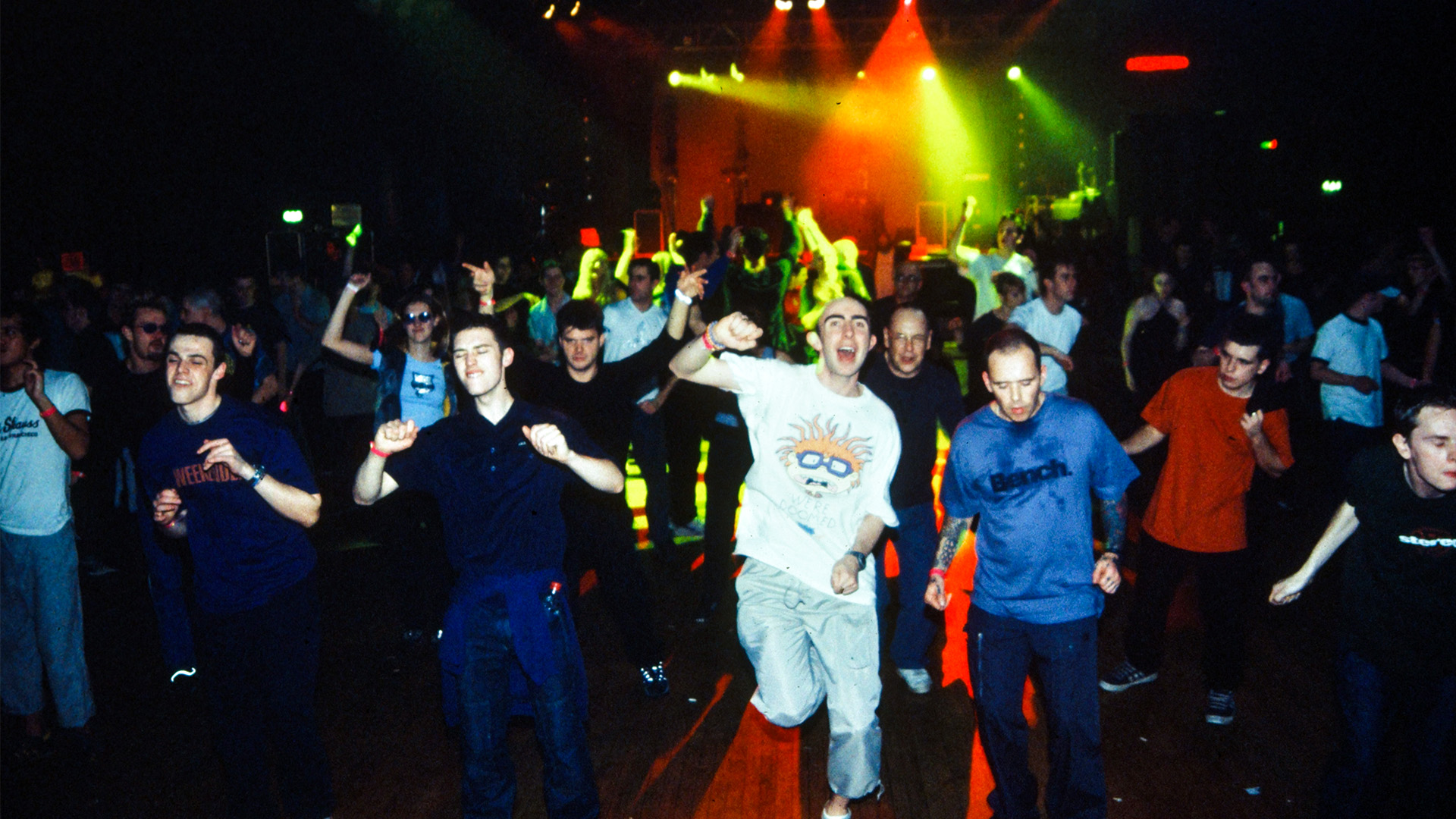
The dancefloor at Bugged Out Weekender in 2000.

Bugged Out Weekender in 2000. Image: Simon King

Reflecting on the past 30 years I’ve spent co-running the nomadic club night Bugged Out for our book, It’s Just A Big Disco, has brought back a flood of memories. Some triggered by the flyers stored in boxes scattered across various lockups, others by the sounds first heard at the club from then little-known acts like the Chemical Brothers and Daft Punk.

Reaching this landmark age has also been the impetus for us to revive one of our best loved events, the Bugged Out Weekender. The seventh edition, our first for ten years, takes place at Butlin’s, Bognor Regis on March 6 to 9. What’s telling is that some of the DJs who are playing, and who we’ve been booking for over 20 years, are arguably even more significant now: Luke Una, Erol Alkan, Ivan Smagghe, and DJ Paulette. Luke, Justin Robertson, Tayo, FC Kahuna and DJ Falcon have even stayed the distance since our first ever weekender held back in the year 2000. 

Bugged Out has danced through countless eras, fads, and fashions, something the book and weekender have tried to capture. We began at Sankeys Soap in Ancoats, Manchester, which at the time was far from the polished neighbourhood it is now. The Chemical Brothers had rocks thrown at them leaving the club at 4am in 1998. Today, it’s all artisanal pizza joints and loft apartments.

Read more:

Back in the 1990s, Paul Benney and I ran our magazine Jockey Slut from an office upstairs in the old mill that housed the venue. And Bugged Out was always a reflection of what we were writing about: LFO, who played our inaugural night, appeared on the cover two months later. Daft Punk played live in October 1995 (entry was a fiver!), after we had done their first ever interview. 

The Sankeys era ran from 1994 to 1998. It ended due to the gang issues common in the city at the time. Looking back at the few photos we have from that period, the clothing was utilitarian and baggy, designed for dancing and sweating. Most fun-camera snaps feature regulars with a cigarette in one hand and a bottle of Holsten Pils in the other.


Advertising helps fund Big Issue’s mission to end poverty

Sankeys have recently announced they are reopening as a club night in Manchester. They have said phones will be banned on the dance floor. It’s a welcome throwback to their salad days, when clubbers were more present, moving as one, only distracted by big breakdowns in the tunes. 

Following Sankeys first closure we moved to Nation in Liverpool in September 1998. The venue had multiple rooms and a 3,500 capacity, four times that of Sankeys. It felt like running a mini-festival every month. The breadth of electronic music we covered in Jockey Slut could finally be represented across all three areas.

Photography was still rare; if a magazine sent a snapper, they focused on the crowd rather than the DJs. I took a photo of Green Velvet watching Daft Punk DJ at our fourth birthday (it’s featured in the book). But I didn’t turn to my left to photograph the Parisians themselves. This must seem baffling to the Insta generation.

Liverpool fashion at the time was partly influenced by the Gatecrasher-inspired “Crasher kids” and the trance scene – blokes over-gelled their hair and twisted strands upwards like Scott from the boy band Five.

The official video of the 2016 Bugged Out Weekend.

If this was our superclub era, what followed dismantled it. The bubble burst for larger, more mainstream clubs like Cream and Ministry around 2002, and at the same time we began booking a new breed of DJs connected to the emergent electroclash scene. Erol Alkan, Miss Kittin, Tiga, JoJo De Freq, and 2manydjs breathed new life into Bugged Out, revitalising the noughties.

Electroclash embraced DIY punk styling and heavy eyeliner. We moved to The End in London in 2002 around this time, where Erol was resident in Room 2 for several years.

We stayed at The End for our longest stretch and witnessed more than one epoch-defining musical moment. Electroclash evolved into electro house and then new rave, with Ed Banger Records setting both the sound and the look. Bright American Apparel T-shirts and mustard trucker caps became ubiquitous. We left The End when it closed in January 2009; events from our final party with Justice were captured mostly on digital cameras, as iPhones were only just starting to become common. The Instagram era had yet to arrive.

Todd Terje at Bugged Out Weekender, 2015.
Todd Terje at Bugged Out Weekender, 2015. Image: Luke Dyson

During the 2010s, we were nomadic again, holding the night at Vauxhall’s Fire, Shoreditch’s XOYO, various car parks (rebranded as “warehouse parties”), and co-founding the Field Day festival, where we hosted a stage each year. We had run the first Bugged Out Weekender in 2000 at a Pontin’s in Prestatyn though it was a financial disaster. We were more successful at Butlin’s in Bognor Regis where the event ran from 2012 to 2016. Once again we saw new acts break through. Bicep started out in the smallest room at the 2013 Weekender; ten years later we co-promoted two sold-out nights at Alexandra Palace.

With the Weekender revived for March, we hope we’ve done justice to our legacy. It’s going to be emotional reuniting with friends and DJs from over our many years, and being thrilled by the new talent we continue to book. One thing’s for certain: we’ll have far more than a handful of photos to show off after the event.

Bugged Out! It’s Just A Big Disco – 30 Years of the Seminal Club is out now on Disco Pogo. 
Bugged Out Weekender is at Butlin’s, Bognor Regis, from March 6 to 9, 2026.

Do you have a story to tell or opinions to share about this? Get in touch and tell us more

Change a vendor’s life this winter.

Buy from your local Big Issue vendor every week – and always take the magazine. It’s how vendors earn with dignity and how we fund our work to end poverty.

You can also support online with a vendor support kit or a magazine subscription. Thank you for standing with Big Issue vendors.

Advertising helps fund Big Issue’s mission to end poverty

HELP VENDORS KEEP WORKING THROUGH THE COLD

For £36.99, help a vendor stay warm, earn an extra £520, and build a better future.
Grant, vendor

Recommended for you

View all
Moby: 'Home was terrifying at times. My mom dated Hells Angels'
Letter To My Younger Self

Moby: 'Home was terrifying at times. My mom dated Hells Angels'

I quit my job and gave myself a year to get my band signed. This is how it's going
Music

I quit my job and gave myself a year to get my band signed. This is how it's going

What Man On The Run director Morgan Neville learned from spending hours with Paul McCartney
Film

What Man On The Run director Morgan Neville learned from spending hours with Paul McCartney

Mumford & Sons: 'I’m thrilled our music is being used for anti-ICE protest videos’
Interview

Mumford & Sons: 'I’m thrilled our music is being used for anti-ICE protest videos’