Advertising helps fund Big Issue’s mission to end poverty
News

Roger Bannister: "I'd rather be remembered for neurology than running"

Originally published in May 2014, the four-minute-mile icon, who has died aged 88, shares his views on the Empire Games, breaking the world record and why he'd listen to his parents more in his Letter To My Younger Self

Roger Bannister

At 16 I was focused on getting to Oxford. No member of my family had studied there. It was quite difficult to get into Oxford then. I was impatient to leave school for reasons I’m not sure of now, but I was keen to get on with my medical career.

I’d tell my younger self he could and should learn more from his parents. I was rather independent then, though my parents did encourage me. I was always very active and involved in things. I threw myself into everything when I was at school, then when I was at university – president of the sporting club and the students’ union. I always felt I must exploit the opportunities my parents hadn’t enjoyed to the full. And Oxford is a wonderful place.

It seemed to be the fashion in Oxford to have a sport so I went along to the track, paid my guinea, and joined the athletics club. I didn’t run very fast at first – I was included in the team because I’d been seen diligently shovelling snow. In my first big race I was the third string runner. I was told just to keep out of the way. But with 200 yards to go I felt I could still run faster. So I proceeded to overtake everyone and won by 10 or 15 yards.

I didn’t run very fast at first – I was included in the team because I’d been seen diligently shovelling snow

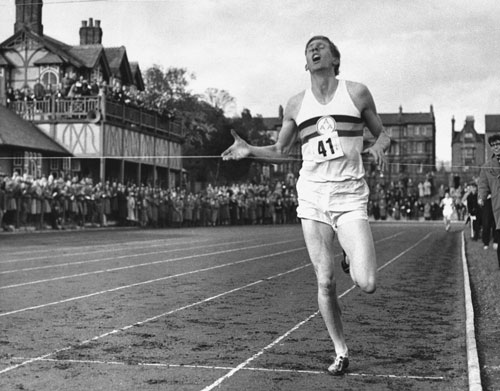
It was a windy day on May 6 1954 in Vancouver, when I went to run in the Empire Games. The conditions weren’t good. I only decided I was going to go for it half an hour before the race. My coach said to me, ‘if you don’t take the chance when you get offered it you might regret it for the rest of your life’. In the end I ran in three minutes 59 seconds. I heard the announcement of the times over the tannoy, by Norris McWhirter, founder of the Guinness Book of Records. When he got to ‘a new world record, at three…’ the crowd suddenly roared and nobody heard the seconds.

I think the record was important to Britain. There was a feeling after the war that Britain was finished. We had borrowed extensively from America and had to pay huge debts. We’d lost an Empire. So we did things. We had the Festival of Britain in 1951. We had the climbing of Everest in 1953. We won nothing at the Helsinki Olympics in 1952, so everyone was very disappointed in me and the others. I knew I couldn’t retire on such a disappointing note so I had to stick with the running just a little longer.
Advertising helps fund Big Issue’s mission to end poverty
Bannister_embed1

For the first ten years of my medical career it was an uphill battle to prove to others that I was dedicated to medicine and would not be moving into sport. For me there was never any doubt that medicine, ideally neurology, would be my career. My big dream was to add a small contributions to the knowledge we had about the brain. It was only after I’d been a consultant for many years that I considered offers like being chairman on the first independent Sports Council.

For the first ten years of my medical career it was an uphill battle to prove to others that I was dedicated to medicine

My wife has always been with me, helping me in everything I’ve done. We have four children – my daughters, a painter, and an Anglican priest; and my sons, a banker in America and a CEO of the Phoenix Insurance group. They’re high achievers but they all put family first. I have 14 grandchildren. My eldest grandson is the British champion motor glider.

Bannister_embed2
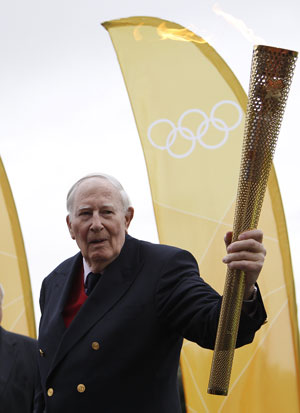
Bannister carrying the Olympic torch ahead of the London 2012 games

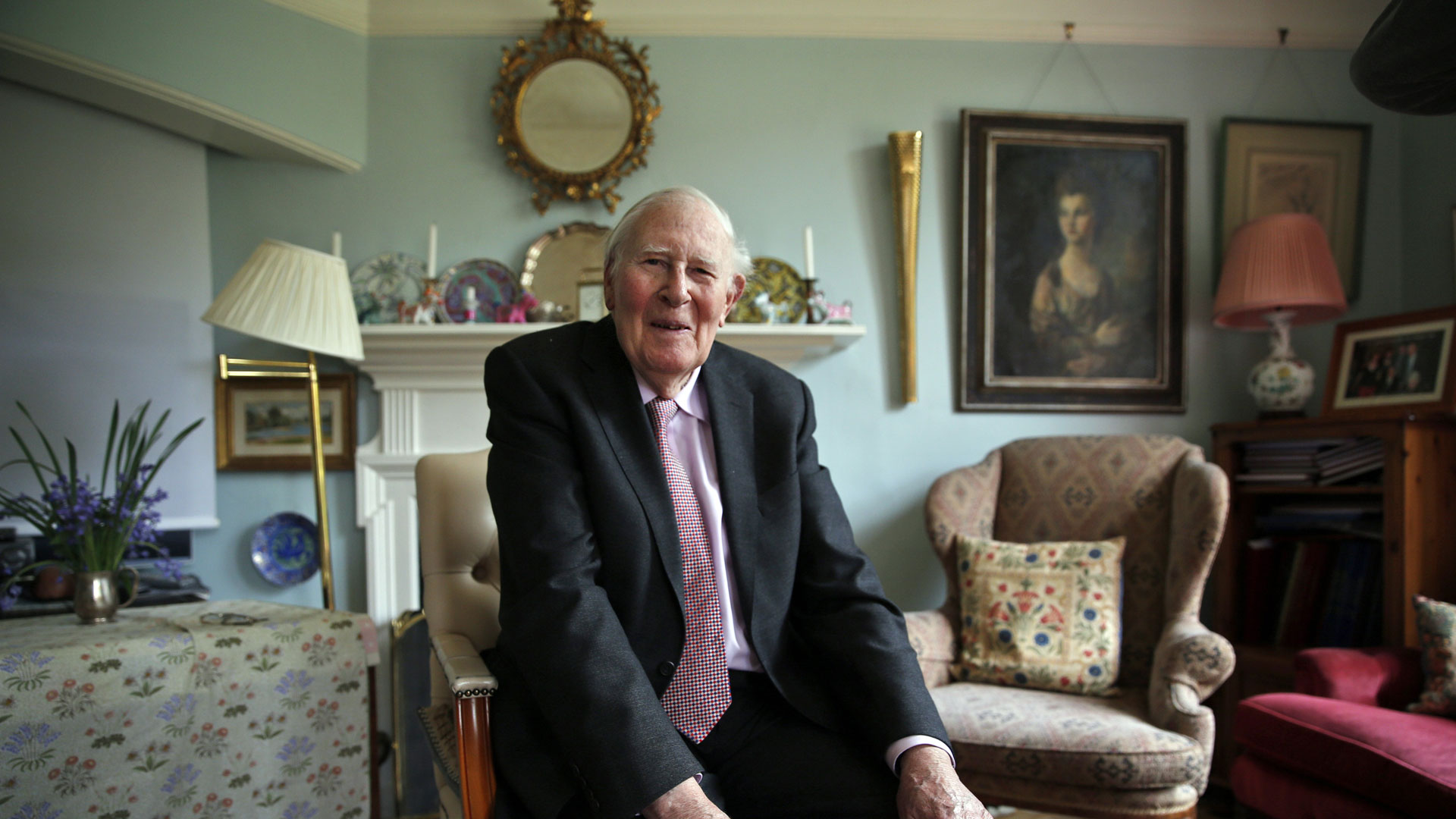
I’d rather be remembered for my work in neurology than my running. If you offered me the chance to make a great breakthrough in the study of the automatic nerve system, I’d take that over the four minute mile right away. I worked in medicine for sixty years. I ran for about eight. I enjoy my life now but I’m not very mobile. I have something called Parkinson’s Disease and unfortunately that restricts me.

Keep reading the journalism that powers our mission

Register free to continue and learn more about the stories, campaigns and the support we provide, helping people facing poverty across the UK.

Find your local vendor

Find your Vendor
Advertising helps fund Big Issue’s mission to end poverty

Do you know how Big Issue 'really' works?

Watch this simple explanation.

Recommended for you

View all
A new Bhopal disaster play asks whose lives are considered expendable in the pursuit of profit?
Linnea Berthelsen in Darkling, a play about the Bhopal disaster
Theatre

A new Bhopal disaster play asks whose lives are considered expendable in the pursuit of profit?

Will chancellor John Healey unfreeze local housing allowance at the autumn budget?
a housing estate in Luton pictured from the air
local housing allowance

Will chancellor John Healey unfreeze local housing allowance at the autumn budget?

Women can't be left out in the cold if we are to end rough sleeping
A woman walking down the street
Ella Tritton

Women can't be left out in the cold if we are to end rough sleeping

How a British man was pulled into modern slavery working at a food court in the heart of London
An illystration of people walking in a line to illustrate modern slavery
Modern slavery

How a British man was pulled into modern slavery working at a food court in the heart of London