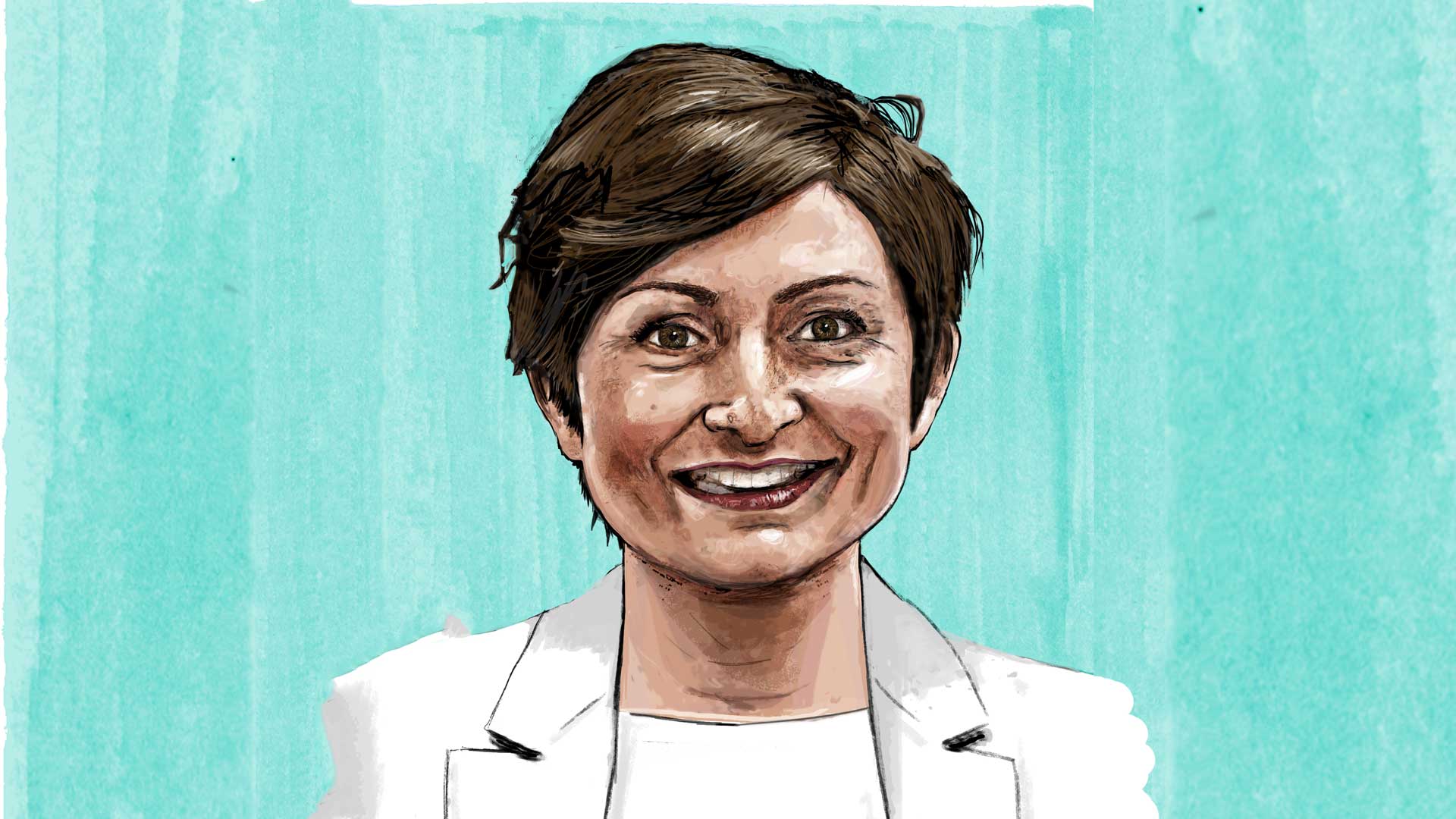
What if you could see the world through a child’s eyes – would you change your behaviour towards them? Helen Costa thinks so. When she co-founded the Cornerstone Partnership, she had one mission: to improve the lives of families touched by the care system. But four years later, her social enterprise has pioneered the country’s first virtual-reality programme that fosters understanding between an adopted child and the adopter, used in more than 40 local authorities.
Costa, 50, worked in pharmaceuticals before landing a job in what was the Department of Trade and Industry. She moved to the London Development Agency to take the reins on science and innovation before joining Boris Johnson’s administration at City Hall to work on social policy – hers is a CV not for the faint of heart. And then she decided to adopt two children.
“I couldn’t go back,” she tells The Big Issue. “I decided that the adoption system needed some reconfiguring and looked into how the government was trying to reform it. But I just thought: ‘I’ll show you how we can do it differently’.”
The Cornerstone Partnership started as a small project, the combination of efforts from Costa and co-founder Claire Brasier (who has since stepped away from the social enterprise).
“We wanted to change the experience of becoming an adopter, then children being placed, then the support that you get – all of those things are core in terms of how good an experience it turns out to be,” Costa explains. “But the process is geared up just for child protection and not to help people become brilliant and comfortable parents to children who are likely to have experienced trauma. I encountered problems at every part of the system.”
After securing funding, Cornerstone officially launched in January 2015. It offered parenting training and support for adopters, plus peer mentoring.