Advertising helps fund Big Issue’s mission to end poverty
Housing

Councils doubt government will hit target of ending rough sleeping by 2027

A think tank survey finds that 61 per cent of local authorities reckon the lofty ambition is unlikely to be met

homelessness and Rough sleeping Alexander Baxevanis

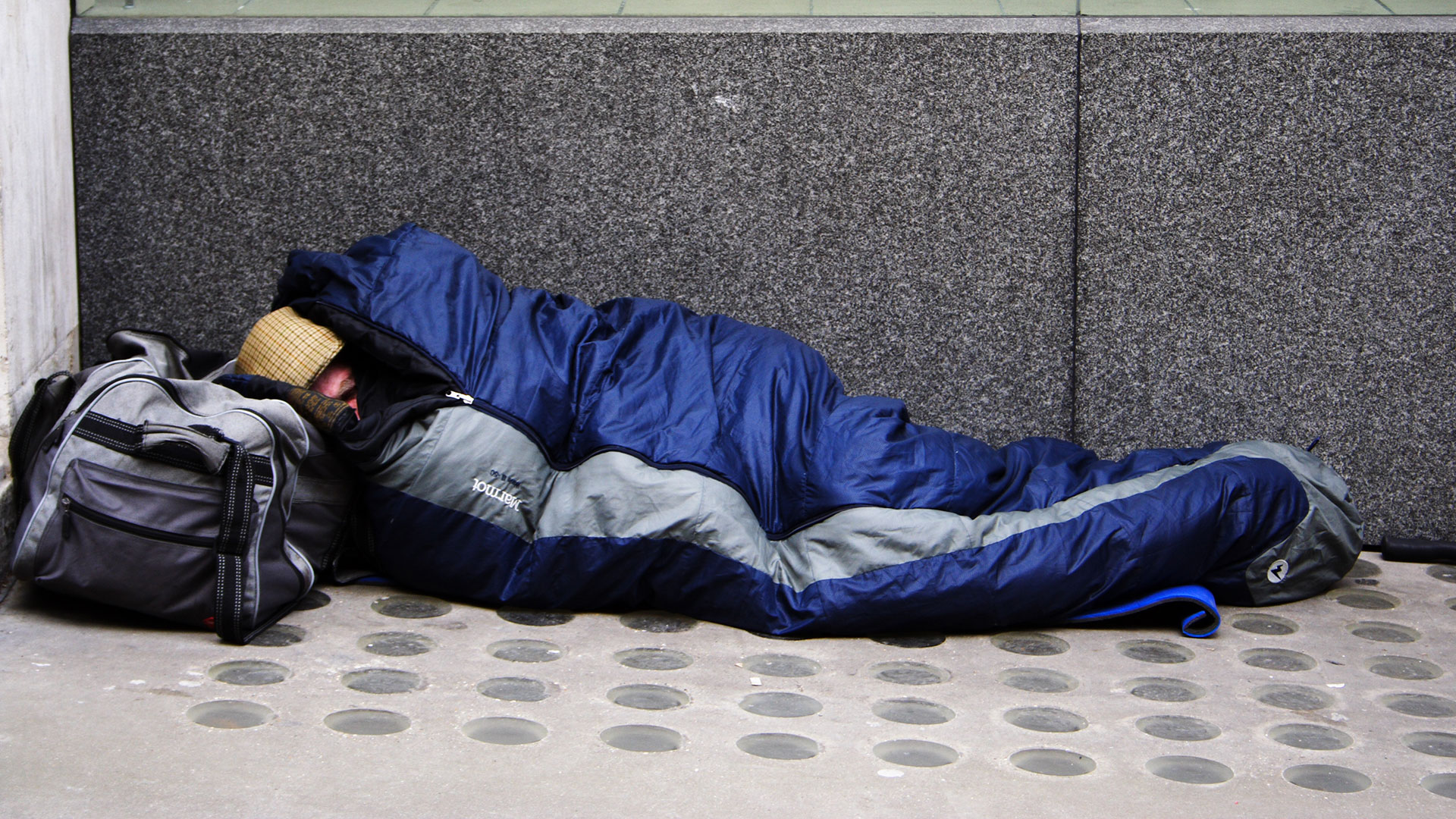
The number of people deemed to be 'living on the streets' in London is now the highest since 2019. Image credit: Alexander Baxevanis/Flickr

The government’s target to eradicate rough sleeping by 2027 will not be met according to over 40 per cent of councils, a new survey finds.

Research by the New Local Government Network [NLGN] think tank showed that councils are far off meeting their 2027 target – particularly in towns and cities.

Amongst predominantly urban councils, 61 per cent think they are unlikely to eradicate rough sleeping by 2027, with 38 per cent saying they are unable to halve it by 2022 citing the negative impact of Universal Credit and the lack of funding as reasons.

Adam Lent, director of the New Local Government Network, said: “The government needs to work closely and urgently with councils to understand what extra resources are needed to meet the targets and how planned welfare reforms can be revised to prevent them contributing to rough sleeping.”

The survey found that 65 percent of councils felt that Universal Credit had led to an increase in homelessness with less than three per cent reporting a decrease.

Advertising helps fund Big Issue’s mission to end poverty

These worrying figures have been released one year after the Homelessness Reduction Act (HRA) came into force.

The HRA placed a new duty on local authorities to prevent homelessness of all families and single people, regardless of priority need, who are eligible for assistance and threatened with homelessness.

To fulfil these duties councils were provided with £72 million from central government, however these latest figures suggest that most councils feel they do not have enough funding.

The survey also asked local authorities to comment on the impact of the HRA, one council responded: “There are long term and systemic issues that have combined to cause the current increase in homelessness. These will be exacerbated if the broader public sector services are not funded properly.”

Other problems the council’s encountered were a lack of suitable temporary accommodation, the inability to build more affordable housing or buy it and recruiting suitably qualified staff.

However, official rough sleeping statistics did report the first fall since 2010 last year but this progress was offset by a significant rise in cities like London and Manchester.

Advertising helps fund Big Issue’s mission to end poverty

Do you know how Big Issue 'really' works?

Watch this simple explanation.

Recommended for you

View all
How World Cup 2026 host cities are offering solutions to homelessness and the housing crisis
AT&T Stadium in Arlington is home of the Dallas Cowboys and will host World Cup 2026 fixtures
World Cup

How World Cup 2026 host cities are offering solutions to homelessness and the housing crisis

Rough sleeping is deadly. We meet the NHS outreach workers trying to save lives on the street
An NHS mural on a pavement
Health

Rough sleeping is deadly. We meet the NHS outreach workers trying to save lives on the street

A new scheme is offering £50,000 to families who don’t buy their home through Right To Buy
Brighton and Hove
Housing

A new scheme is offering £50,000 to families who don’t buy their home through Right To Buy

Two-thirds of renters left waiting for emergency repairs by 'rule-breaking' letting agents
An electrician holding cut wires
Housing

Two-thirds of renters left waiting for emergency repairs by 'rule-breaking' letting agents