Advertising helps fund Big Issue’s mission to end poverty
Housing

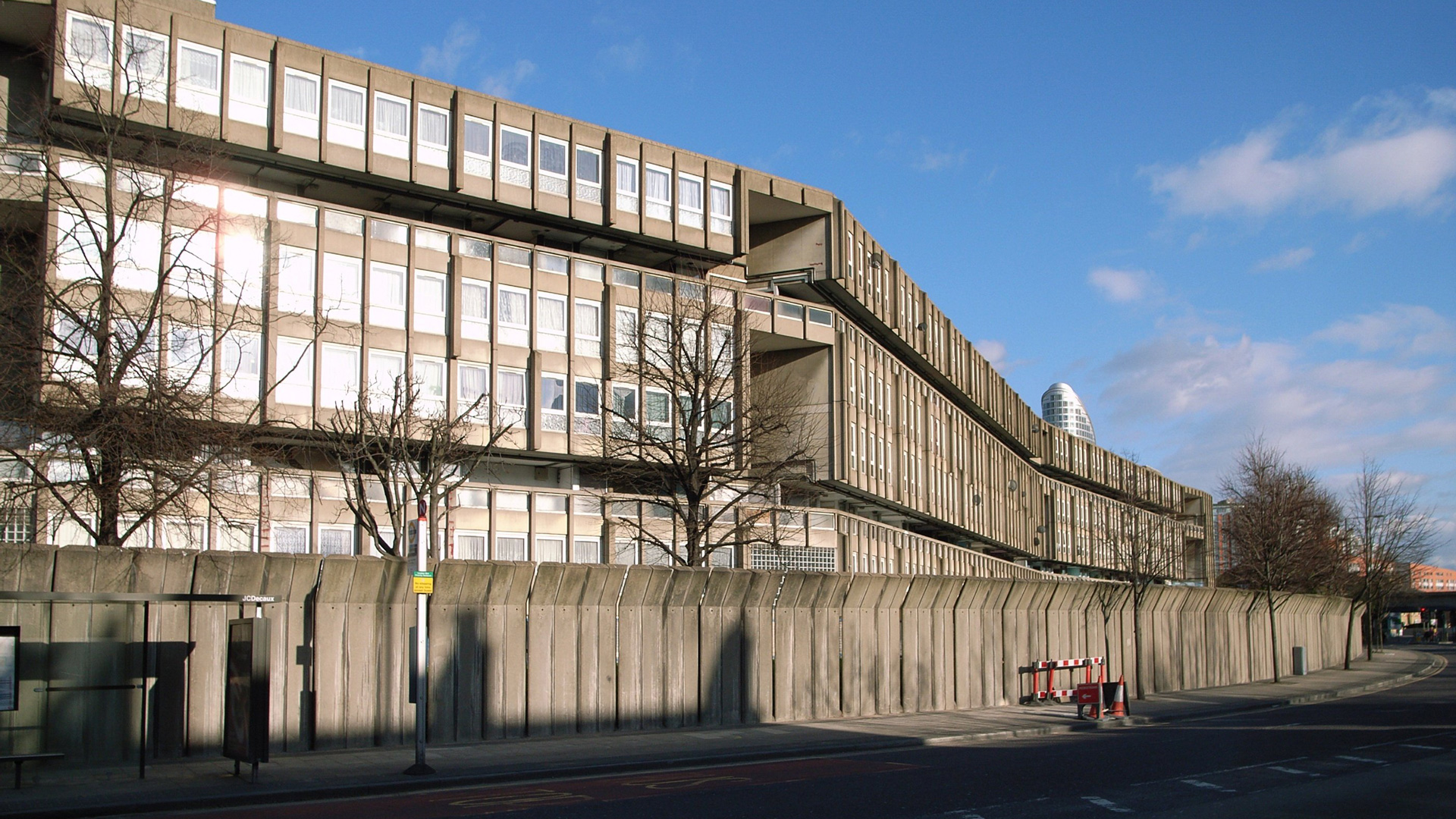
Robin Hood Gardens: Demolition of iconic London housing estate begins

Bulldozers begin razing Robin Hood Gardens, the social housing estate in Poplar set to be replaced by mix of flats for private sale, market and social rents

It was one of the most notable of all of London’s post-war housing estates, a groundbreaking scheme offering working-class people in the east end the chance to live in “streets in the sky.”

But Robin Hood Gardens will soon be no more: the demolition of the estate in Poplar is now under way following a lengthy process of moving tenants and leaseholders out.

Last year The Big Issue detailed the process of clearing the estate of its residents. Some were moved into housing association properties at higher rents, while owner-leaseholders were offered sums that meant they struggled to buy again in the same area.

Photo: @saverobinhood

Now that the bulldozers have moved in on the Anderson House part of the estate, a different kind of community looks set to emerge at the site near Canary Wharf.

Robin Hood Gardens’ replacement, known as Blackwall Reach, will have 1,575 homes across an expanded area, but only 698 of the units (45%) will be “affordable”.

I’d lay money that within 15 years this area will be predominately middle-class

Swan Housing Association, charged with managing much of the regeneration process, told The Big Issue 80% of the affordable homes would be available for social rent, rather than “intermediate” rates. Swan’s development arm Nu living has been selling some of the replacement flats on the private market.


Advertising helps fund Big Issue’s mission to end poverty

One former resident, Darren Pauling, told the magazine: “It being so close to Canary Wharf, I’d lay money that within 15 years this area will be predominately middle-class.”

RobinHoodGardens2
Photo: @saverobinhood

Much of this process has been typical of regeneration schemes happening across London.

But lovers of concrete “brutalism” felt this particular estate was a cut above many of the system-built tower blocks of the 1960s, and merited a second life through refurbishment.

The 20th Century Society and several leading architects campaigned over many years for Robin Hood Gardens’ to be listed.

Simon Smithson, son of the buildings’ architects Alison and Peter Smithson, described its demolition as “an act of vandalism.”

He recently told Dezeen that the decision to get rid of it was “a failure on the part of all those charged with protecting the nation’s architectural heritage.”

Watch the Pride special collection.

Our LGBTQ+ film playlist offers a new and interesting angle on LGBTQ+ love and struggle – giving an international overview by taking us inside some of the most and least sexually liberated countries in the world.  

Sign Up Now
Advertising helps fund Big Issue’s mission to end poverty

Do you know how Big Issue 'really' works?

Watch this simple explanation.

Recommended for you

View all
Thousands of renting households threatened with homelessness through no-fault eviction ahead of ban
renters protest in London with protesters holding placards
Renting

Thousands of renting households threatened with homelessness through no-fault eviction ahead of ban

Renters’ Rights Act: ‘For too long, families have lived with the constant fear of eviction’
Prime minister Keir Starmer
Renting

Renters’ Rights Act: ‘For too long, families have lived with the constant fear of eviction’

Boost for Sadiq Khan as rough sleeping in London plummets: 'Now build on it'
Mayor of London Sadiq Khan
Homelessness

Boost for Sadiq Khan as rough sleeping in London plummets: 'Now build on it'

The number of homeless children in England could fill Wembley Stadium twice: 'A clear failure'
Inside Wembley Stadium
Homelessness

The number of homeless children in England could fill Wembley Stadium twice: 'A clear failure'