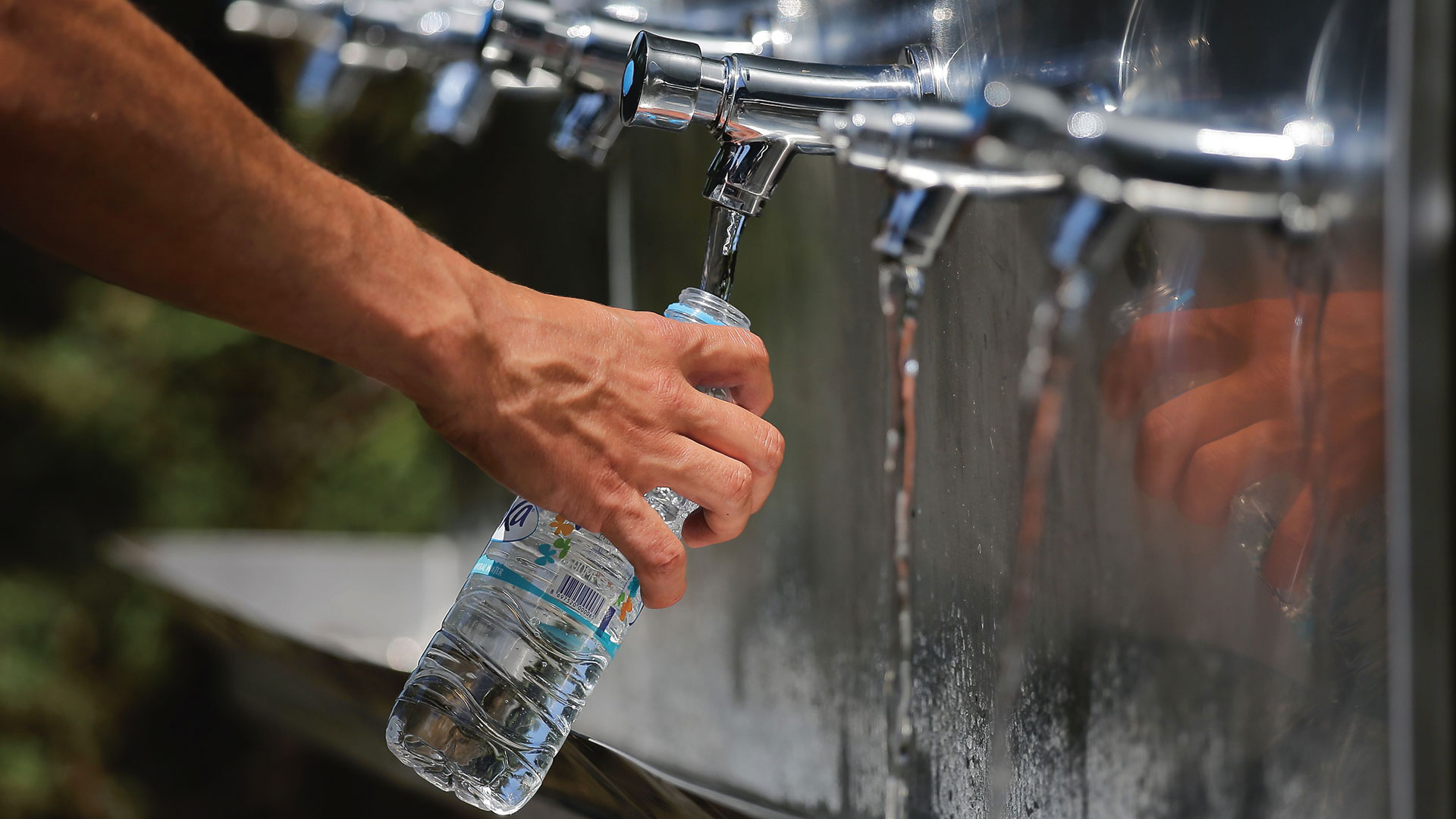
Set up in Bristol in 2015, there are now almost 12,000 businesses found in their national network across England and Scotland. Plans are afoot to take it to Wales.
Industry body Water UK dived in to support Refill earlier this year, campaigning for new refill stations to top up bottles in every major town and city in England by 2021.
“When we first started out, the presentations we gave started with a 15-minute talk explaining why plastic was bad, now that is one slide,” says Refill programme manager Gus Hoyt, ahead of a relaunched app coming next month.
Keep reading the journalism that powers our mission
Register free to continue and learn more about the stories, campaigns and the support we provide, helping people facing poverty across the UK.
“We really do have to thank Sir David Attenborough from the bottom of our hearts. One programme really did change everything overnight and it was amazing to be a part of such a defining moment.
“Now perceptions have changed – to be honest, almost every business that we contact about getting involved says yes, only a tiny percentage say no and that was the case even in the early days because they want to do their bit. Doing something nice is what everyone wants and what we are all about doing really – it’s nice to help people.”
Water for London (WFL) are also aiming to introduce refill stations – on the Transport for London network (TFL).
Anyone who has spent five minutes on the Circle Line this summer and emerged as a sweaty mess will welcome their plans. The grassroots group have already had 16,000 signatures on their petition asking Mayor Sadiq Khan to install new fountains across train, tram, Tube and bus stations as well as along pedestrian and cycling routes.
Khan has made his own moves, installing four drinking fountains across London so far as part of a new pilot scheme, and inviting bids for another 16. The English capital consumes more plastic bottled water per capita than any other region, according to DEFRA, and has the double whammy of also having the worst recycling rates in the UK.
But who will foot the bill for WFL’s plans?
“We’d be asking the mayor to find some money,” says volunteer Ruth Westcott. “We have estimated that it would cost 50p per Londoner, with each fountain costing around £5,000 in around 500 stations. Then we would want Thames Water to pay because the fountains will need to be maintained and cleaned. And finally we would want TFL to chip in. When you think of the money they spend cleaning up litter and recycling, it makes financial sense for them to invest in a system to prevent it.”
She adds: “We are welcoming the 20 fountains that the mayor has proposed but it’s about what happens next and we want to see these fountains in areas where they are really in need – we can’t have rough sleepers buying water.”
Know your rights
The Licensing Act 2003 states that “The responsible person shall ensure that free tap water is provided on request to customers where it is reasonably available” in England and Wales.
The Licensing (Scotland) Act 2005 only differs slightly with “Tap water fit for drinking must be provided free of charge on request”.
This means that you can go into any licensed property and ask for free tap water. As for those without an alcohol licence, there is nothing legally obliging them to provide water for free.
Schools and workplaces must provide drinking water to students and employees at all times under the School Premises (England) Regulations 2012 and Workplace (Health, Safety and Welfare) Regulations 1992 respectively.
Image:DANIEL LEAL-OLIVAS/AFP/Getty Images