The Welfare State, from cradle to grave, was coming to our rescue. Soon we would be educated, well-fed and healthy; and well-housed and well-clothed to boot.
Alas, on my actual birthday (as if to suggest there were other problems in the world), a man who had wandered Notting Hill and Bayswater 60 years before me – Mohandas Gandhi – was murdered in distant Delhi, in India. The result, it would seem, was a post-war Great Britain trying to shrug off much of its imperial woes to become (at last!) a democratic nation, and not the world’s policeman (which it had been up until a few decades before).
Yet one of the sons of this fading empire, who preached a better world, had been slain just as that bitter 1948 had begun.
Keep reading the journalism that powers our mission
Register free to continue and learn more about the stories, campaigns and the support we provide, helping people facing poverty across the UK.
Our rats, lice, mice, shared toilets and rancid poverty didn’t change suddenly though. How could they? Our little squares of News of the World newspaper, cut up to wipe our rears, didn’t magic into soft, consumeristic, fluffy two-ply. Nourishing food didn’t appear on our plates.
Summer came late, and seemed eternally postponed. And the old class system with its deference to the middle and upper classes, and their reinforcers, the police, seemed an unchangeable reality.
Yet in that summer of 1948, the Welfare State became a reality. It was no longer a promised land. And the finest part was to be the new National Health Service. Finally, we were to leave behind the sense that if you were poor, you were on your own. A more loving version of George Orwell’s Big Brother was going to make sure we didn’t ‘wither on the vine of life’, simply because we were born into the wrong class.
The trappings of life enjoyed by so many middle-class people were to be shared amongst us all. And vast tranches of the working classes – through a clever process of siphoning off the ‘brightest and best’ for a grammar-school education – ensured more social mobility!
My own memories of the Welfare State were partial. The cod liver oil pills and milk in school began in 1951, when I was five. The constant exercises in the playground and in the school hall. The regular health check-ups.
When our family (under the weight of too many mouths to feed, stuck in a marketplace where my father’s skills weren’t valued) collapsed, it was the Catholic Church that took us into care. It was not the British State, as it later would, which came to our rescue.
The welfare-ism seemed to be about prevention. We seemed to hang on in there in poverty; or at least until the end of my parents’ lives, a few decades later.
But the foundations of a system that wasn’t just more of the same had been laid, discontinuing a system that had failed to cater for the poorest, and only enabled the well-placed to get on in life.
The work began when was I was a babe. It is not yet over. Perhaps we might need a reinvention?
Certainly, we don’t need more of the arbitrary, throw-it-in-your-face, ‘sink-or-swim’ thinking that the Welfare State tried to replace; though there’s evidence there seems to be more of this in the UK today.
The greatest defence we can make of the Welfare State? Reinvent it.
Don’t whittle it away.
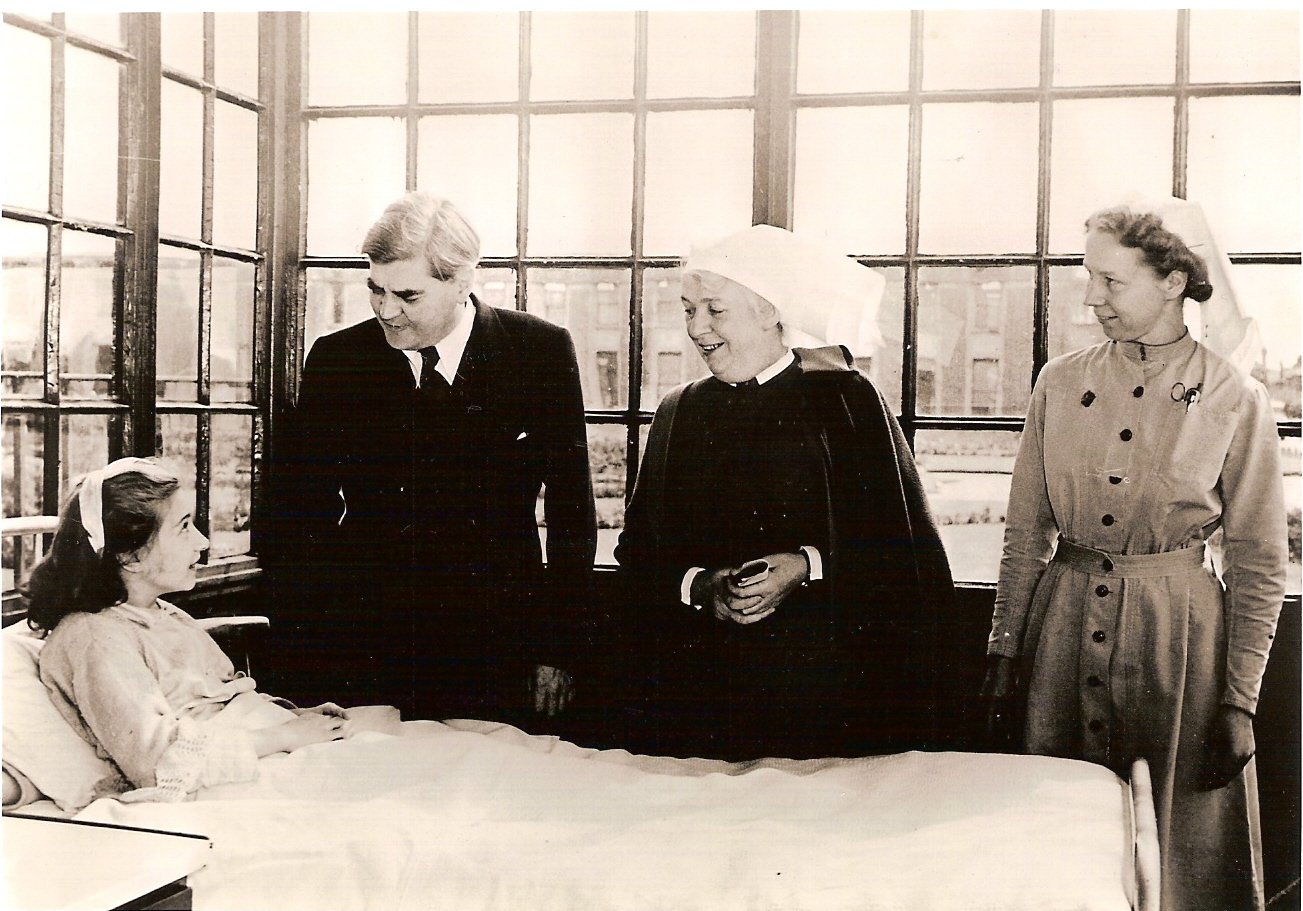
Image: Anenurin Bevan, Minister of Health, on the first day of the National Health Service, 5 July 1948. Wikimedia Commons