Advertising helps fund Big Issue’s mission to end poverty
Social Justice

Return to normality sparks ‘compassion fatigue’ fears for foodbanks

Supermarket donations are drying up, people who volunteered while on furlough are going back to work, and local authorities are winding down food aid projects. But demand for 'pop-up' foodbanks created during the Covid-19 crisis shows no sign of decreasing

Food bank Trussell Trust

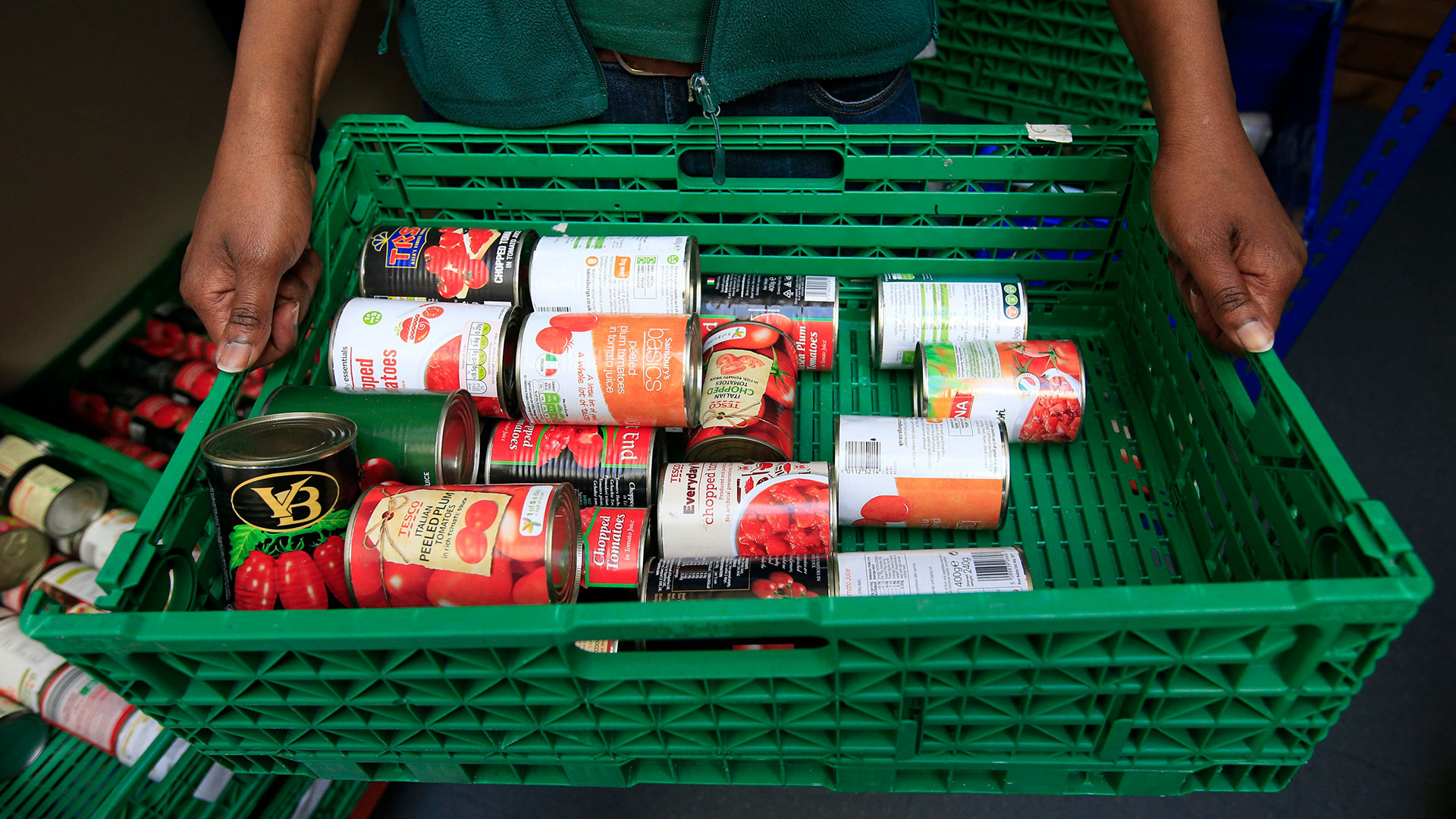
The Covid-19 lockdown inspired an outpouring of goodwill across the UK. Now foodbanks set up to fight pandemic hunger are worried that they’re being left behind.

Since March, 144 food aid organisations have joined the Independent Food Aid Network (IFAN) – with a third of those created in response to Covid-19 poverty.

The Food Standards Agency found that the crisis had tipped households which were ‘just managing’ to make ends meet into food insecurity, with up to one in ten people forced to turn to foodbanks in June.

But as restrictions ease and financial hardship starts to impact more households, foodbanks are beginning to see support dry up.

IFAN reported that a drop in supermarket donations, furloughed volunteers returning to work and local authorities winding up food aid projects signalled a problem for the organisations providing immediate support to families in need.

They saw a 148 per cent increase in the need for emergency food parcels between February and May this year, triggering a network of ‘pop-up’ foodbanks – but they are seeing no sign of demand decreasing despite being set up as temporary measures.


Advertising helps fund Big Issue’s mission to end poverty

And they’re calling for the Government to “do more than temporarily mitigate food poverty” through the normalisation of foodbanks – by committing to cash grants for people on low incomes as a long-term solution rather than making them dependent on charity for food.

Foodbanks are preparing for demand to increase in the coming months after the UK plunged into its deepest recession on record and a quarter of food parcel recipients told the Office for National Statistics they were in need after losing their job during the pandemic.

Sabine Goodwin, IFAN coordinator and Big Issue Changemaker, told us: “Covid-19 has proved, once again, that relying on food banks to fill the holes in our broken safety net is both unsustainable and inappropriate.

“As compassion fatigue sets in, former donors start to need food banks, supermarkets withdraw support, any Government funding runs dry and deep recession resets communities’ capacity to help, food bank teams are running out of ways to prepare for the inevitable.

“The Government cannot fail to act and provide decent incomes and adequate benefit payments for the millions of people impacted by COVID-19 job losses and the austerity-driven poverty that preceded them.”

Advertising helps fund Big Issue’s mission to end poverty

Do you know how Big Issue 'really' works?

Watch this simple explanation.

Recommended for you

View all
How Heart n Soul makes change: 'It’s about not underestimating the potential of anybody'
A performance from Big Issue Changemaker Heart n Soul
Social Justice

How Heart n Soul makes change: 'It’s about not underestimating the potential of anybody'

‘Grotesque’ council tax system set for biggest change in 30 years. Here's what it means for you
Martin Lewis
Money

‘Grotesque’ council tax system set for biggest change in 30 years. Here's what it means for you

Period poverty forces UK women to use newspaper instead of sanitary products: 'It's unacceptable'
Sanitary towels
Period poverty

Period poverty forces UK women to use newspaper instead of sanitary products: 'It's unacceptable'

Wales homeless football team faces race against time to survive: ‘We’re at breaking point’
Wayne Ellaway Homeless World Cup
Homelessness

Wales homeless football team faces race against time to survive: ‘We’re at breaking point’