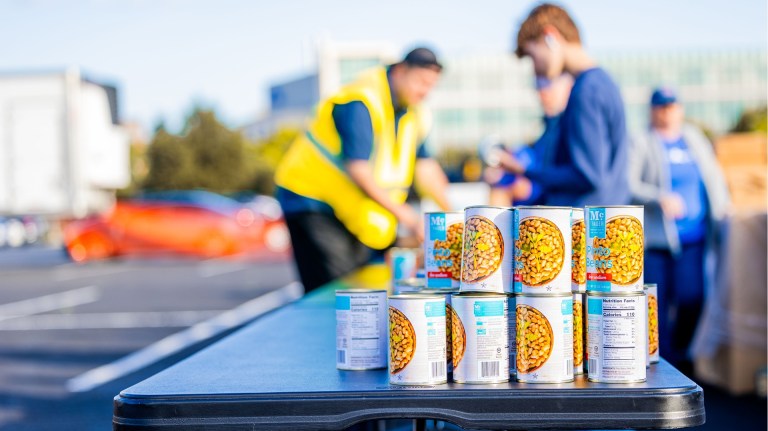
Of 430 families surveyed, 88 per cent said the two-child limit had made it difficult for them to afford food.
Lisa, who has four children and a husband in full-time work, said: “I don’t buy foods that I would like to buy, just food that’s close to nothing. I would have liked to get them fruit. I can’t remember the last time I made a fresh dinner, it’s all stuff I’ve got in my freezer.”
Ministers previously said child tax credit reforms would teach parents that “children cost money”.
Keep reading the journalism that powers our mission
Register free to continue and learn more about the stories, campaigns and the support we provide, helping people facing poverty across the UK.
The policy is hitting refugee families hard too, who largely arrive in the UK with nothing. It not only makes it difficult for parents to provide the basics for their children as they rebuild their lives but limits refugee children’s access to activities that could help them integrate and build social connections in their communities.
One couple told the Refugee Council: “We just try to pay the bills and buy food because that’s all we can afford, that’s what we have to prioritise.”
The family got rid of their TV to cut costs and, since having their youngest child, had to withdraw their eldest son from the football club he used to go to every Saturday.
CPAG chief executive Alison Garnham said: “Here in the UK, we believe that every child should have the best start in life. This means access to free health care, a good education, and a childhood free from poverty.
“We wouldn’t turn away a sick child from our hospitals or stop them going to school and yet the two-child limit denies families the support they need from our social security system when they experience tough times, trapping kids in poverty.
“We need to help children thrive, by supporting parents to raise happy, healthy children – especially during the first years of a child’s life, when foundations are laid for their future development. It’s right to support families when they need it most. Our government should lift the two-child limit and help all children to thrive.”
Interviews carried out by Women’s Aid suggested the policy traps women and their children in abusive relationships by increasing the financial risk of leaving. One survivor of domestic abuse said she felt forced to return to her abuser because the third child she was carrying wouldn’t be eligible for a child allowance.
And under the two-child limit, a woman who becomes pregnant due to rape is required to tell authorities that the conception was non-consensual in order to get an exception.
The report was published as more than fifty organisations – including the Joseph Rowntree Foundation, Trussell Trust, Royal College of Paediatrics and British Pregnancy Advisory Service – launched a joint campaign to abolish the policy for good.
Margaret Greenwood, Labour’s shadow work and pensions secretary, said: “The government must listen to the damning evidence in this report. It brings home the impact of this cruel policy on families forced to cut back on essentials and pushed into poverty as a result.
“The two-child limit means children missing out not just on toys or school trips, but meals and new clothes when they need them. It sends a message that one child matters more than another simply because of the order in which they are born.”