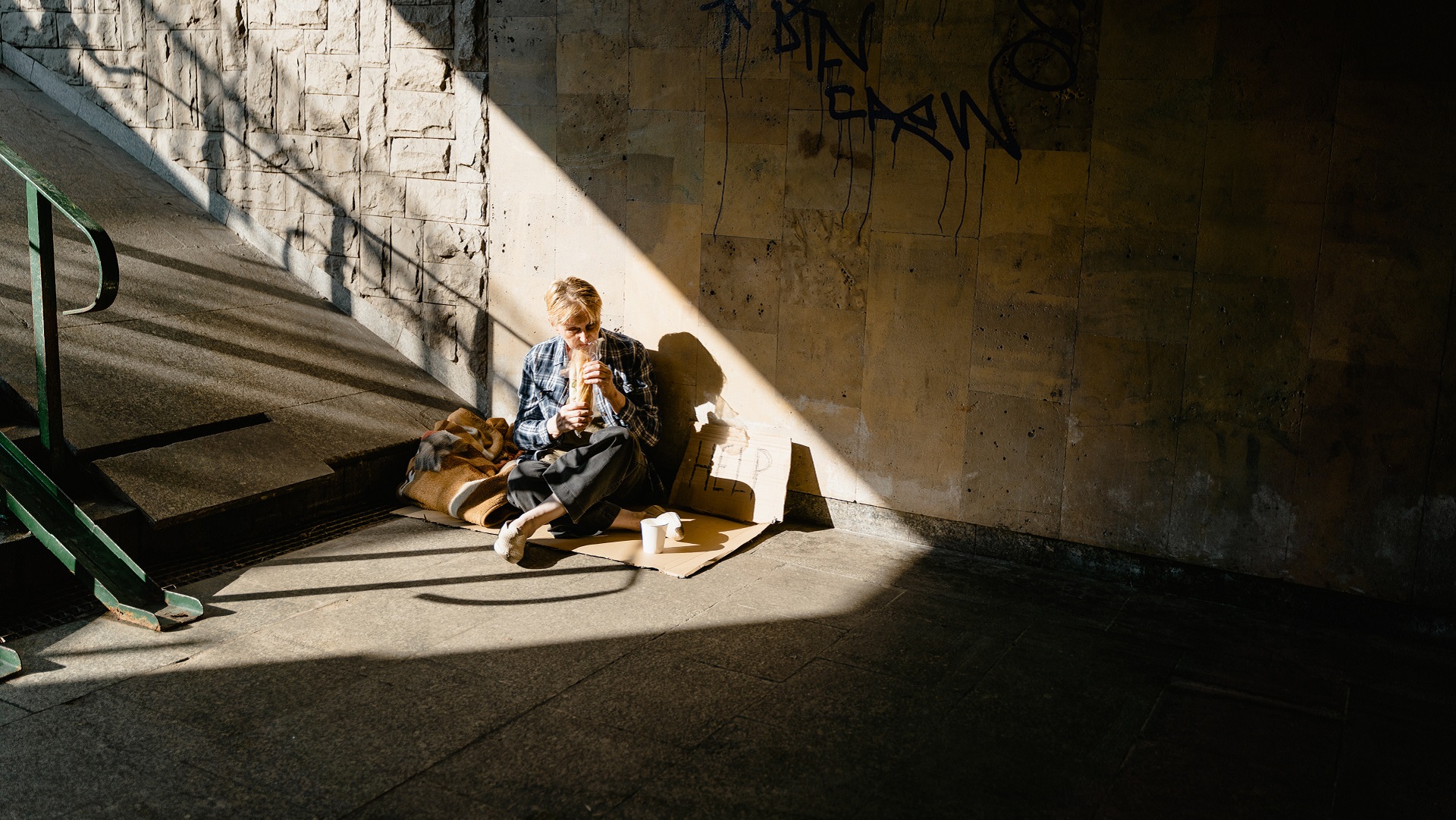
New statutory homelessness statistics for England show how homelessness has continued to be a pressing issue despite the Everyone In scheme which saw more than 37,000 rough sleepers protected in emergency accommodation during the pandemic.
The scheme is one of the main reasons behind an almost 40 per cent rise in the 11,580 single households who were assessed as rough sleeping when they were approached by councils when compared to 2019/20 figures.
The UK government also introduced an eviction ban between March and September 2020 as well as further protections against bailiff enforcement to protect against evictions in later lockdowns.
Continue reading for free
Registration is free and takes less than 30 seconds.
Our supporters make Big Issue’s work possible. Join us to see the impact we’re having together and discover more ways to help people facing poverty access income, opportunity and support.
This action saw the number of households requiring council support for a ‘no-fault eviction’ – when a landlord can evict a tenant without giving a reason – plunge by 50 per cent to 9,000 cases. Theresa May’s government pledged to axe the section 21 notices – as they are also known – and The Big Issue’s Stop Mass Homelessness campaign has called on the current administration to suspend them.
Despite the fall in households facing a ‘no-fault eviction’, the loss of a private rented property home remained the most common reason for the threat of homelessness with 13,360 households requiring preventative action from councils to keep their home.
Advertising helps fund Big Issue’s mission to end poverty
However, soaring domestic abuse during the pandemic saw the issue become the most common reason for the loss of a settled home. More than 15,000 households with children faced homelessness due to domestic abuse – up 14 per cent on 2019-20.
Lockdowns also saw a surge in households pushed into homelessness because friends or family could no longer accommodate them, up 17 per cent on the previous year to 86,810 households.
Jon Sparkes, chief executive of Crisis, said: “These statistics make painfully clear that you cannot free people from the cycle of homelessness without a proper home and crucially, the support they need to keep it long term.
“Half of the households forced into or put at risk of homelessness in the last year had one or more support need, which are harder to resolve without a stable home. For many people with multiple issues relating to mental health, trauma or addiction, short-term accommodation cannot prevent them being forced back into rough sleeping.
“We urgently need a national Housing First scheme that delivers them long-term housing, alongside tailored, unconditional support to rebuild their lives and leave homelessness behind for good. “
Meanwhile, 1.6 million people who remain on furlough in the UK before the scheme ends later this month are also at risk of homelessness.
Advertising helps fund Big Issue’s mission to end poverty
The latest HM Revenue and Customs figures showed fewer 340,000 jobs were being supported by the scheme on July 31 than the previous month.
Hundreds of thousands of people are at risk of losing their homes right now. One UK household is being made homeless every three-and-a-half hours.
You can help stop a potential avalanche of homelessness by joining The Big Issue’s Stop Mass Homelessness campaign. Here’s how: