Advertising helps fund Big Issue’s mission to end poverty
Life

How to come out from behind the mask

Masking can be useful, and often necessary. But sometimes it's time to take off the mask and remember who you are underneath

Everybody wears a mask, metaphorically speaking. Our daily lives do not allow us to express our every thought or emotion, and more often than not, nor would we want to. Instead, we present a version of ourselves to the people we interact with; often it’s a different version presented to our friends, co-workers and families.

In this way, masking our true selves is not only useful, it is necessary for making our way through life when we perform multiple roles; parent, professional, confidante, lover. The problems start when we find ourselves hiding from the world, presenting a version of ourselves that becomes so unfamiliar, we no longer recognise who we really are. The concept of ‘impostor syndrome’ – when someone feels like a fraud in their own lives, unable to accept praise or the position they’ve earned – can be seen as a fear of the mask slipping and exposing one as ‘a fraud’.

The more stressful the situation, the more pressure there is to cope and hide behind a façade of ‘just getting on with it’.

So how can masks that conceal be used to reveal complicated emotional truths?

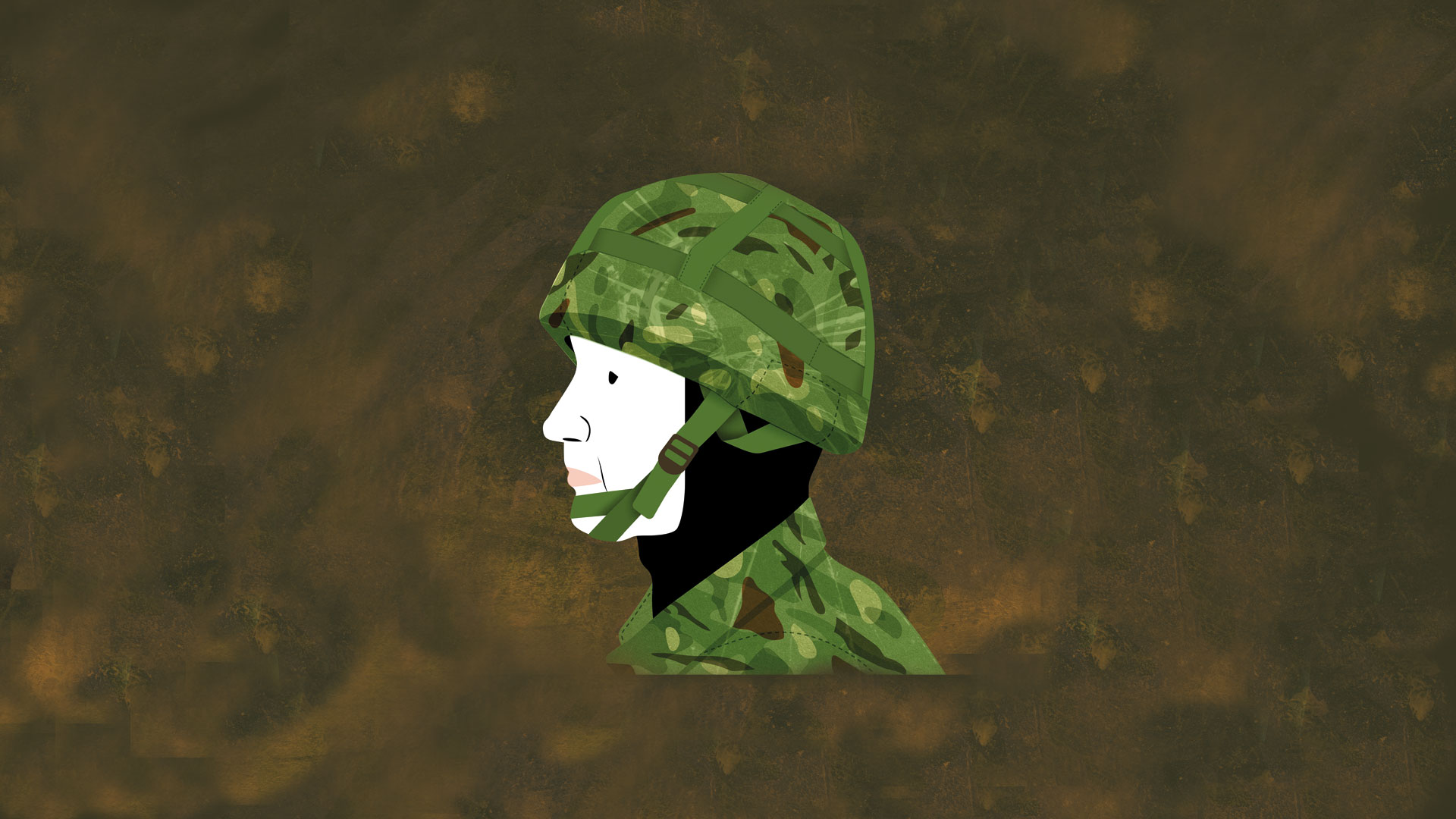
Our productions at Vamos Theatre are performed by actors in full mask, without words or even facial expressions. Our new production, A Brave Face, explores ­post-traumatic stress, an unseen and often unrecognised injury of war, and the impact it can have on even the closest of families.
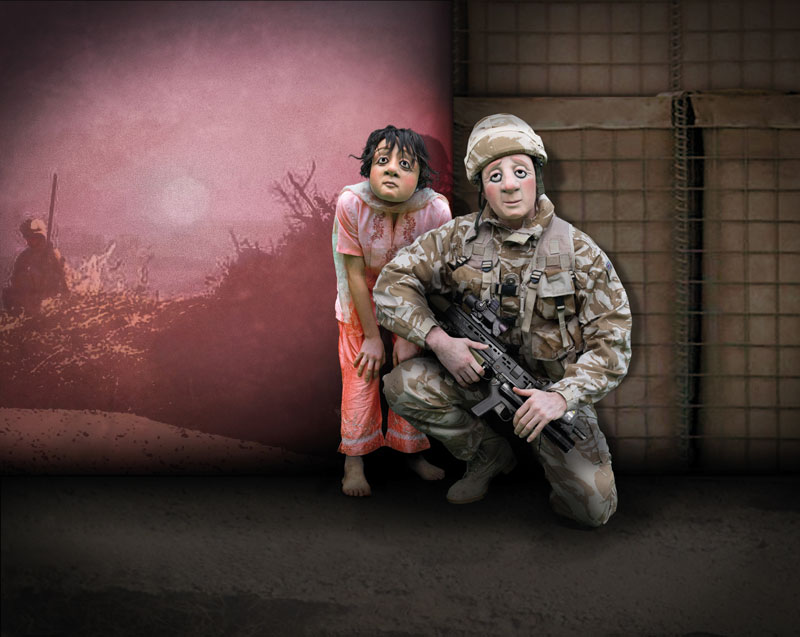
Pause_masks_1291_embed
A Brave Face is at London International Mime Festival, February 1-3 mimelondon.com

When wearing a full mask you can’t speak, so all acting is done non-verbally – think of black-and-white silent movies.


Advertising helps fund Big Issue’s mission to end poverty

We show emotion through the quality of our action and gesture, our pace, through where we hold tension, through our rhythm and breath. Full mask theatre is performed with physical precision, and is both detailed and economic. It cuts through to exactly what needs to be told, without words. But we have scripts, very different from those conventionally used in theatre. The ‘lines’ that mask actors use are spoken internally.

Working without words creates a personal and immediate kind of communication in which difficult issues can be more powerfully experienced. The audience has to work hard to interpret and in doing so they engage more deeply, connecting usually with emotional empathy.

We created A Brave Face from two years of research with ­ex- and serving soldiers, families and health professionals. How does war break people? How can we understand this better and take a responsibility for how our ex- military are treated back home? How can we persuade those in power that the system needs changing and better resourcing?

Continue reading for free

Registration is free and takes less than 30 seconds.

Our supporters make Big Issue’s work possible. Join us to see the impact we’re having together and discover more ways to help people facing poverty access income, opportunity and support.

Asking for help is the hardest part. People suffer for years, or decades, before coming forward. And they often don’t talk about it, which is even more reason to tell this story without words.

Advertising helps fund Big Issue’s mission to end poverty

Do you know how Big Issue 'really' works?

Watch this simple explanation.

Recommended for you

View all
Hip hop star Loyle Carner is cooking up solutions for young people with ADHD at Chilli Con Carner
Loyle Carner with people from his cooking school Chilli Con Carner
Neurodiversity

Hip hop star Loyle Carner is cooking up solutions for young people with ADHD at Chilli Con Carner

'What are data centres actually for? Did anyone actually ask us if we want AI?'
Wires connecting to a server
Letters

'What are data centres actually for? Did anyone actually ask us if we want AI?'

The Edinburgh tour delivered by a former homeless woman that goes to the city's darkest corners
An Invisible Cities tour in Edinburgh
Travel

The Edinburgh tour delivered by a former homeless woman that goes to the city's darkest corners

Migrants are twice as likely to work nights than Brits. The care system would collapse without them
A clock with a moon and clouds to illustrate night carers
Essay

Migrants are twice as likely to work nights than Brits. The care system would collapse without them