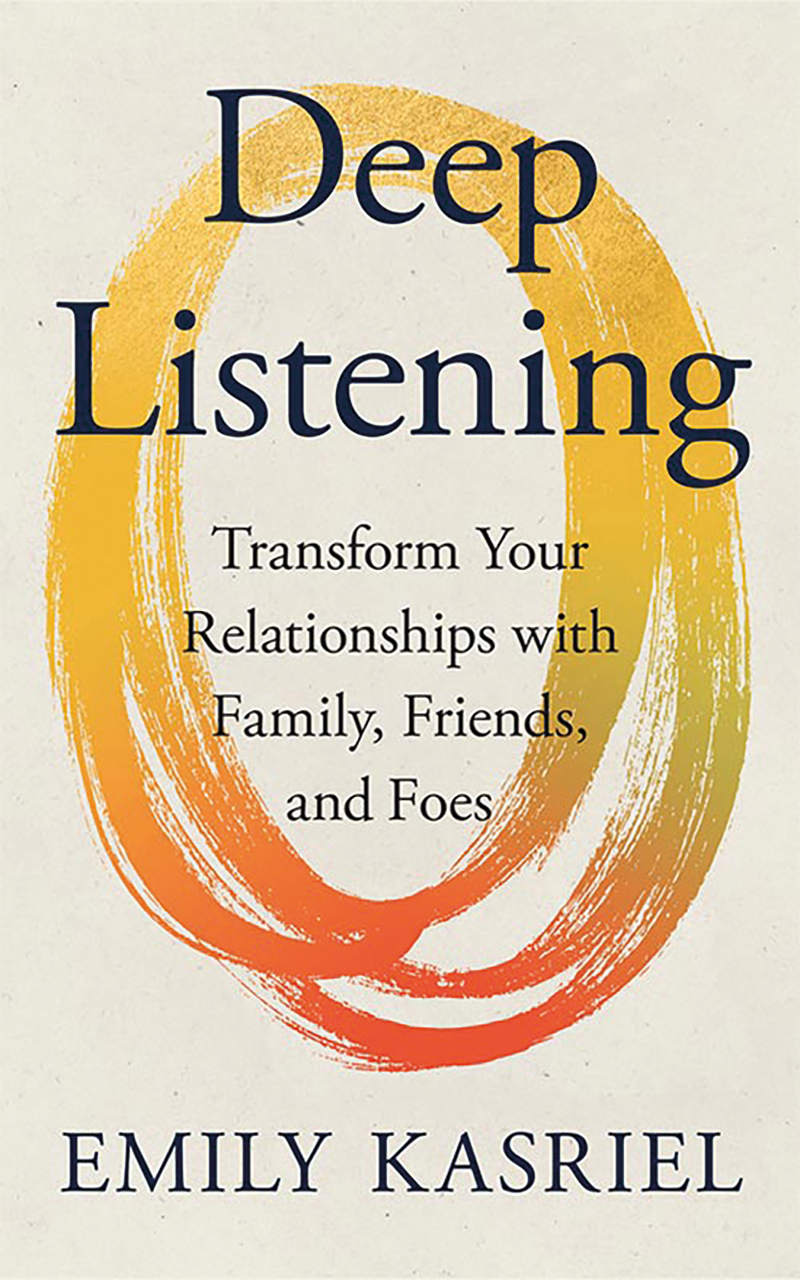
Deep listening is a radical act of empathy. It’s not about passive silence or nodding along. It’s about creating space for others to unfold their truths, even – especially – when their views clash with ours.
Over a number of years, I’ve refined this approach. Here are the eight steps that can transform how you listen:
1. Create space
Begin by designing an environment where your speaker feels safe and comfortable. This means minimising distractions (putting phones away) and choosing settings that signal respect. When I listened to my friend Sofiya, a Russian Ukrainian émigré, we met in a quiet corner of a London hotel. The plush seating and lack of interruptions let her voice fears about exile she’d never shared before. Psychological safety is key: assure your speaker they won’t be judged or interrupted.
2. Listen to yourself first
Your inner noise – biases, anxieties, or the urge to problem-solve – can hijack a conversation. Before engaging, pause. Acknowledge your “family of shadows”, the parts of yourself that might resist openness to others. I’ve learned that self-awareness is a foundation of listening well.
3. Be present
True presence is rare. Our brains process words faster than they’re spoken, leaving room for distraction. Mandela exemplified this: he focused entirely on each soldier, his attention unbroken. Practise grounding techniques – a breath, a sip of tea – to anchor yourself.
4. Be curious
Approach conversations with humility. You don’t already know their story. When Brazilian human rights lawyer Ana Luiza argued with her conservative stepfather about politics, curiosity replaced combat. By asking, ‘How did you reach that view?’ they uncovered shared values beneath their differences.
5. Hold the gaze
Eye contact signals respect. In my global project with 1,000 young people from 119 countries, participants told me that a steady, warm gaze built trust across cultural chasms. Avoid a hard stare, and let your curiosity, empathy and respect flow through your eyes.
6. Hold the silence
Pauses are where thinking deepens. When Sofiya hesitated, describing her dual identity as Russian and Ukrainian, the silence gave her space. Resist the urge to fill quiet; just let it breathe.
7. Reflect back
Reflect back the core of what you’ve heard to check understanding – the words, what’s unspoken between them, and the emotions. After Sofiya spoke, I echoed her thoughts: ‘You’re excited to live here but grieve the homes you’ve lost.’ This isn’t parroting – it’s showing you value their story, and checking that you’ve understood, before going deeper.
8. Go deeper
Listen for the unspoken: contradictions, hopes, fears and values. In Latvia, I trained communities divided by Russia’s war in Ukraine. Through deep listening to each other, Latvian and Russian speakers uncovered shared fears, softening their mutual suspicion.
Why this matters now
We live in a world where shouting often drowns out dialogue. Yet in my work with the BBC’s Crossing Divides season I’ve seen how deep listening fosters collaboration. A factory study found that teams trained to listen saw productivity soar. Nurses were less likely to be insulted or suffer humiliation in a positive listening environment.
Deep listening isn’t about agreement – it’s about dignity. It’s recognising the humanity in someone even when their ideas repel you. As climate negotiator Christiana Figueres told me, listening “heart-to-heart” was key to the Paris Agreement. Start small. Next important conversation, pause. Breathe. Ask, ‘Tell me more.’ You might just bridge a divide you thought was uncrossable.
Deep Listening by Emily Kasriel is out now (Thorsons, £16.99). You can buy it from the Big Issue shop on bookshop.org, which helps to support Big Issue and independent bookshops.
Do you have a story to tell or opinions to share about this? Get in touch and tell us more. Big Issue exists to give homeless and marginalised people the opportunity to earn an income. To support our work buy a copy of the magazine or get the app from the App Store or Google Play.