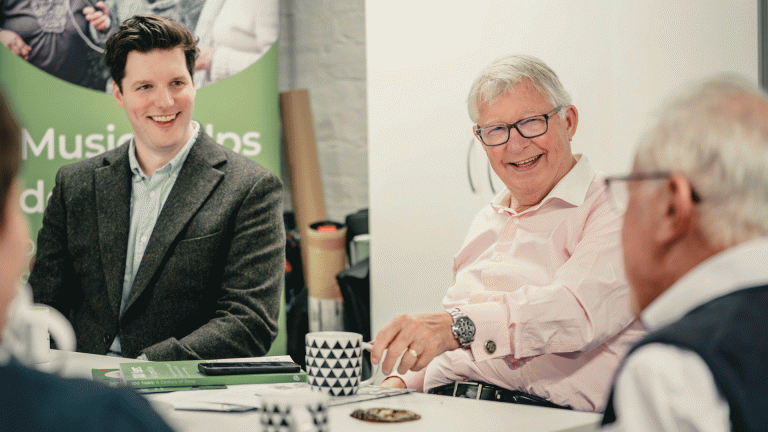
“A lot of the photographs that did survive were from people who came out [of Nazi-occupied territories] in 1937, ’38, ’39, when they were still able to export or take some things with them,” says archivist Hari Jonkers. Others were hidden by friends, employees or neighbours and reunited with their owners or their relatives after the end of the war.
By focusing on personal stories, the exhibition emphasises the impact of atrocities on an individual human level, helping visitors to make connections with current events. “To me, it’s all about the actual person, the actual story you can tell about them, and seeing the actual things,” Jonkers says.
One of the survivors featured is Iby Knill, author of the memoir The Woman with Nine Lives, which encapsulates Holocaust Centre North’s future focus. “That was a reference to this: yes, I’m a death march survivor, but I’m also a translator [and] a creative,” says CEO Dr Alessandro Bucci.
Keep reading the journalism that powers our mission
Register free to continue and learn more about the stories, campaigns and the support we provide, helping people facing poverty across the UK.
Holocaust Centre North’s staff also think about “how we approach the future when survivors aren’t really around anymore and the Holocaust moves from living memory to the past,” says development coordinator Andrew Key. “Once the presence of those survivors has gone, we have to imagine their experience, and use this imaginative power to try to understand and empathise.”
Alongside the learning programmes, they have found a solution in Memorial Gestures: a series of commissioned creative responses from resident artists.
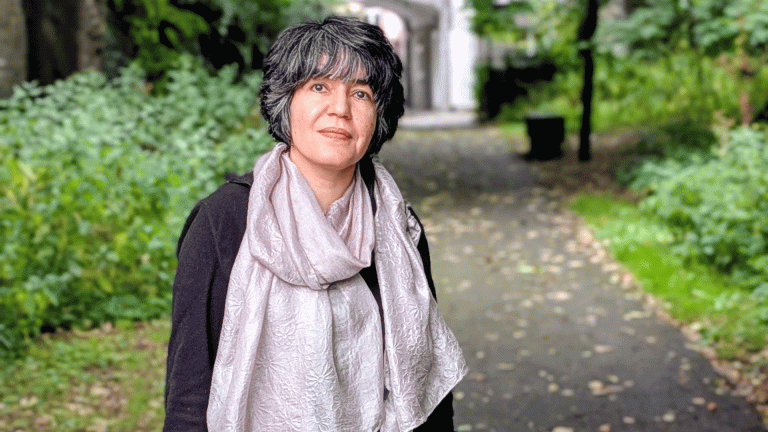
Contributor Laura Fisher transformed objects such as Red Cross letters and telegrams into blankets, allowing survivors and their relatives to interact physically with their history. “People engaged really strongly with these,” says Key.
“A lot of the survivors worked in textiles,” Fisher adds. “Many of them were very involved in textiles before they emigrated to the UK; many after, too, in very different capacities. When Holocaust refugees came to England, they were only offered work in either the coalmines, textile service or, for women, domestic service, so a lot of people took those jobs.”
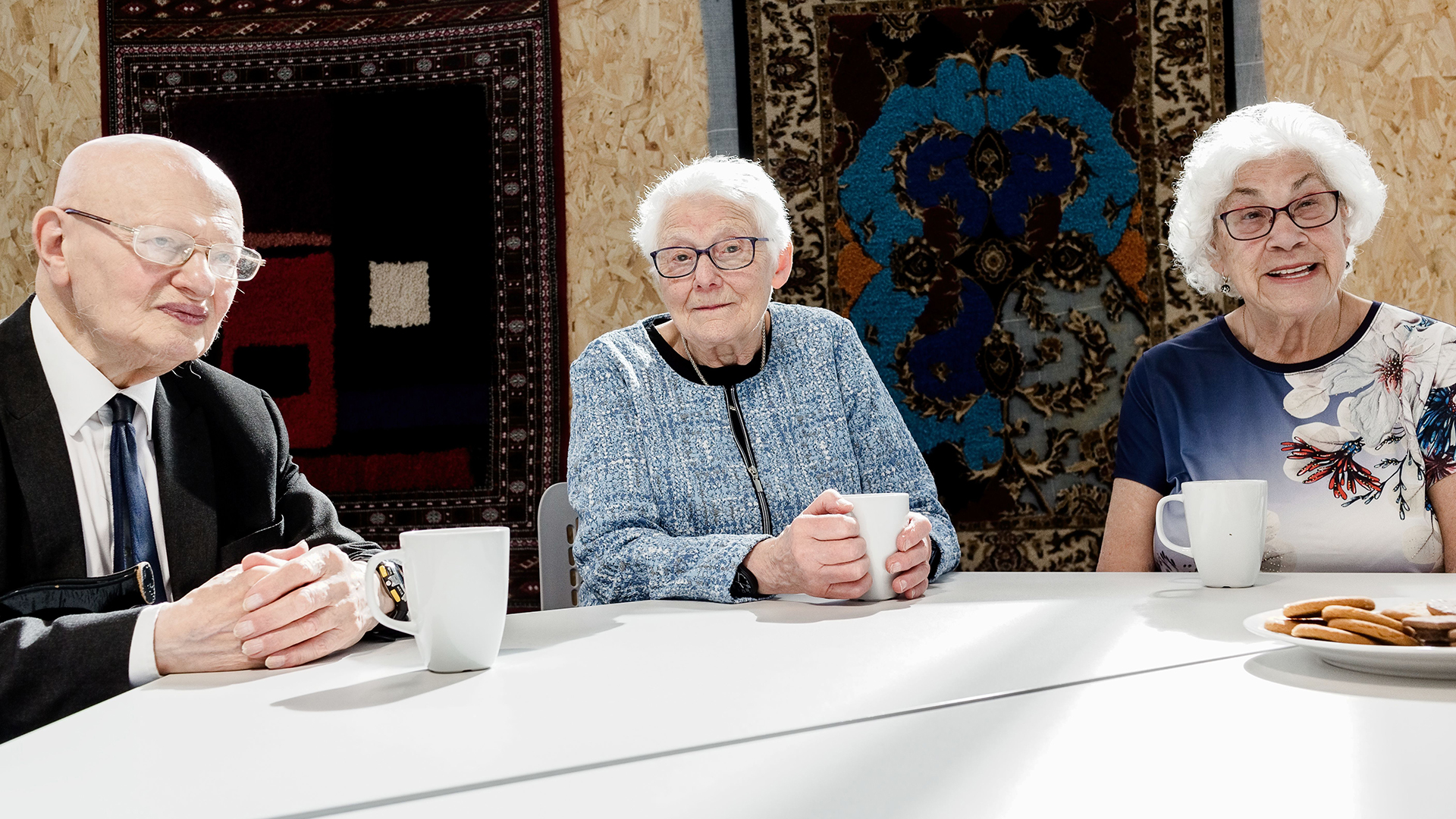
The Big Issue visited on the first day of Chanukah, for which Holocaust Centre North hosted Kirklees’ first community candle lighting in 60 years, attended by Trude Silman – one of the 16 survivors featured in the exhibition and the former chair of the Holocaust Survivors’ Friendship Association.
“It’s wonderful for me to know that we have an educational unit with a memorial,” says Trude Silman, who describes Holocaust Centre North as “an asset” to the University of Huddersfield.
After fleeing Czechoslovakia in 1939, aged 10, Silman built a new life in England, later winning a scholarship to study biochemistry at Leeds University, making her one of the first women, and Leeds residents, to do so. The contribution of people like Trude resulted in Holocaust Centre North receiving the King’s Award for Voluntary Service at the end of last year.
Memorial days typically prompt a backwards look at our history, but as the world faces increasing division and conflict, the work of organisations like Holocaust Centre North is integral in ensuring that we look to the present and the future, too.
To learn more, visit hcn.org.uk.