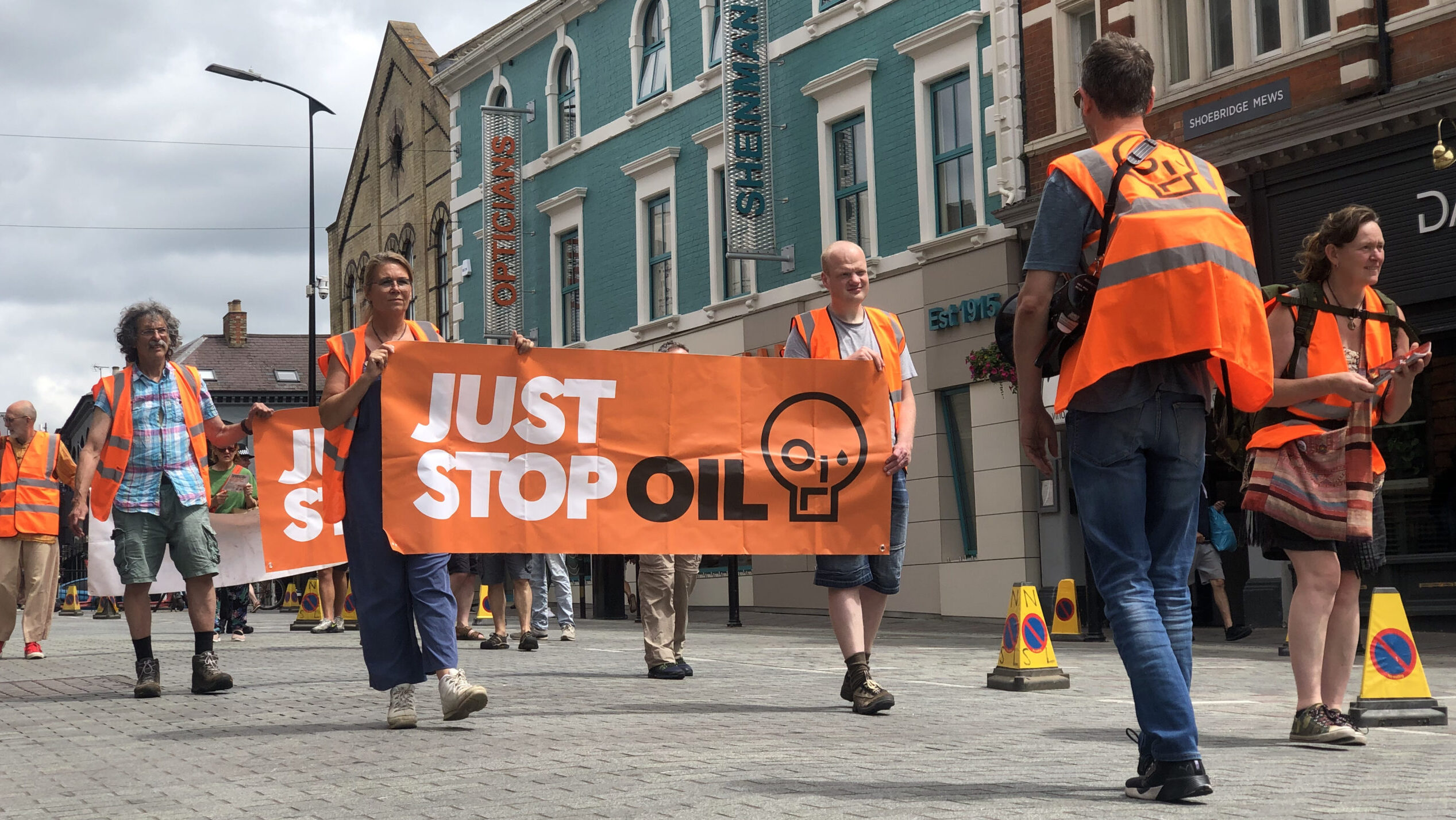
Think back 18 months or so ago, and Just Stop Oil were everywhere. Radio hosts argued about growing concrete, roads were blocked and the orange t-shirt became a must-have stag do accessory.
At the beginning of 2025, with climate news gloomier than ever, the group remains active. Last week saw a stunned Sigourney Weaver escorted off stage at a London theatre after two Just Stop Oil supporters disrupted a performance of The Tempest. The spray-painting of Charles Darwin’s grave generated mild outrage. But it’s hard to escape the feeling: where have all the climate activists gone?
Donald Trump’s presidency and the Gaza ceasefire could see a renewed spate of climate protests in 2025, as activists step back from disruption to find a new way to get the public engaged in the climate crisis, experts tell Big Issue.
Political attention has dwindled from Just Stop Oil, the most high-profile environmental campaign group to spring up since the pandemic. MPs have all-but stopped mentioning the group in parliament, a Big Issue analysis shows, with the last mention coming in September 2024, tailing off from a flurry in the summers of 2022 and 2023 when the group’s campaigns inspired anti-protest legislation. At the peak, MPs mentioned the group 18 times in a month.
“I wouldn’t for a moment suggest these movements have become inactive, it’s just they’ve moved from a program of public displays to strategic coordination and planning,” says Benjamin Abrams, a lecturer in sociology at University College London who specialises in mass protests and social movements.
“Part of it is the issue with the attention cycle. It’s kind of just inevitable that when other threats predominate, people talk about other things. The election of Donald Trump has caused climate activists or people who consider themselves people of the left to be hugely concerned about the presidency,” Abrams adds.