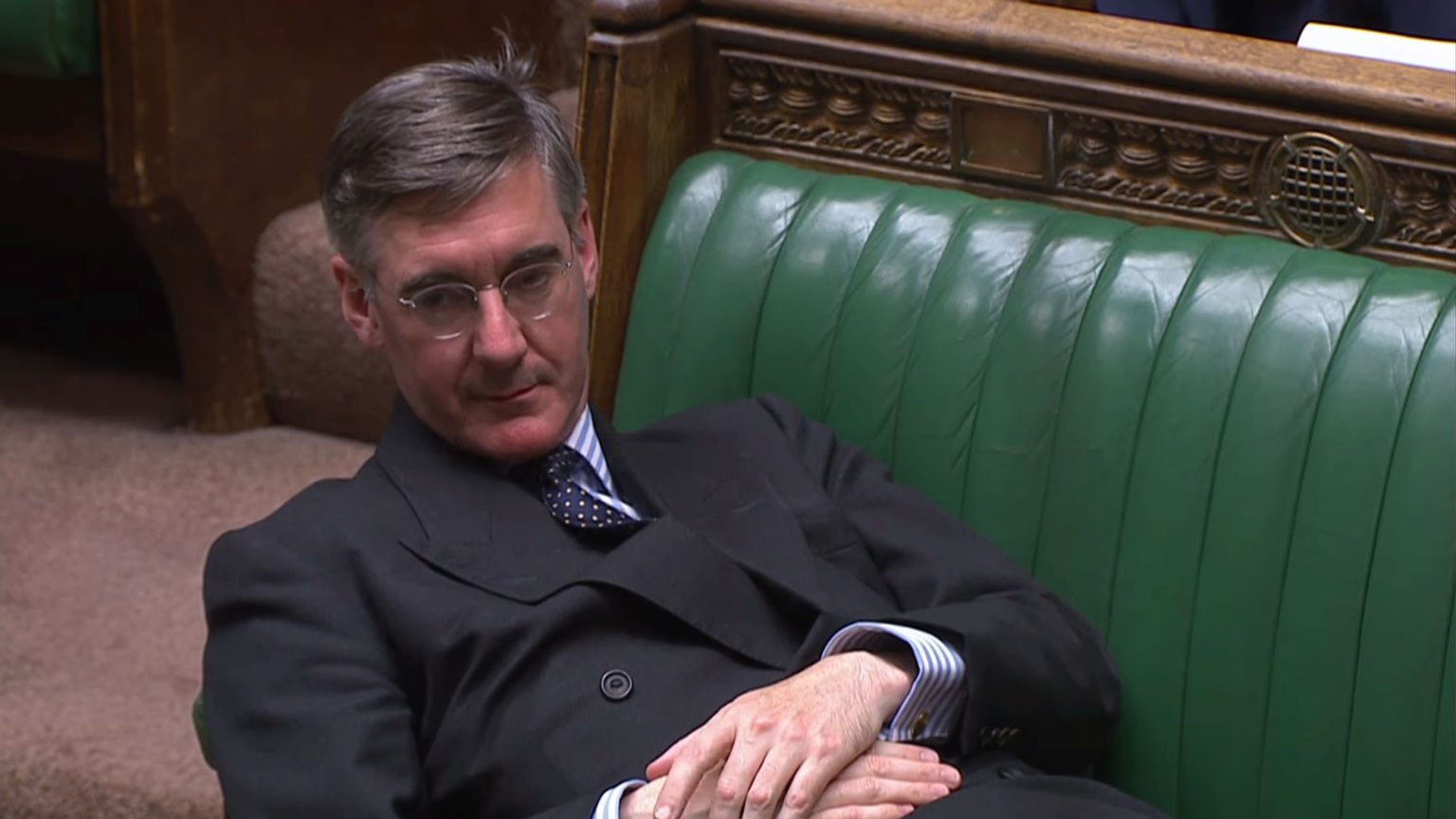
Rees-Mogg slouching during a Brexit debate. Image: Parliament
Share
Incoming energy secretary Jacob Rees-Mogg has taken on his new job at a big moment. Not only are we in an energy crisis, with soaring gas prices linked by pretty much every expert to our failure to invest in renewable energy, but a climate crisis that is becoming increasingly apparent to the public.
While Liz Truss has also appointed Graham Stuart as minister for climate change, Jacob Rees-Mogg’s new gig means he’s the one in charge of bringing the UK towards our legally-binding net zero 2050 target. But his track record of comments on climate change aren’t exactly promising on that front.
The effects of carbon emission on the climate ‘remains much debated’
In 2013, Rees-Mogg’s position was that it was simply too early to say whether climate change was real.
“It is widely accepted that carbon dioxide emissions have risen but the effect on the climate remains much debated while the computer modelling that has been done to date has not proved especially accurate,” he wrote in the Telegraph.
“Common sense dictates that if the Meteorological Office cannot forecast the next season’s weather with any success it is ambitious to predict what will happen decades ahead.”
That piece was headlined “climate change alarmism caused our high energy prices”, by the way.
Advertising helps fund Big Issue’s mission to end poverty
Advertising helps fund Big Issue’s mission to end poverty
Rees-Mogg has backed the extraction of coal – for heritage railways, of course
Reacting to the Aberpergwm coal mine being given permission to mine an extra 40 million tonnes of coal earlier this year, Jacob Rees-Mogg said: “We are going to need to have fossil fuels for the interim period and we are going to need coal for things like heritage railways and so on.
“Therefore, it is perfectly reasonable that we take some coal out of the ground. I cannot see why it is better to import it from abroad, rather than to get it from our own green and pleasant land.”
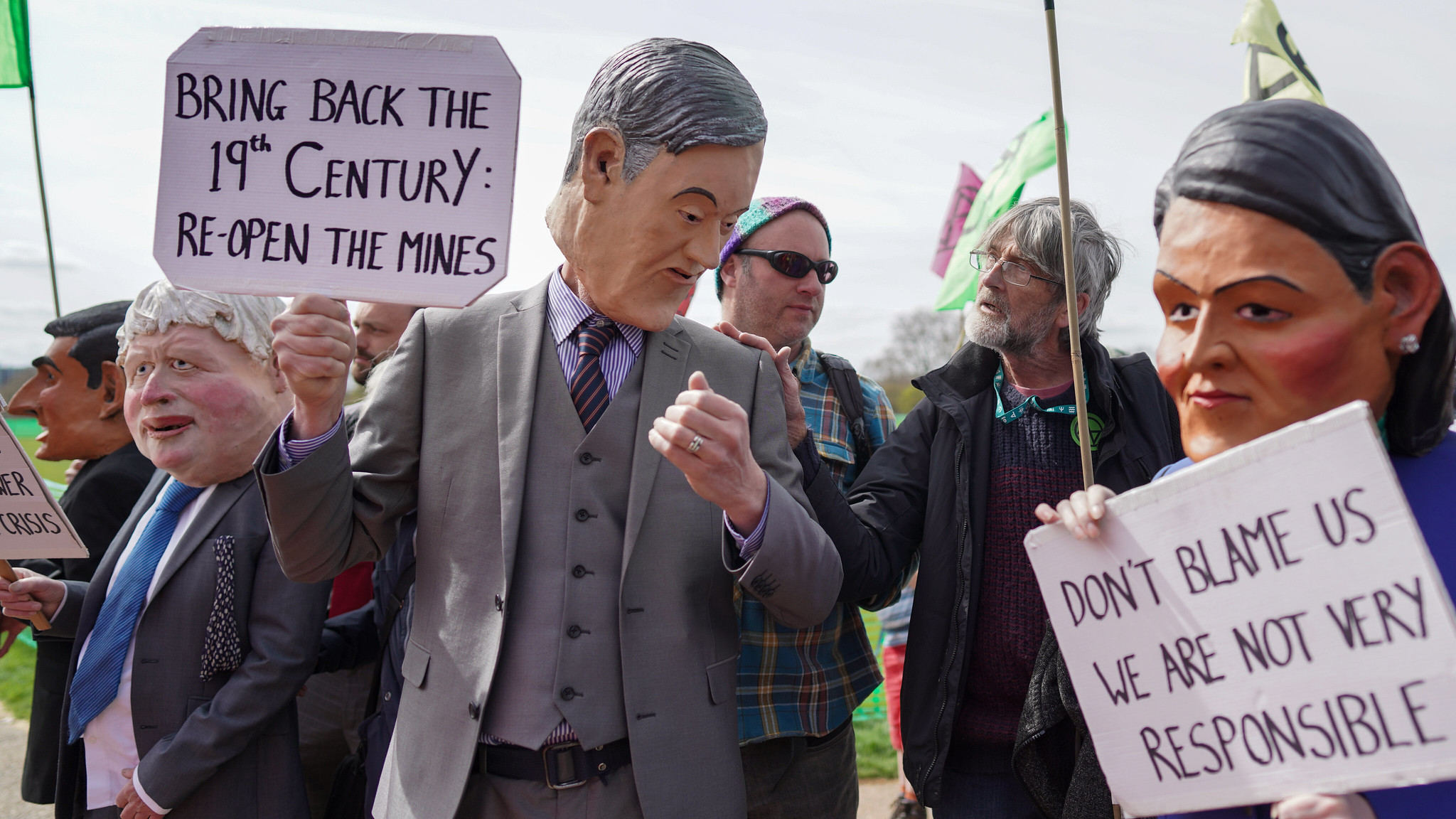
Climate protesters dress up as Rees-Mogg at a protest in April 2022. Image: Alisdare Hickson/flickr
‘We need to exploit every last cubic inch of gas from the North Sea’
Just as the UN’s secretary general Antonio Guterres warned that drilling for oil and gas is “moral and economic madness”, Rees-Mogg was keen to remind people that – actually – we’ve got plenty of time.
Keep reading the journalism that powers our mission
Register free to continue and learn more about the stories, campaigns and the support we provide, helping people facing poverty across the UK.
Instead of a windfall tax on oil and gas producers, profits should be preserved to make sure companies can keep drilling
“We need to be thinking about exploiting every last cubic inch of gas from the North Sea. We are not going for net zero tomorrow – 2050 is a long way off,” Rees-Mogg told LBC in April.
Cheap energy is more important than windmills
“I would like my constituents to have cheap energy rather more than I would like them to have windmills,” Rees-Mogg said in 2014.
The good news is that now they can have both. By 2023, electricity from UK offshore wind is forecast to be cheaper than existing gas power stations.
Rees-Mogg spoke in debates on the oil and gas industry without disclosing he founded a firm with investments in them
Somerset Capital Management, founded by Rees-Mogg, has made the throwback MP a pretty penny. In 2014 he was referred to parliament’s standards watchdog for speaking in a debate on oil and gas while failing to declare that the company – which he remained a director of – had investments in the industry.
Net zero will be a ‘huge regulatory cost’ for the UK
“Net zero is going to be a huge regulatory cost and that is an issue for the country to face and to face up to,” Rees-Mogg said at a Centre for Policy Studies event.
“If we were to have a ‘one in, one out’ or ‘one in, two out’ rule, you would end up excluding net zero, as we previously excluded EU regulation, and then you’re tinkering at the edges because you’re ignoring the biggest piece of regulation.”
Advertising helps fund Big Issue’s mission to end poverty