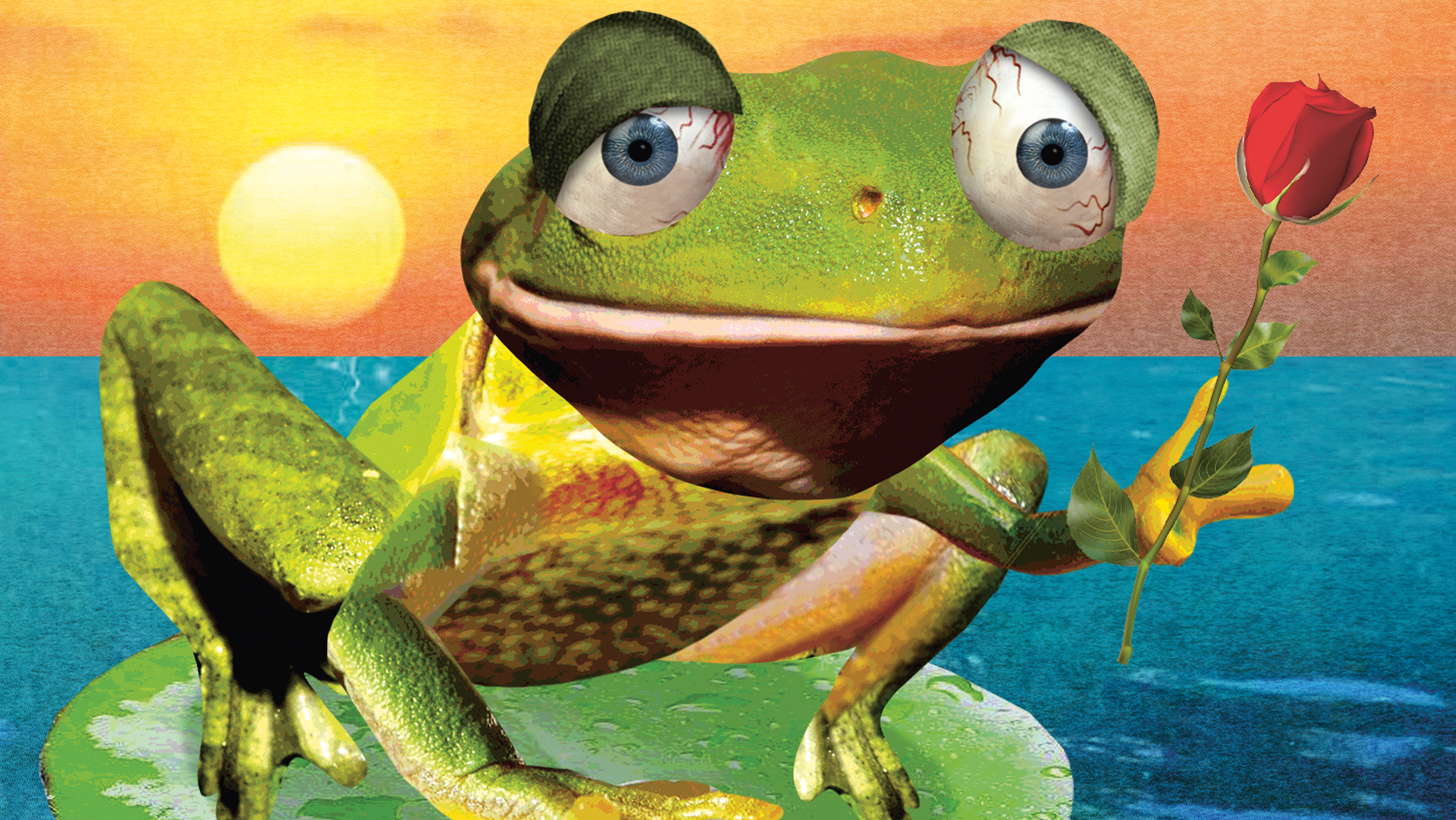
But did the profile, which casually – and in a no-way needy manner – calls for “another Sehuencas like myself. Otherwise, my entire existence as we know it is over (no big deal)”, actually work?
Facts. Checked.
Kind of. The match.com profile did more than raise awareness of Romeo – and his species’ – plight as it also raised $25,000 (£19,300) for conservationists to continue the search for more frogs in the Bolivian cloud forest.
I’m sure the Tinder rat race would be much simpler if a team was dispatched to find your perfect other half every time you swiped right.
Continue reading for free
Registration is free and takes less than 30 seconds.
Our supporters make Big Issue’s work possible. Join us to see the impact we’re having together and discover more ways to help people facing poverty access income, opportunity and support.
The four-strong team from Global Wildlife Conservation and the Bolivian Museo de Historia Natural Alcide d’Orbigny found five frogs, including one they’d named Juliet, that they have now introduced into a conservation breeding programme to save the species.
This is perhaps the most pertinent point as Science News amplify with their own article: “This rediscovered Bolivian frog species survived deadly chytrid fungus” – behind the marketing bluster, a species has potentially been saved.
Life has been rough in the last decade for the frogs, with disease not the only obstacle to overcome. You can also add to that list: habitat destruction thanks to deforestation, climate change (our fault again), pollution (still us) and even invasive trout conspiring against them by eating their eggs.
Advertising helps fund Big Issue’s mission to end poverty
It’s a similar story for other amphibian species in Bolivia, according to Global Wildlife Conservation, with 22 per cent facing some degree of extinction threat.
That begs the question – with such company, is Romeo even the world’s loneliest frog?
The aforementioned factors have had such a devastating effect on amphibian species in the rainforest that researchers from Macquarie University in Sydney, Australia, estimate more than 200 species of frog have gone extinct since the 1970s, including the Rabb’s fringe-limbed tree frog in 2016.
And new types of frog are still being discovered all the time – Florida International University’s Alessandro Catenazzi found one in the Amazon last March while four months later University of Manchester researchers identified another dubbed Sylvia’s Tree Frog.
So who knows? There could still be a number of Romeos wandering out in the wild undiscovered and looking for a mate.