Advertising helps fund Big Issue’s mission to end poverty
News

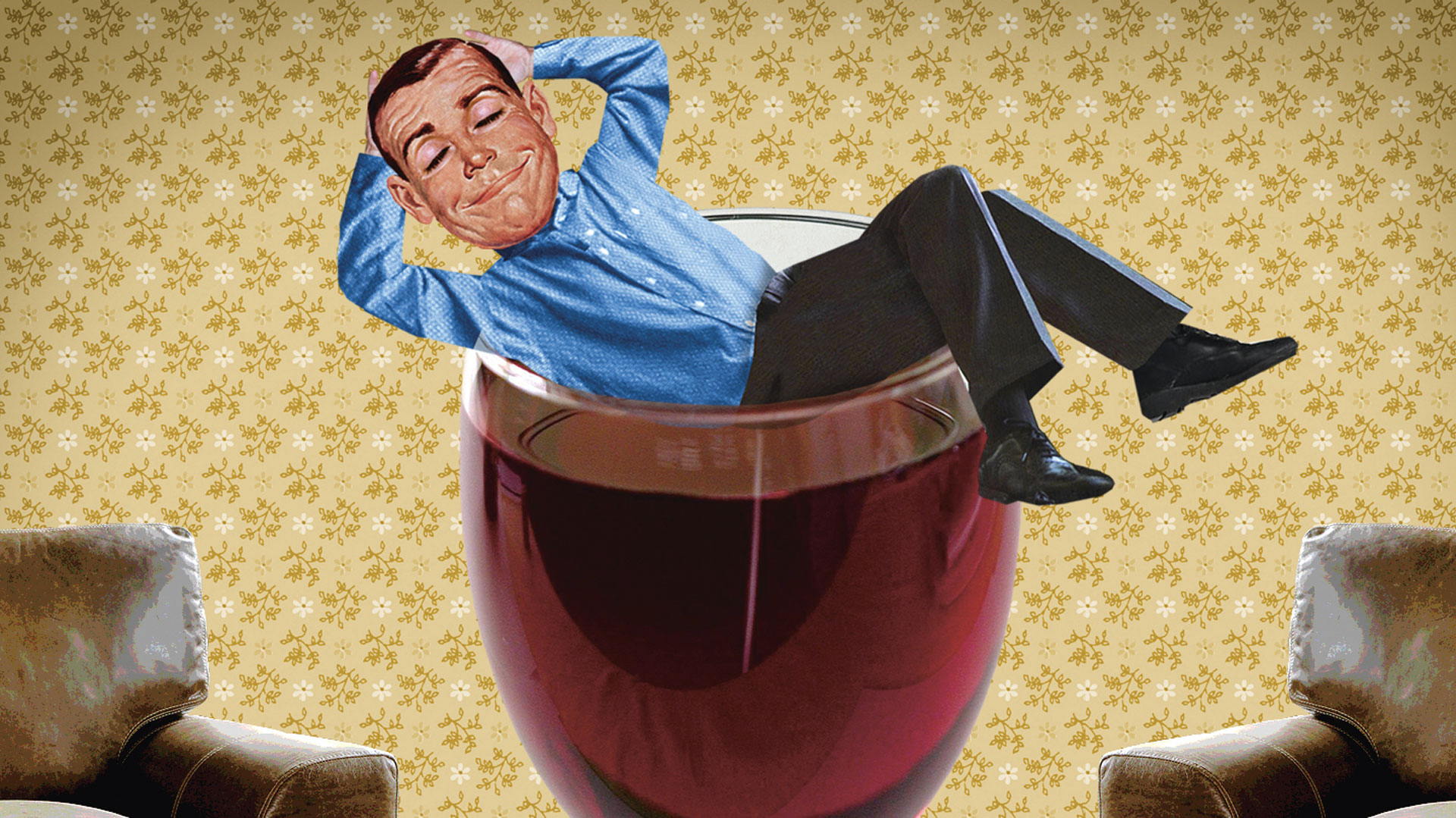
Fact/Fiction: Does a glass of red wine a day relieve stress and anxiety?

A wave of stories suggested there's a magic ingredient in red wine that could treat depression and anxiety, but should we really be reaching for the corkscrew?

How it was told

If you reach for a bottle of red and a corkscrew at the end of the day, stories in the press last week about how it could help battle stress are worth toasting.

Reports suggested that unwinding with wine did just the trick and it was down to a compound called resveratrol.

That was the line that a lot of the UK press went for.

Mail Online led the way with the in-depth headline: “Red wine compound opens door for new depression and anxiety treatment because it ‘shuts down enzyme in the brain thought to cause the disorders’”.  You could probably get through a bottle while reading that headline.

Mirror Online was a bit more succinct with “Red wine compound could be used to treat anxiety and depression, study claims” while the Daily Star kept it short and sweet too. They opted for: “An ingredient in red wine could help relieve stress, research shows”.

The Sun, however, chose a different line. They steered away from the science with their header, going for: “BOTTOMS UP! Having a glass of red wine after a hard day really DOES relieve stress and anxiety, say scientists”.

Advertising helps fund Big Issue’s mission to end poverty

It sounds too good to be true – but can wine lovers drink in the news or should they tell the press to put a cork in it?

Facts. Checked

It’s true – but before you upgrade the wine cellar on medical grounds, it is worth noting a few major caveats.

Firstly, it’s nothing to do with alcohol. The stories all stemmed from research led by the University at Buffalo’s research associate professor Ying Xu and professor Xiaoxing Yin of Xuzhou Medical University in China.

Continue reading for free

Registration is free and takes less than 30 seconds.

Our supporters make Big Issue’s work possible. Join us to see the impact we’re having together and discover more ways to help people facing poverty access income, opportunity and support.

Their findings, which were published on July 15 in the journal Neuropharmacology, found that resveratrol can have antidepressant effects. The compound is found in the skin and seeds of grapes and berries.

The study revealed that the enzyme phosphodiesterase 4 (PDE4) could cause depression and anxiety-like behaviour when induced by corticosterone, which regulates the body’s response to stress.

However, PDE4 lowers a molecule that signals physiological changes – cyclic adenosine monophosphate –  in the body, leading to physical alterations in the brain. But resveratrol inhibited the expression of PDE4 and academics believe that find could lay the groundwork for the use of resveratrol in antidepressants.

Advertising helps fund Big Issue’s mission to end poverty

This is all well and good, but it should be noted that so far, these tests have been run on mice – a fact that was reported more widely in some publications than others.

For example, Mail Online reported that the mice were given the equivalent of up to 10mg of resveratrol per kilogram of their body weight and put into context how much that would be for a human – 350 glasses of red wine to get the dose of 700mg for a 70kg person.

In the Daily Star, the fact the study was on mice gets just a single cursory mention.

Also, The Sun’s headline infers a greater involvement with alcohol than this study really warranted.

Resveratrol just so happens to be in red wine and that is the key ingredient being tested here – but it can also be found in peanuts, pistachios, grapes, blueberries, cranberries, and even cocoa and dark chocolate.

On the whole, the reporting of this study was fair and accurate. But before opening a bottle to celebrate, remember that alcohol should be enjoyed in moderation. Addiction and the impact on mental health that often follows can have a devastating effect on lives.

Advertising helps fund Big Issue’s mission to end poverty

So while this is an important study that could lead to crucial medical breakthroughs, don’t rush out to the off-licence to celebrate just yet.

Illustration: Miles Cole

Advertising helps fund Big Issue’s mission to end poverty

Do you know how Big Issue 'really' works?

Watch this simple explanation.

Recommended for you

View all
Protesters block roads and occupy offices over the cost of living: 'Bills are rising but so are we'
Acorn protesters occupied offices to protest the cost of living crisis
Protest

Protesters block roads and occupy offices over the cost of living: 'Bills are rising but so are we'

Chicken Shop Date star Amelia Dimoldenberg: 'Young people are always the first to bear the brunt of cuts'
Amelia Dimoldenberg
Employment

Chicken Shop Date star Amelia Dimoldenberg: 'Young people are always the first to bear the brunt of cuts'

Why do prime ministers now last as long as Premier League managers? 
Andy Burnham and his prime minister predecessors on a mock football pitch
Politics

Why do prime ministers now last as long as Premier League managers? 

Rents in the UK are at record highs. Will they keep going up?
rents uk
Renting

Rents in the UK are at record highs. Will they keep going up?