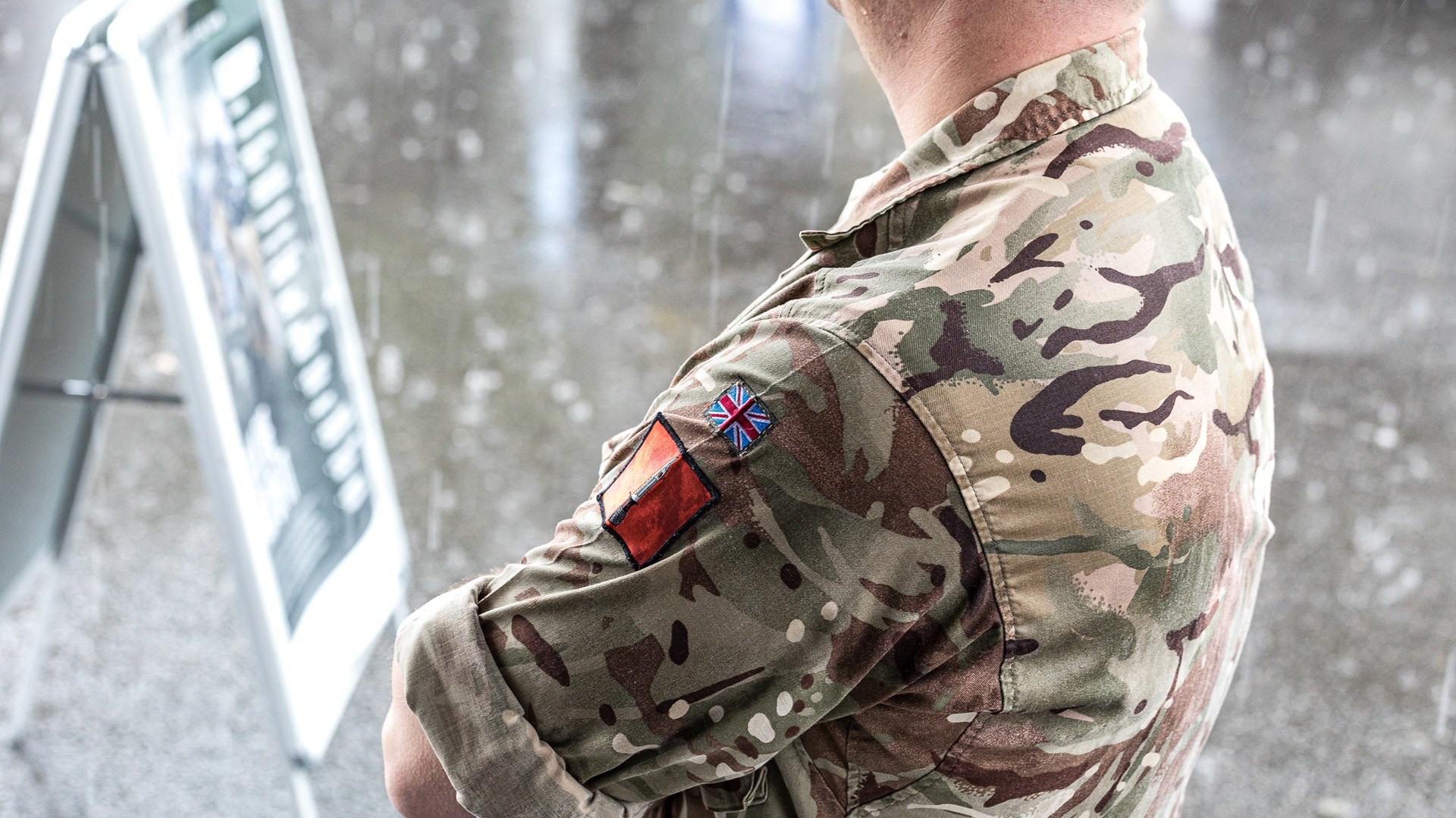
Veteran status is not recorded consistently among people sleeping rough across the country.
We can count veterans referred to homelessness services and record what happened to them in those services, but service-level activity is not the same as population-level impact.
Homelessness services can support many people well, while the wider problem remains unchanged, grows or shifts geographically.
Keep reading the journalism that powers our mission
Register free to continue and learn more about the stories, campaigns and the support we provide, helping people facing poverty across the UK.
London shows what is possible when the question is asked consistently.
Recording veteran status across all boroughs allows veterans to be measured alongside the movement in rough sleeping overall.
That comparison produces a much more meaningful picture.
It helps us understand prevalence, representation and change over time, and it creates a firmer basis for judging whether policy and investment in homelessness services are achieving their intended effect.
You cannot credibly end veteran rough sleeping if you cannot reliably measure veteran rough sleeping.
The prime minister has announced a commitment to offer everyone a route off the streets. But ‘everyone’ needs to mean everyone, and that includes veterans.
The veteran sector doesn’t have the capacity or the available accommodation to accommodate every veteran sleeping rough. We need to ensure veterans can also access mainstream homelessness services.
The mainstream housing and homelessness sector has substantial expertise in trauma, engagement, psychologically informed practice, tenancy sustainment and the realities of homelessness.
For many veterans, good-quality local homelessness services will be the normal and preferable route. A veteran who can access effective help where they currently live may retain a local connection, a housing waiting-list position, and established relationships with GPs, mental-health teams or substance-misuse services
It can also keep veterans connected to family, health services, housing pathways and the communities in which they ultimately need to live independently.
But mainstream provision will not work for everyone.
Some veterans find it difficult to trust or engage with services that do not understand military experience. Some will self-exclude.
For a smaller group, veteran-specific support may be the best, and sometimes the only, viable option. We don’t expect every veteran to use veteran’s homelessness services but we need to retain excellent specialist capacity for when it is genuinely needed.
Read more:
This is also about transition. If one of the underlying challenges is moving from military to civilian life, placing somebody back into a strongly military environment may simply defer part of that transition until they move on again.
Where it is appropriate and safe, supporting a veteran within the civilian community in which they will build an independent life can strengthen belonging, continuity and long-term sustainability.
The Armed Forces Covenant principle states that nobody should be disadvantaged because of their service. Specialist homelessness services are needed when military experience creates a genuine barrier to accessing or benefiting from mainstream support.
That principle only has meaning if veterans can genuinely access mainstream homelessness assistance.
Sadly, local-connection rules can prevent a veteran from receiving support in the place where they are living, even when they are willing to use local provision.
The result can be perverse: a person is pushed away from community-based help and towards scarce specialist accommodation, because the mainstream route is blocked.
There is also a practical resource case for this approach. Veteran-specific supported housing is limited and is increasingly required by people with high and complex needs.
If veterans who could succeed within mainstream provision are unnecessarily directed into specialist accommodation, capacity is reduced for those who have no viable alternative.
Stronger mainstream homelessness services protect veteran services for the people who most need it.
This is the wider principle I keep returning to in homelessness policy: as well as, not instead of.
We should resist organising homelessness services around loyalty to a single model.
The task is to build a range of good-quality services, understand who they work for and match the response to the individual. Veteran awareness and homelessness expertise are complementary, not competing, forms of knowledge.
First, veteran status should be recorded consistently within national rough-sleeping data so that government and services can understand the scale, distribution and movement of veteran rough sleeping.
Second, veteran data should be considered alongside population data, allowing activity and individual outcomes to be tested against changes with the wider challenge.
Third, mainstream homelessness services need the capability and confidence to identify and respond to veterans’ needs.
Finally, specialist pathways must remain available for those for whom mainstream support is not viable, with barriers such as local-connection rules addressed rather than allowed to determine where a veteran receives homelessness support by default.
The end goal we need is a spectrum of homelessness support services from veteran-aware mainstream services to excellent specialist services when they are needed.
Crucially we also need consistent collection of data to make sure that more veterans are leaving the streets than are arriving.
Lee Buss-Blair is director of operations and group veterans lead at Riverside
Do you have a story to tell or opinions to share about this? Get in touch and tell us more.
Change a vendor’s life.
Buy from your local Big Issue vendor every week – and always take the magazine. It’s how vendors earn with dignity and move forward.
You can also support online:
Subscribe to the magazine or support our work with a monthly gift. Your support helps vendors earn, learn and thrive while strengthening our frontline services.
Thank you for standing with Big Issue vendors.