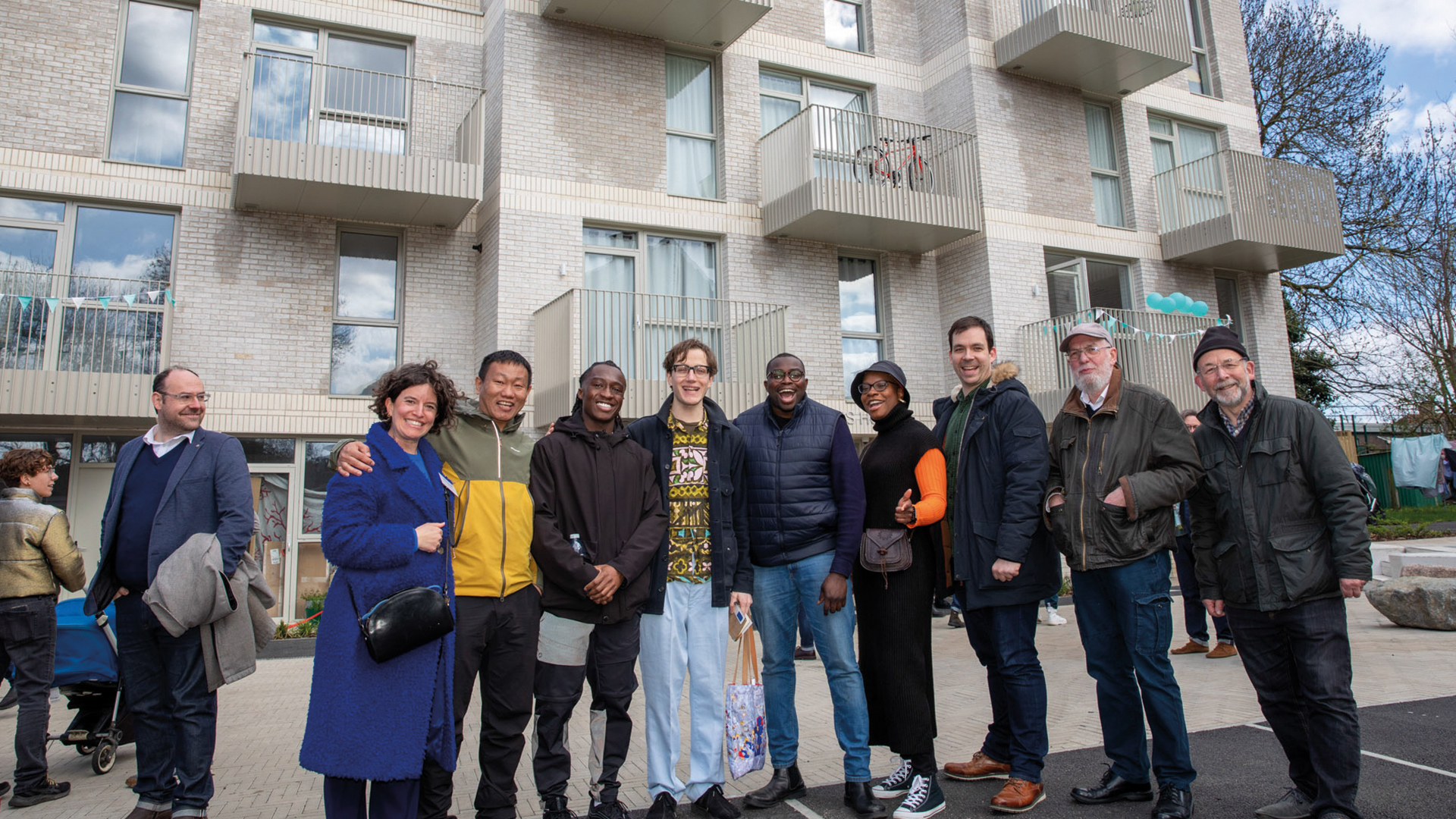
Nearly 500 Lewisham residents became part of London CLT and together built a complex of permanently affordable homes, opened in March this year, with the backing of funding from Big Issue Invest, The Big Issue’s social investment arm. BII’s Glenn Arradon says, “Under our affordable housing programme (funded by a £10m revolving loan from the GLA), we have a target of supporting the creation of 200 new affordable homes in the capital by 2027. Citizens House is one of the projects that helped us achieve that goal.”
For Citizens House, selecting an architect was a community decision. “It’s usually done behind closed doors by people who think they know best,” says Oliver Bulleid, executive director of London CLT. “But London CLT drew up a shortlist of architects and asked the community to make the final decision.”
Archio, the architect chosen, prioritised visiting people, listening to their concerns and needs. “Community led development is about empowering [people] to have a voice and be heard, and understanding local input is as valuable as knowledge from a technically qualified person,” Bulleid explains.
Keep reading the journalism that powers our mission
Register free to continue and learn more about the stories, campaigns and the support we provide, helping people facing poverty across the UK.
This approach unlocks greener opportunities, too. “When you’ve got 20 homes being built together by people who know each other, you realise maybe you don’t need 20 lawnmowers, or 20 washing machines or 20 cars,” says Jimm Reed, development director of Leeds Community Homes. “There’s an
ability to share resources.”
Community-led developments have been cropping up around the country at an impressive rate in the last decade. In 2010, there were 600 CLT homes, today there are 1,711, with an additional 5,413 in the pipeline. CLT Network research shows there’s potential for another 278,000 to be built. To achieve it, communities need to be viewed as collaborative players.
“We need to bring in developers, housing associations, councils, who are established to do a lot of the heavy lifting,” says Tom Chance, chief executive of CLT Network. “It’s about communities commissioning the homes they want and having stewardship over them.”
Often, the land available is inherently risky, the places private developers and councils tend to stay well away from. “In Leeds, there’s a massive shortage of affordable land suitable for this kind of thing,” explains Reed. Leeds Community Homes are currently developing on a site in Armley, on a patch of land in a deprived area which nobody’s been able to do anything with in the last 20 years. “We’re dealing with the stuff other people can’t.”
In 2016, the government established the Community Housing Fund, which levelled the playing field between CLTs and other developers. But at present the fund isn’t going to be renewed, so the future of CLTs is in jeopardy. “If the government does want to empower communities it needs to support them financially and see that as a long-term investment,” says Bulleid. He compares CLTs to the early days of housing associations. “Housing associations aren’t really the same thing as they were when they first set out; they’ve had to morph into private developers.
“There’s a potential for us to grow. In 50 years’ time, 20% of housing stock in London could be CLTs,” he says. “But it would be a shame if the funding support wasn’t there and in 30 years time we ended up no longer being community led.”
Do you have a story to tell or opinions to share about this? We want to hear from you. Get in touch and tell us more.
This article is taken from The Big Issue magazine out this week. Support your local vendor by buying today! If you cannot reach your local vendor, click HERE to subscribe to The Big Issue or give a gift subscription. You can also purchase one-off issues from The Big Issue Shop. The Big Issue app is available now from the App Store or Google Play