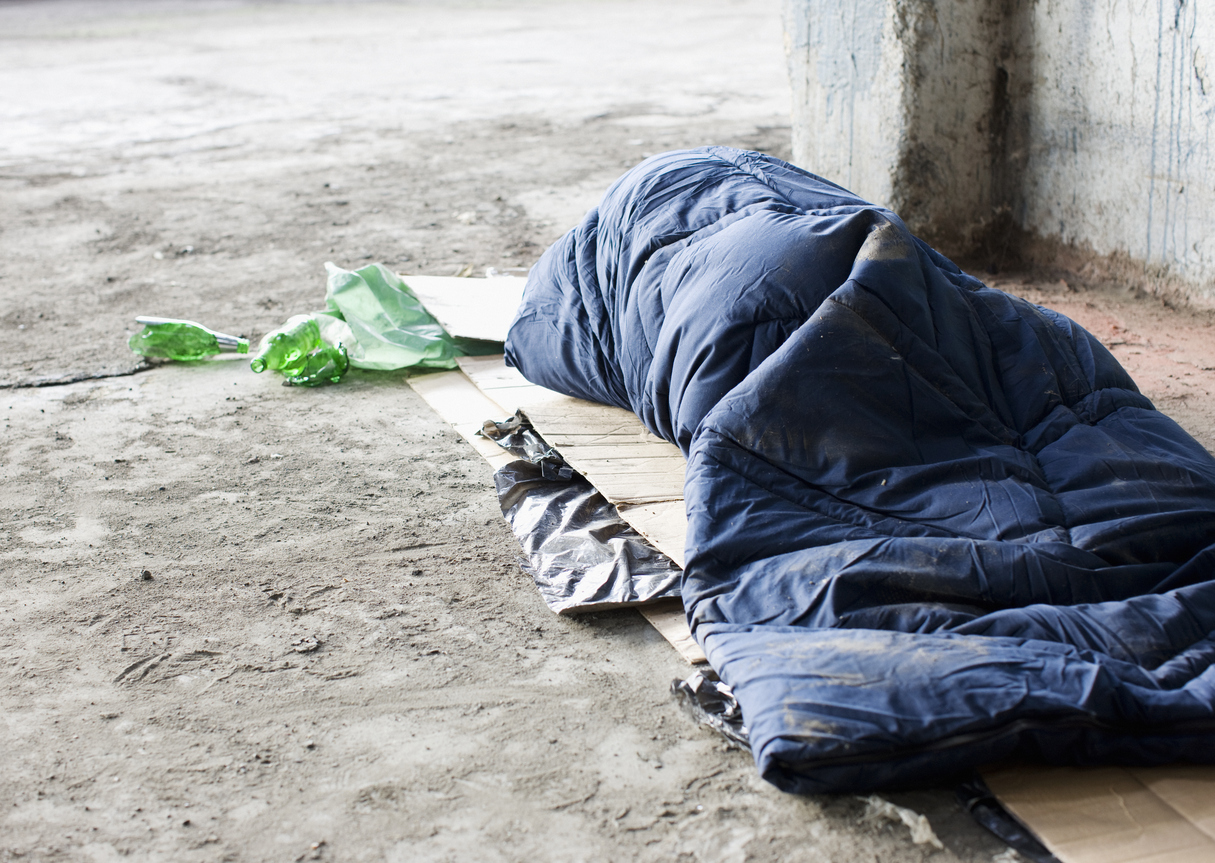
“We still have the highest rates of homeless deaths in Great Britain. This is a damning and urgent reminder that we need to do so much more to support some of our most vulnerable citizens.”
NRS’s experimental statistics are the latest result of a sustained movement to quantify the number of homeless deaths on Britain’s streets and in temporary accommodation. They follow the Office for National Statistics’ (ONS) England and Wales figures that were first revealed in December 2018.
Compared to those figures, Scotland has the highest rate of homeless deaths with 35.9 deaths per million of the population compared to 16.8 in England and 14.5 in Wales.
Continue reading for free
Registration is free and takes less than 30 seconds.
Our supporters make Big Issue’s work possible. Join us to see the impact we’re having together and discover more ways to help people facing poverty access income, opportunity and support.
The 100.5 deaths per million in Glasgow City and the 67.8 per million in Aberdeen City marked the pair out as having the highest rate of deaths in 2018 while, tragically, the average age of recorded deaths was 43 for women and 44 for men.
Men also accounted for the majority of deaths – 74 per cent in 2017 and 79 per cent the following year – while more than half of the deaths in 2018 were drug related.
Advertising helps fund Big Issue’s mission to end poverty
The experimental nature of the statistics means that “the true number may be higher”, according to Julie Ramsay, the NRS statistician responsible for publishing the Scottish statistics. Like the ONS’s statisticians, NRS searched death registration records for signs of homelessness.
Paul Lowe, the chief executive of National Records of Scotland and Registrar General for Scotland, said: “NRS has developed a method of estimating the incidence of homeless deaths in response to user demand. It is important to stress that these are experimental statistics and we will continue to work with users and stakeholders to assess their suitability and quality, as we continue to develop our methodology in future years.”
Outgoing Shelter Scotland director Graeme Brown looked to Housing First to prevent future deaths.
“The housing, health, social care and justice sectors need to work more closely together to ensure people get the tailored support they need for health issues such as mental illness and addictions,” he said. “We also need to see housing that supports people to recover and stay well.
“The Housing First model is a good example of how this can be done but only if it is adequately resourced with good housing and highly-skilled professionals providing support services to ensure it reaches those most at risk.”