Advertising helps fund Big Issue’s mission to end poverty
Housing

Grenfell survivors faced racism and discrimination in wake of fire, final report confirms

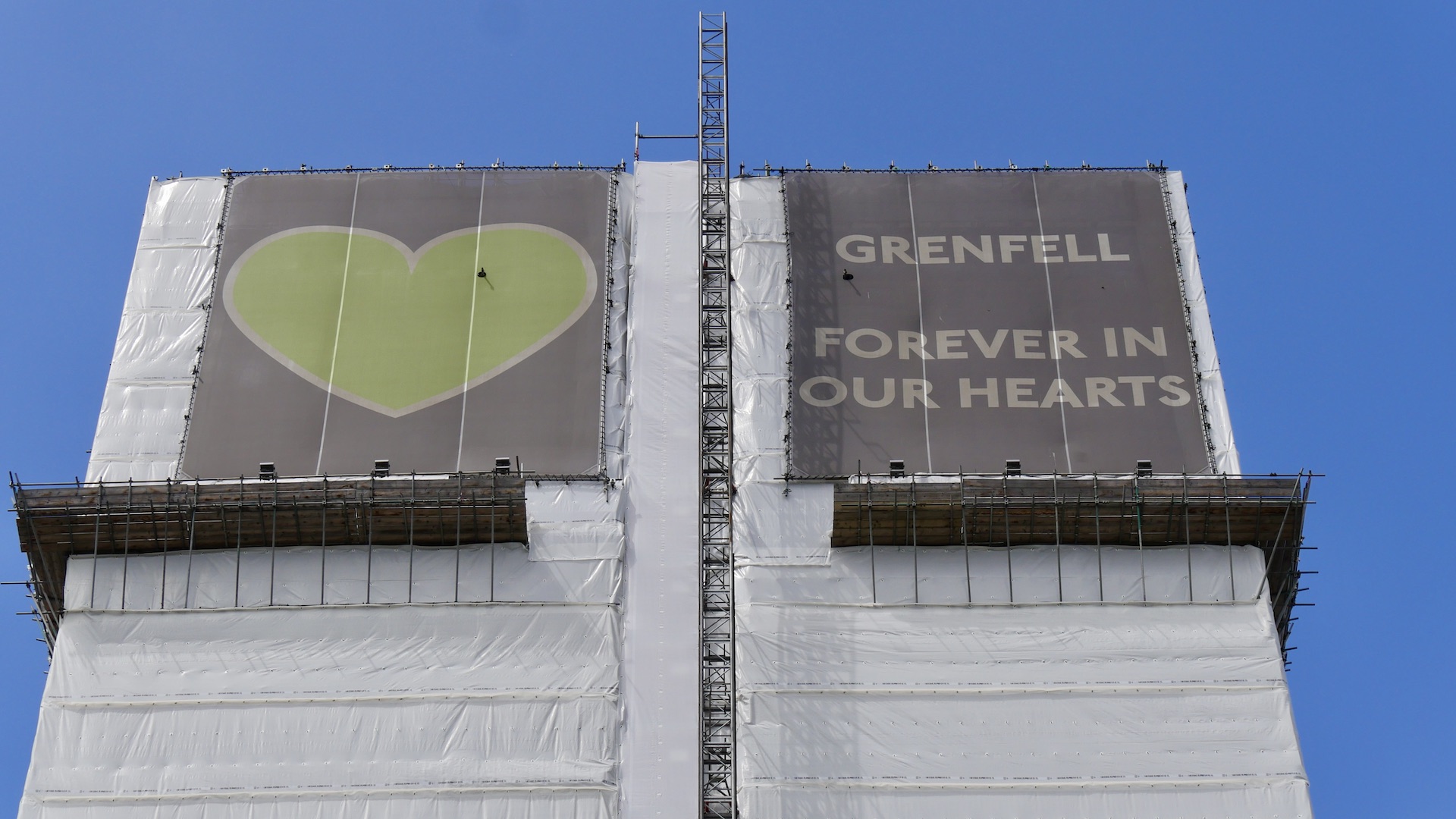
The long-awaited final report into the Grenfell fire has found no evidence of social and racial discrimination in the lead up to the fire

A sign saying "Grenfell forever in our hearts"

Image: Eliza Pitkin/Big Issue

The Grenfell Inquiry says it has found no evidence race or social discrimination of the tower’s residents played a part in bringing about the disaster.

But in the long-awaited second report, the inquiry’s panel said some fire survivors were racially discriminated against in the days after the fire “when they were at their most vulnerable”.

72 people died as a result of the fire at Grenfell Tower, London, which took place in June 2017.

Sir Martin Moore-Bick, the inquiry’s chair, said every death was preventable and that residents were failed by organisations including the UK government, Kensington and Chelsea Council, and the London Fire Brigade.

“We have seen no evidence that any of the decisions that resulted in the creation of a dangerous building or the calamitous spread of fire were affected by racial or social prejudice and none of those representing the bereaved, survivors or residents has drawn any such evidence to our attention, although they have had access to all the material before us,” said the report. 

The report said examining social housing policy, and whether social and racial discrimination was a reason for residents being allocated flats in an unsafe building, was beyond the scope of the inquiry. But said it had also faced calls to look at whether there was a culture of racial and social discrimination at organisations including Kensington and Chelsea Council, and the Tenant Management Organisation.

Advertising helps fund Big Issue’s mission to end poverty

“The desire to investigate and expose discrimination of that kind flowed from the undeniable fact that a significantly disproportionate number of those who died in the fire and of those who survived the fire but whose homes were destroyed were from ethnic minorities or socially disadvantaged,” the panel’s report said.

Moore-Bick’s report said the inquiry had done its best to investigate factors around decisions leading to the creation of the unsafe tower – but found no evidence of racial or social prejudice.

Yet campaigners say discrimination was a fundamental part of the disaster.

Keep reading the journalism that powers our mission

Register free to continue and learn more about the stories, campaigns and the support we provide, helping people facing poverty across the UK.

“The Grenfell fire was a preventable tragedy, marred at every point by structural and direct racism – from those who were killed, to the treatment of survivors, the bereaved, and the wider community, as the latest report from the Inquiry confirms,” said Serena Robinson, senior researcher at the Runnymede Trust.

“People of colour are feeling the harshest impacts of the housing crisis, disproportionately live in unsafe and unsuitable homes, and are often funnelled into the poorest quality and least desirable social housing. As a bare minimum, everyone should have access to safe, suitable, affordable housing.”

Many of those affected by the fire could only find help through voluntary organisations, the report said, adding that Kensington and Chelsea Council should have done more to support Muslim residents observing Ramadan.

“Many who had particular religious, cultural or social needs suffered a significant degree of discrimination in ways that could and would have been prevented if the guidance had been properly followed,” the panel said. 

A spokesperson for the Justice4Grenfell group said a report “of this nature was inevitable” given the “Grenfell Inquiry’s terms of reference, which excluded considerations of social housing, discrimination and social inequality”.

“What we must never lose sight of is that Grenfell is a direct result of how our society treats people. Yet, the report’s recommendations do little to empower to give agency to the community, instead framing the fire as an outcome of administrative failings.”

Do you have a story to tell or opinions to share about this? Get in touch and tell us more. Big Issue exists to give homeless and marginalised people the opportunity to earn an income. To support our work buy a copy of the magazine or get the app from the App Store or Google Play.

Advertising helps fund Big Issue’s mission to end poverty

Do you know how Big Issue 'really' works?

Watch this simple explanation.

Recommended for you

View all
Ending rough sleeping isn't just about money – it takes everyone pulling together
Andy Burnham, pictured in a media interview at No 10, has promised to end rough sleeping
Letters

Ending rough sleeping isn't just about money – it takes everyone pulling together

Is it fair to ask a homeless person to give up their pet to get a home? Half of Brits say no
Big Issue vendor, Alfie Brew on his pitch at Co-op, St Thomas, Exeter
Housing

Is it fair to ask a homeless person to give up their pet to get a home? Half of Brits say no

The success of Andy Burnham’s rough sleeping pledge can’t be judged on Christmas Day. Here’s why
Prime minister Andy Burnham meets former rough sleepers at Independence Initiative alongside Lord John Bird, John Healey and Angela Rayner
Emma Haddad

The success of Andy Burnham’s rough sleeping pledge can’t be judged on Christmas Day. Here’s why

A disabled Big Issue vendor has launched legal action to get an accessible home: 'I've had enough'
Big Issue vendor Jason Sallis pictured in his overgrown garden
Accessible homes

A disabled Big Issue vendor has launched legal action to get an accessible home: 'I've had enough'