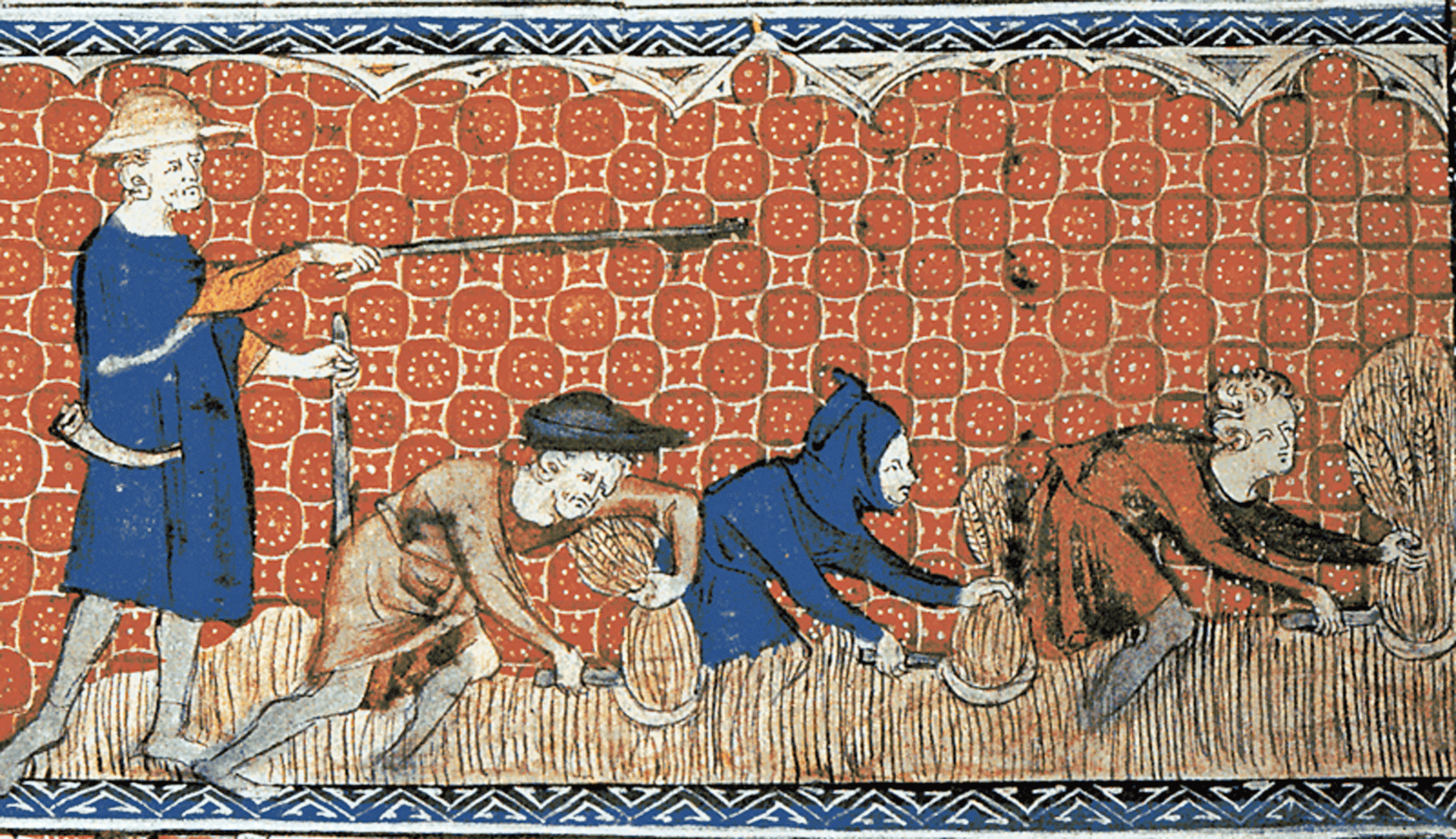
Hundreds of years ago, English villages farmed open fields and grazed animals on common land. In order to know who used which strip or who had the right to gather wood and cut peat you had to be a part of the community that used it.
Under the guise of agricultural efficiency, the already-landed gentry pushed through acts of parliament that allowed them to take legal ownership of the common land. These acts were known as the ‘inclosures’ and formed the basis of the horrendously inequitable land ownership we experience today in modern Britain.
There are striking parallels in the modern age. We, the world’s digital villagers, once had free and open access to information on the World Wide Web. Anyone could publish or access information, and the protocols that governed its flow between the servers, routers and switches paid no heed to sender or recipient. People published things that they thought others would benefit from, and consumed what they needed.
The technology rapidly improved, as did the reach of these tools. Before long, one did not need to be from the technical community to publish or consume the information on the web, you just needed a login to a free platform. The number of users began to skyrocket.
Under the guise of efficiency and the as-yet unratified benefit of ‘connecting everyone’, these platforms began to consolidate their dominant position and enclose the services they provided. They created vast data-processing empires built upon another digital commons and generated some of the largest profit margins in the history of capitalism. It wasn’t long before people began to ape the platforms that harnessed them. Everything was content.
Raw physical experience was there to be captured and uploaded to further feed the machine, both to train it and guide us in our decision making. The digital had come back around to re-enclose the physical.