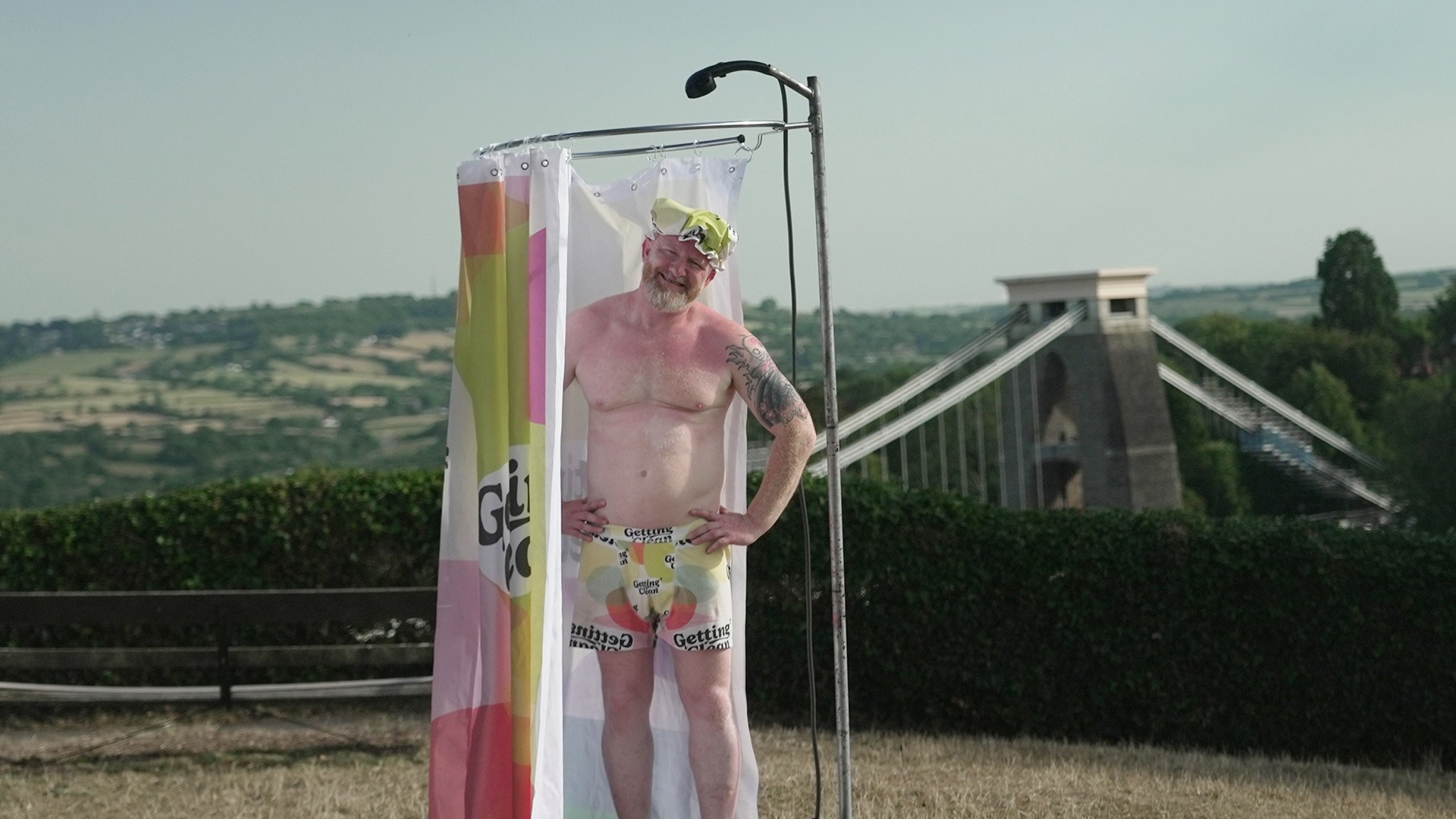
Between 7 and 9 August, Chris Sylvester spent 60 hours in a bathtub in Leeds City Square. He was there to raise the profile of Getting Clean – a soap company that he founded in 2021 on the principles of community, recovery and enterprise for sustainability – as well as raising money for a lived-experience recovery project, delivered in collaboration with Forward Leeds. He let Big Issue join him in the tub to learn more about his remarkable journey.
Tell us about your experience of addiction and recovery.
I was introduced to heroin in the high school toilets at age 12. That opened up the doors to 26 years of active addiction – that’s hospitals, jails, homelessness; a nightmare existence. I just couldn’t find a way out of it. And then, at the age of 36, by chance, I came across mutual aid, 12-step recovery. As I got clean, I gravitated towards support work, but I became very frustrated with the way that support services are run. It seemed like it was more about delivering outcomes and supporting the service than the individual.
I know that everybody needs a purpose, and I also know that everybody has skills and strengths, and it’s about empowerment. So, while working a 50-hour week in a homeless shelter, I set up a group that allowed people in recovery to come together to support the community, to challenge stigma by being of service, by tackling environmental issues. We’re all products of our environment, so if we start taking care of our environment, we start creating cleaner, safer communities.
We started simply by picking litter, and then we learned to recycle what we were collecting. Then we started doing conservation projects, started creating wildflower meadows, doing all this amazing work.
And as the group grew, so did the ability for us to be able to deliver more impact and to help people more. I realised that we could do jobs for elderly people, disabled people; fixing their fences, decorating their houses, doing DIY, focusing on people’s skills and strengths, empowering them to see that they were more than their past, and that they were assets to the community.