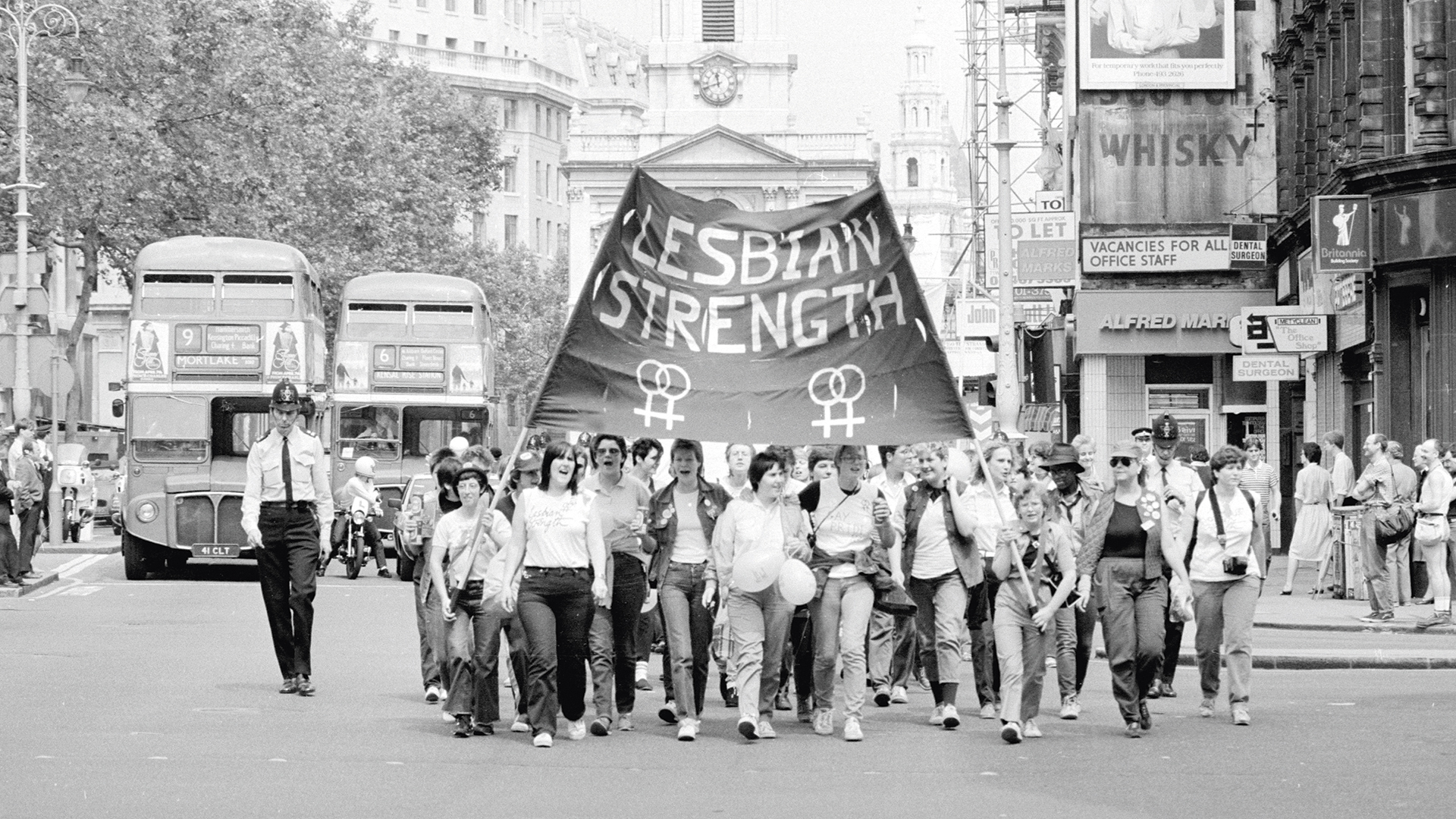
It’s also a chance to reflect on how far the community has come.
“When I was growing up, it felt like there were literally zero visible lesbians, bi women, queer women, non-binary people – none of these things existed. The people existed, of course, but visible role models did not,” she said. “Now there’s much greater visibility. Legal protections aren’t perfect, but they’re a lot better.”
Equal marriage has been a reality since 2014. Section 28 – the law prohibiting the “promotion of homosexuality” in school’s – has been consigned to history. Meanwhile, changes in the law mean that more schools, employers and public services are empowered to tackle anti-LGBTQ+ discrimination and bullying.
Keep reading the journalism that powers our mission
Register free to continue and learn more about the stories, campaigns and the support we provide, helping people facing poverty across the UK.
But there’s still a long way to go, Kelley urges. “Particularly for young people, it can still feel really lonely,” she said.
“Lesbian Visibility Week is an opportunity for those young people to look around and see – do you know what? My life can look like all sorts of things. I can grow up to be all kinds of things… there’s no one way of ‘being a lesbian.’”
Unfortunately, outdated stereotypes persist. According to Just Like Us research, the top two reasons for queer women to delay coming out were that being a lesbian is viewed as ‘cringey or awkward’ (30%) or ‘wrong’ (25%). This was followed by lesbians being stereotyped as ‘taboo’ (23%), ‘embarrassing’ (23%), ‘masculine or butch’ (22%), ‘over-sexualised’ (19%), ‘unattractive’ (16%) and ‘man-hating’ (12%).
This stigma has devastating consequences – not only for a person’s mental health, but their physical safety.
“Lesbians are often either portrayed as sexual objects for men, or as completely sexless and totally invisible,” explained Nancy. “And the combination of misogyny and homophobia mean we are particularly vulnerable to sexual harassment.”
Between 2013 and 2023 homophobic and biphobic hate crimes in England and Wales soared by 465%. Transphobic hate crimes rose by a staggering 1,211% (according to the Office for National Statistics). As many as 24% of young homeless people are LGBTQ+, including many lesbians and queer women – making them especially vulnerable to violence and harm.
“Most people in our community and still experience some form of discrimination, some form of disadvantage – at the minute that is really acute for trans and non-binary people,” Kelley continued.
The community must “rally around” to support one another. This year’s Lesbian Visibility Week theme – #UnifiednotUniform – is a testament to the radical power of solidarity and care.
“There is and has always been enormous power in being a lesbian,” she said. “The flipside of breaking all the rules about what society wants for women is that you are living in a world where you can create your own rules, your own space, your own values.”
“I feel a powerful sense of joy, love and connection as a lesbian. And that is a thread that runs through our community.”