Advertising helps fund Big Issue’s mission to end poverty
Social Justice

'Privatisation has failed' – will rail nationalisation make a difference? Yes, but not on its own

All aboard for cheaper, better UK railways! Labour's nationalising the train biz

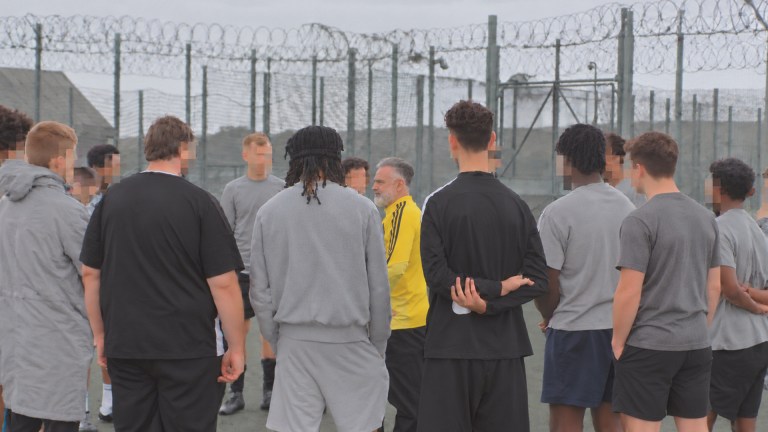
Stock image of a train

Three rail operators will be renationalised in 2025 (Jeremy Segrott/Flickr)

Campaigners have welcomed the “long-awaited” nationalisation of three rail operators by Labour in 2025. 

The Department for Transport confirmed on Wednesday (4 December) that three rail operators will be renationalised in the coming year – South Western Railways in May 2025, C2C in July 2025 and Greater Anglia in autumn 2025.

The move to renationalise the rail operators comes as the Passenger Railway Services (Public Ownership) Act 2024 was passed, allowing Labour to deliver on its election promise to renationalise nearly all passenger rail services within five years of the party being elected.

“For too long, the British public has had to put up with rail services that simply don’t work. A complex system of private train operators has too often failed its users,” transport secretary Heidi Alexander said.

“Starting with journeys on South Western Railway, we’re switching tracks by bringing services back under public control to create a reliable rail network that puts customers first.

“Our broken railways are finally on the fast track to repairing and rebuilding a system that the British public can trust and be proud of again.”

A YouGov poll in July 2024 found that more than three quarters (76%) of Brits think rail companies should be run by the public sector. Other areas which had strong support for nationalisation included water companies (82% were in favour), Royal Mail (75%) and energy companies (71%). 

Currently, the UK’s rail network is run by various private rail company franchises, each of which has a private contract with the government for a set period of time.

Advertising helps fund Big Issue’s mission to end poverty

The Labour government has promised to absorb these franchises – such as Avanti West Coast, C2C and Southern Rail – into a new body, Great British Railways, which will take over contracts currently held by private firms as they expire in the coming years.

Campaigners praise the ‘really important first step’ to nationalisation

Campaigners have praised the move as a “really important first step”, but added that it is “just the first step” in nationalising the rail system “in order to get a rail service that fully works for passengers, not for profit”.

Johnbosco Nwogbo, lead campaigner at public ownership campaign group We Own It, said: “Passengers will be hoping that these rail lines coming into public hands will mark the beginning of a long-awaited great railway revival in England.

Continue reading for free

Registration is free and takes less than 30 seconds.

Our supporters make Big Issue’s work possible. Join us to see the impact we’re having together and discover more ways to help people facing poverty access income, opportunity and support.

“30 years of failed privatisation has left us paying more and getting less.”

He told the Big Issue that a railway system “that is able to bring every part of the system together to work toward one objective, which is providing high quality rail services to passengers, will without a doubt produce good results”.

He added that there are still a “good number” of rail operators that will be coming into public ownership over the next five years, and that the campaign group expects the “gradual process” will have a “positive impact on the quality of the service for passengers”.

Advertising helps fund Big Issue’s mission to end poverty

“There are a number of ways to see that privatisation has had a terrible impact on passengers,” Nwogbo said. “We were told that having private companies run our rail would lead to lower fares for passengers. In reality, over the last 30 years, when our rail has been in private hands, we’ve actually seen our rail fares go up by around 20% over that period.

“Every person who has used our rail system has encountered some kind of nightmare, with long delays, with cancellations, with people having to stand in trains… with the trains themselves being dirty and really not comfortable to use.

“These are things that you could only encounter in the rail system if the people running the rail system are trying to save money on running the system so that they could maximise on paying out dividends. We believe that public ownership will produce a much better resource for passengers because it is focused on producing a better resource for passengers.”

He added that the government nationalising the operating companies would make a difference, “but it’s not going to make all the difference”, and the government must also “invest into the system”, and give passengers a “voice” in how the rail system is run.

“For every one pound you put into the rail system, you produce more than two pounds in economic activity. So rail can be the engine that’s driving the growth the government’s looking for,” he said.

Do you have a story to tell or opinions to share about this? Get in touch and tell us more. This Christmas, you can make a lasting change on a vendor’s life. Buy a magazine from your local vendor in the street every week. If you can’t reach them, buy a Vendor Support Kit.

Advertising helps fund Big Issue’s mission to end poverty

Do you know how Big Issue 'really' works?

Watch this simple explanation.

Recommended for you

View all
I spent 60 hours sat in a bathtub in Leeds to show how my soap company can tackle addiction
Getting Clean's Chris Sylvester in the shower
Rehabilitation

I spent 60 hours sat in a bathtub in Leeds to show how my soap company can tackle addiction

British public don't back cuts to disability benefits – even Reform and Tory voters
The Disabled People Against Cuts (DPAC) in Norwich demonstrated outside the PIP offices in central Norwich in 2016
Disability benefits

British public don't back cuts to disability benefits – even Reform and Tory voters

Inside the charity warehouse offering thousands of families a cost of living lifeline every month
Keely Dalfen at Multibank North West's warehouse
Social Justice

Inside the charity warehouse offering thousands of families a cost of living lifeline every month

Do food banks need to exist until we end hunger? We'd rather live in a Food Bank Free Britain
campaign imagery showing woman holding up a sign calling for a food bank free britain
Stef Lake, Ronald Ranta and Carl Walker

Do food banks need to exist until we end hunger? We'd rather live in a Food Bank Free Britain