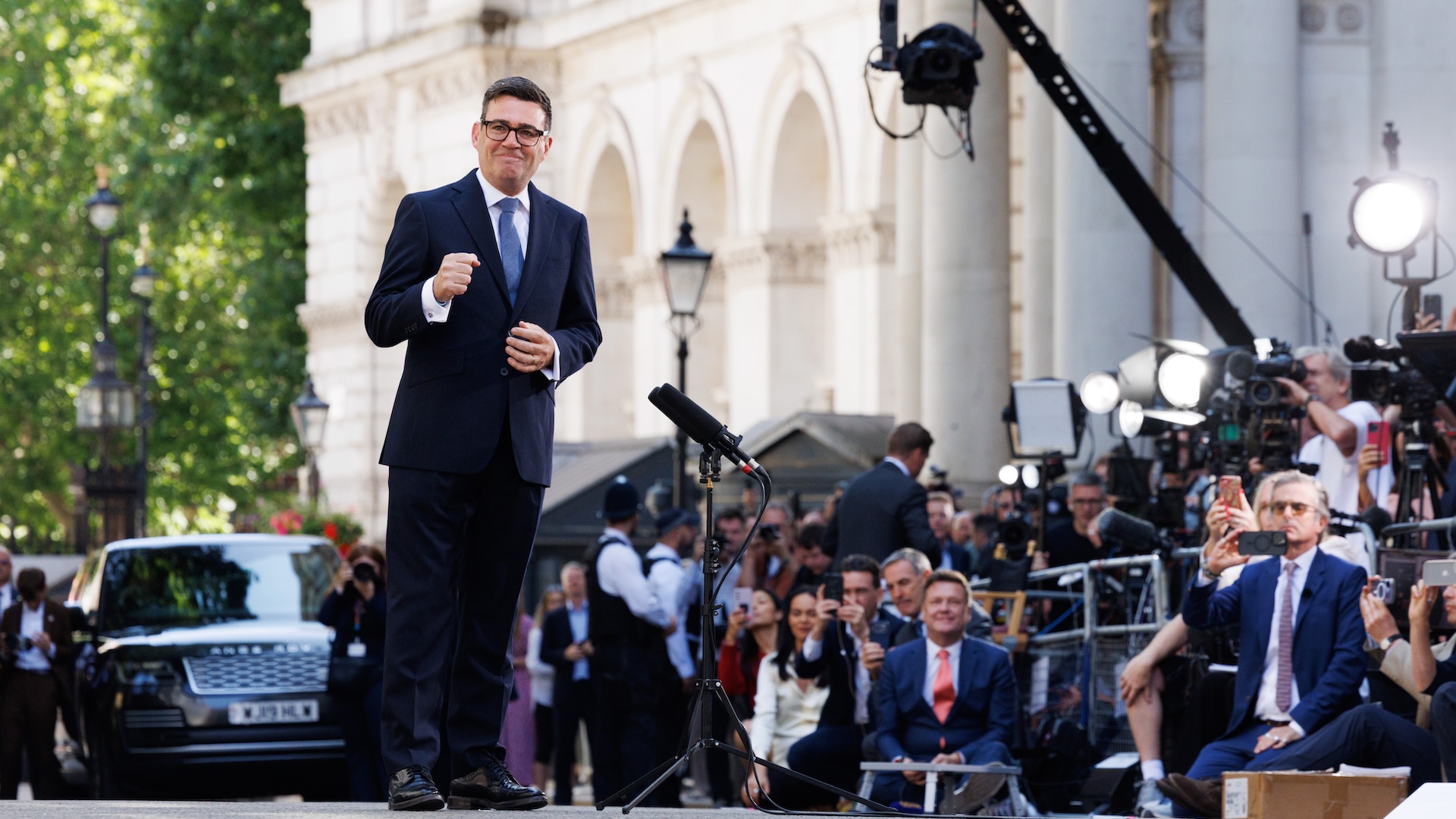
While he was speaking about young people in detention, the principle behind his remarks has wider relevance. Burnham recognises early mental health support gives people a chance to break out of negative cycles.
It makes problems simpler and cheaper to address, and can prevent unnecessary suffering. Notably, as mayor of Greater Manchester we have seen Burnham champion Live Well. This partnership builds on the principle of community led initiatives, evidenced to be particularly effective, to ensure that people in every neighbourhood can access everyday support.
Prevention rather than crisis management must sit at the heart of any serious response to Britain’s mental health crisis. It would be transformative if Burnham placed prevention at the heart of all government policy.
Keep reading the journalism that powers our mission
Register free to continue and learn more about the stories, campaigns and the support we provide, helping people facing poverty across the UK.
Burnham also recognises the tendency for mental health to be sidelined when the health service comes under strain.
As shadow secretary for health in 2010 he said: “In tough times the NHS reverts to its default position, which is to focus on the mainstream and to ignore mental health.”
True to form, this year the UK government scrapped its long-standing commitment to increase mental health spending in line with overall NHS funding. Reversing that decision would provide an early indication of whether Burnham intends to match his words with action.
Advertising helps fund Big Issue’s mission to end poverty
What Burnham has said about mental health and barriers to work
As mayor of Greater Manchester, Burnham showed that he understands that work is about more than a payslip. Good work can provide purpose, connection and self-worth. But he has also recognised that for people experiencing poor mental health, the route into employment is rarely straightforward.
“We recognise that the barriers to work our residents face are often linked to issues like housing, personal debt and mental health. Consequently, a whole-person, whole-system approach is the only one that stands any chance of working,” he said.
This way of thinking is particularly important at a time when growing numbers of young people are not in work, education or training. Among those unable to participate due to a health condition or disability, two-thirds say a mental health condition or autism is the main reason.
These difficulties have been compounded by a narrative pushed by some in politics that put the blame on the young people themselves rather than acknowledging the systemic barriers that prevent many from entering or remaining in employment.
Burnham’s whole-system approach recognises that employment is shaped by housing, financial security, health and access to support. That understanding could help more people into meaningful work while improving wellbeing and strengthening the economy.
What Burnham has said about technology and mental health
It is encouraging that Burnham was speaking out against big tech and the perils of social media before it was fashionable. Last year, he was one of the most senior politicians to call for action against harmful online content and the influence of social media on mental health, specifically criticising the UK government’s delay in taking a stand against big tech.
Advertising helps fund Big Issue’s mission to end poverty
“It’s clear that from a mental health point of view this is harmful. Why are we equivocating? If it’s not a ban it needs to be something. We’ve got to start to think differently about tech,” Burnham told The Times.
Burnham is expected to continue the online safety measures already set in motion by his predecessor. We urge him to go further. Restricting children’s access alone will not make the online world safe. We need far more ambitious action, including an end to addictive algorithms and infinite scrolling. Crucially, we need legislation forcing platforms to demonstrate that their products are safe before they are allowed to operate in the UK.
His comments on the need to think differently about technology suggest he may be willing to take a stronger stance against corporations that put profit before user safety and wellbeing.
What Burnham has said about mental health and the arts
The benefits of creativity are sorely undervalued when it comes to health and wellbeing. Writing for the Big Issue mere weeks ago, Burnham shows that he knows it’s time for art to take centre stage.
He argued that “making space for people to create is how we build a healthier, more hopeful society”.
At a time when loneliness is rising and community spaces are disappearing, creativity offers people opportunities to connect, build confidence, and develop a sense of belonging. Burnham’s recognition of the role the arts play in wellbeing suggests an understanding that good mental health depends on more than healthcare alone. Greater support for arts and community infrastructure could strengthen the social foundations that protect mental wellbeing.
Advertising helps fund Big Issue’s mission to end poverty
Whether Burnham becomes Britain’s first truly mental health-focused prime minister will depend on what he does now. Yet his record suggests he understands a truth too often overlooked at Westminster: good mental health is not simply a healthcare issue. It is shaped by the homes we live in, the jobs we do, the communities we belong to, the technology we use and the opportunities we have to thrive. If he governs with that understanding, there are genuine reasons to be optimistic.
Alexa Knight is director of policy and influencing at Mental Health Foundation.
Do you have a story to tell or opinions to share about this? Get in touch and tell us more.
Change a vendor’s life.
Buy from your local Big Issue vendor every week – and always take the magazine. It’s how vendors earn with dignity and move forward.
You can also support online:
Subscribe to the magazine or support our work with a monthly gift. Your support helps vendors earn, learn and thrive while strengthening our frontline services.
Advertising helps fund Big Issue’s mission to end poverty
Thank you for standing with Big Issue vendors.