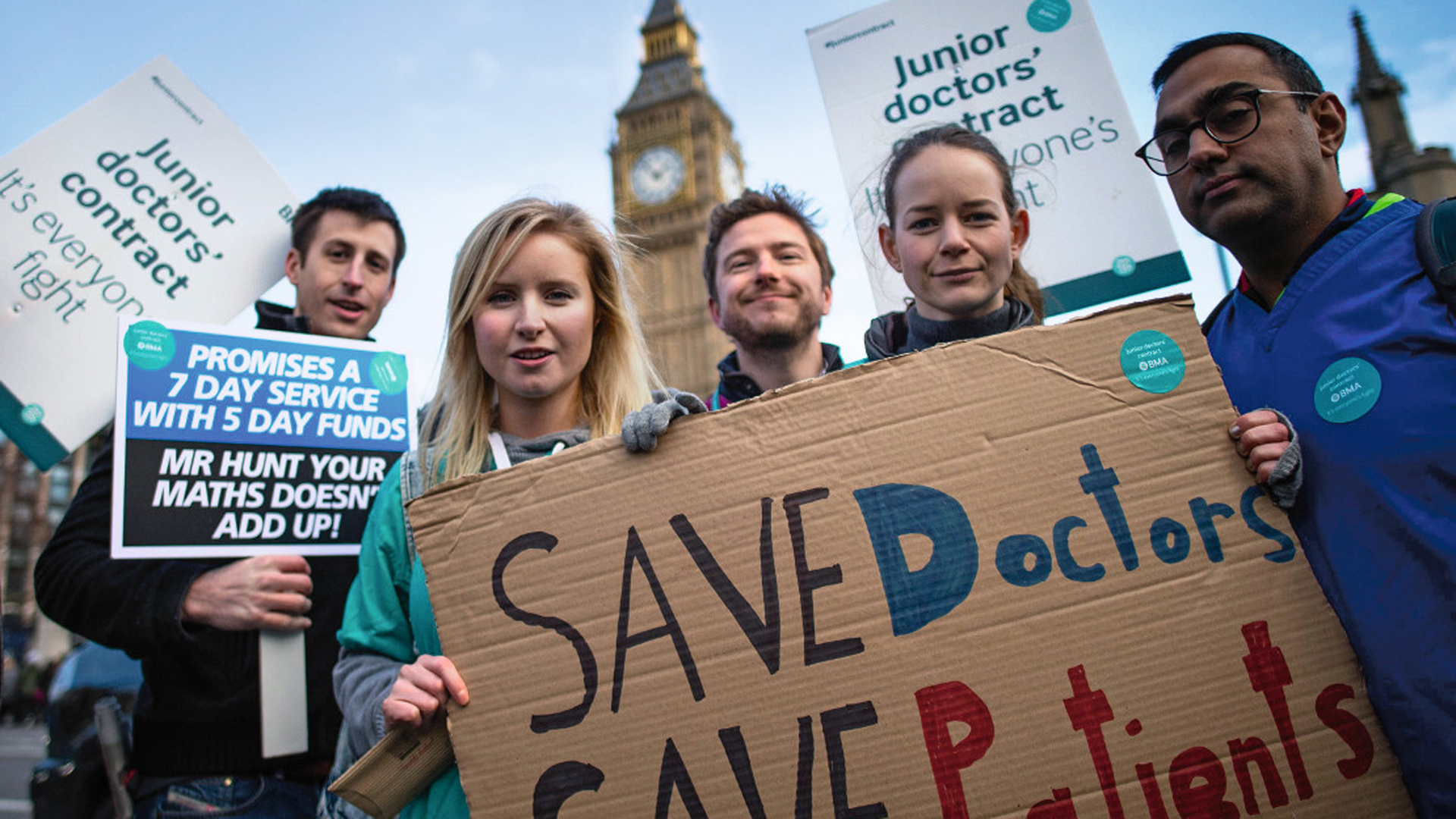
Forty years ago, when I was in a revolutionary group, one of our members was a junior doctor. He was always tired, always doing more than 100 hours a week. Surely, I argued, it was a bit like serving an apprenticeship, with muck and bullets and over work being a part of the job. Wouldn’t there come a time when they would be looking back on their times of heroic sacrifice as a necessary stage to pass through?
The health service, though, is bigger, deeper into the community, and busier than ever. And what is at the very heart, and this was the killer for me, is patient safety. If you did happen to carry on the worn-out-doctor syndrome into eternity it would come with more risks. For patients as much as for doctors, and for medical boards and trusts. More negligence flows from exhausture.
I sat also with a former hospital staff nurse who pointed out that 30 years ago the acute wards’ average age might be in the 50s. But now it was into the ’80s. People were living longer, needing more help, and in the middle of all this the government seems intent on saving money.
Keep reading the journalism that powers our mission
Register free to continue and learn more about the stories, campaigns and the support we provide, helping people facing poverty across the UK.
If patient safety is not put first then how can it be called a health service?
This week the group of junior doctors have asked leading lawyers Bindmans LLP to do a judicial review. They are out fundraising to pay for this. As one doctor said: “It doesn’t matter if it comes out in favour of the government’s actions. This will mean that they have covered all the rota issues, that patients’ safety has been taken care of. And they have done their homework on making the new arrangements work.”
I was at a loss as to why you would rush around raising money for a review that proved the government right. But the doctor did say: “This is not about junior doctors and their conditions. It’s about patient safety. Short and simple. Will the government getting junior doctors to cover two doctors’ jobs at the same time still make it possible to put the patient’s safety above all things?”
It was a maelstrom on my part of instant learning. I have kept myself to myself over health. Always, at the drop of a hat, said that we need more prevention. We need to stop the 70 per cent of patients who are ill because they’ve eaten, drunk or done the wrong things to themselves; that’s been my argument.
But here, in the middle of life, if thousands of doctors leave the system because of exhausture and a sense of no one listening to their plight, then we will have an even bigger crisis on our hands. And also, if patient safety is not put first then how can it be called a health service?
It would seem that somewhere there is a good piece of clarity demanded over this issue. Is the government laying patients open to a poorer, more unsafe service? Or is the government going to develop a superior service for less money?
Perhaps the judicial review will clarify the above.
A special health issue of The Big Issue is on the cards. Look out for both sides of this turbulent story. All I know is that between us, hoping that the NHS is not turned into a US clone, full of management speak, and turned into a cash cow for companies that will build profits out of anything – from prisons to hospitals – it’s not always to the benefit of those using these services.
John Bird is the Founder and Editor in Chief of The Big Issue. Email him: john.bird@bigissue.com or tweet: @johnbirdswords