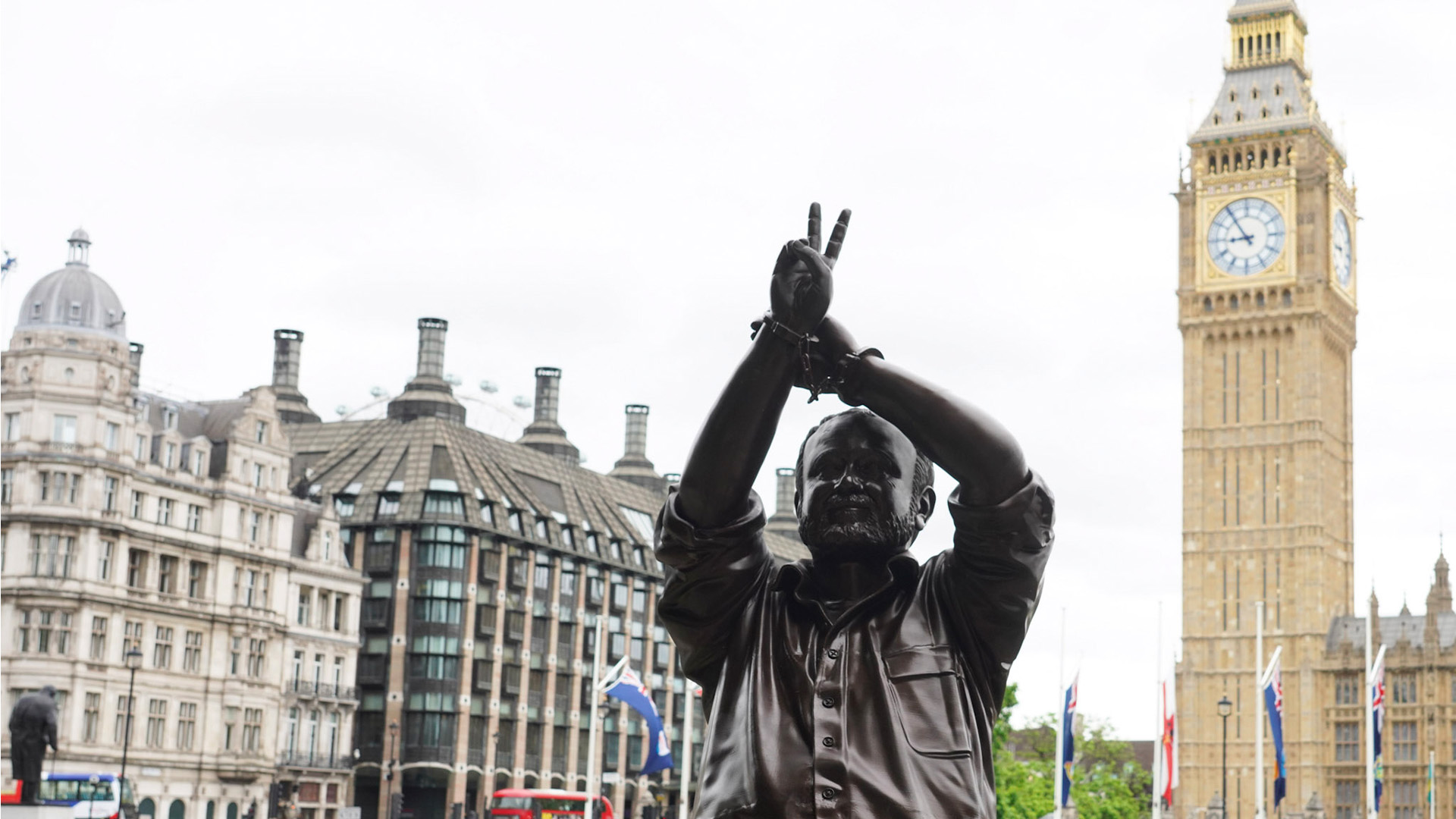
I’m sitting in Florence’s Nelson Mandela forum surrounded by veterans of the Italian Pro-Palestine movement. It’s over 30 degrees. We are here because seven Tuscan municipalities are recognising Marwan Barghouti as an honorary citizen. Arab Barghouti, Marwan’s son, received the award on his behalf. Arab is led into a glass replica of Mandela’s cell. The original cell on Robben Island is where in 2013 the campaign to free Marwan Barghouti, ‘Palestine’s Mandela’, was launched. The symbolic impact has the Italian Free Marwan Committee weeping.
“What is happening to Barghouti is exactly the same as what happened to me”, declared Nelson Mandela in 2002, shortly after Marwan’s arrest in Israel.
Mandela highlighted the similarities before anyone else had noticed. Since this moment, the campaign to free Marwan has drawn huge inspiration from the struggle to free Mandela.
- How one remarkable day in Westminster showed the power of the Big Issue to change lives
- Jon Snow: ‘It was wonderful to talk to Nelson Mandela’
- David Attenborough by Chris Packham: ‘I don’t think he has an earthly equal’
Barghouti has been in Israeli jail for 24 years following a trial that has been widely condemned as illegitimate and politically motivated. The Inter-Parliamentary Union, representing over 180 national parliaments, found “numerous breaches of international law” in his case, concluding it was “impossible to say that Mr. Barghouti received a fair trial.”
However, a lifelong freedom fighter, Marwan said: “If the price of my people’s freedom is my own freedom, I am willing to pay that price.”
Marwan Barghouti is Palestine’s most prominent political leader. He regularly polls the highest when Palestinians are asked who they want to lead them. This sustained popularity, despite more than two decades behind bars, underscores how Barghouti is almost uniquely trusted across Palestinian factional lines. Many international observers see him as the only figure who could credibly negotiate, and deliver, a two-state settlement. His imprisonment, supporters argue, removes the very person most capable of brokering peace.