In the occupied West Bank, a child is killed every week. When did that become acceptable?
Since October 2023, at least 258 children have been killed and more than 2,100 injured in the West Bank, writes UNICEF UK CEO Dr Philip Goodwin
by: Dr Philip Goodwin
24 Jul 2026
UNICEF UK CEO Dr Philip Goodwin visited the community of Um El Kheir Village south of the WB with UNICEF State of Palestine, meeting children and hearing about the challenges they face. Image: UNICEF/2026/Ahed Izhiman
Share
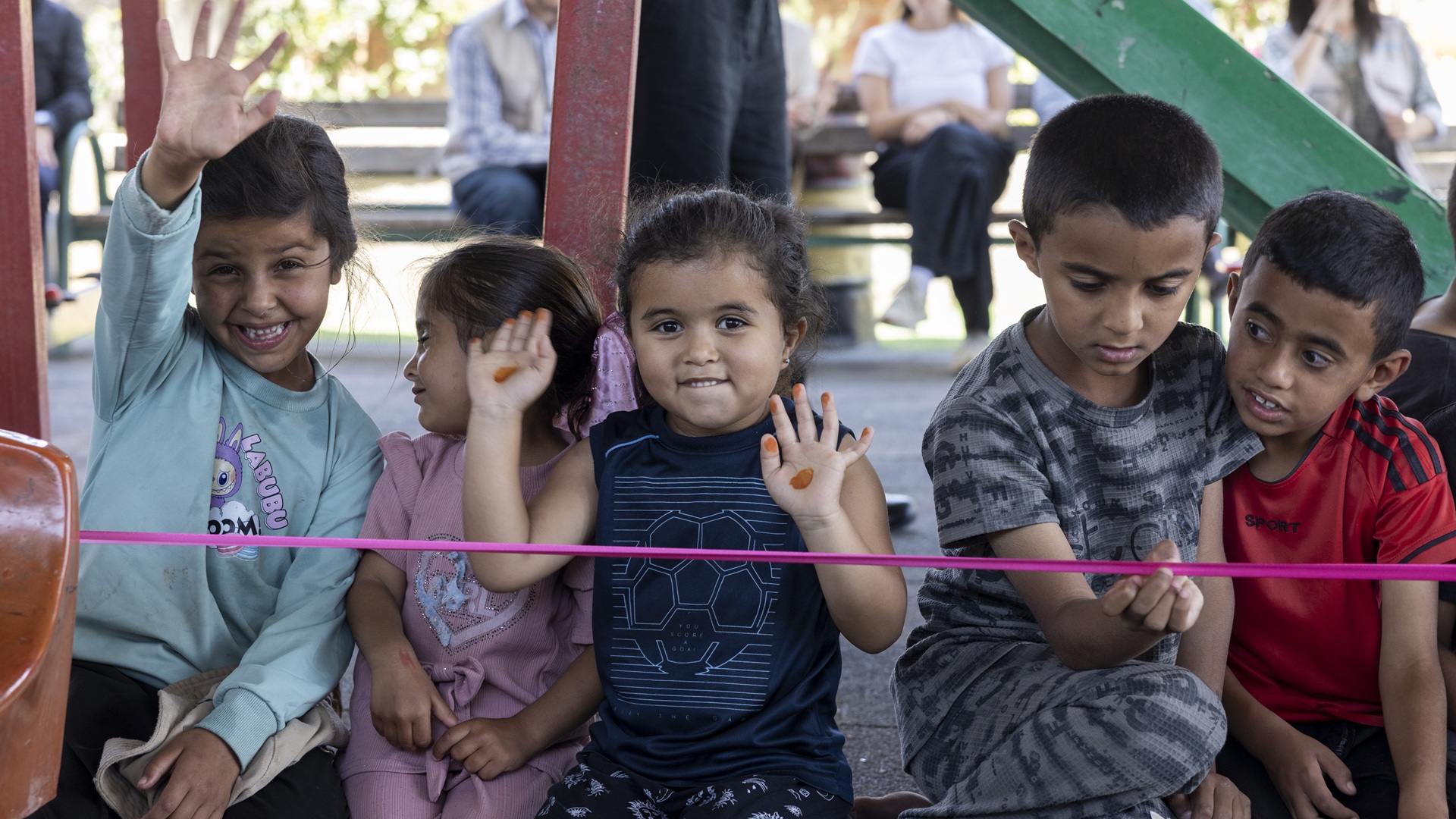
Just outside a community centre in the occupied West Bank, there is a small football pitch. Like children everywhere this summer, the ones who play here have been swept up in World Cup fever – arguing over goal celebrations, pretending to be their favourite players, replaying the tournament’s most iconic moments.
But this pitch is hemmed in by razor wire. If the ball goes over the wire, the children can’t retrieve it – to try would risk violent repercussions, because a settler outpost, illegal under international law, sits right on the other side.
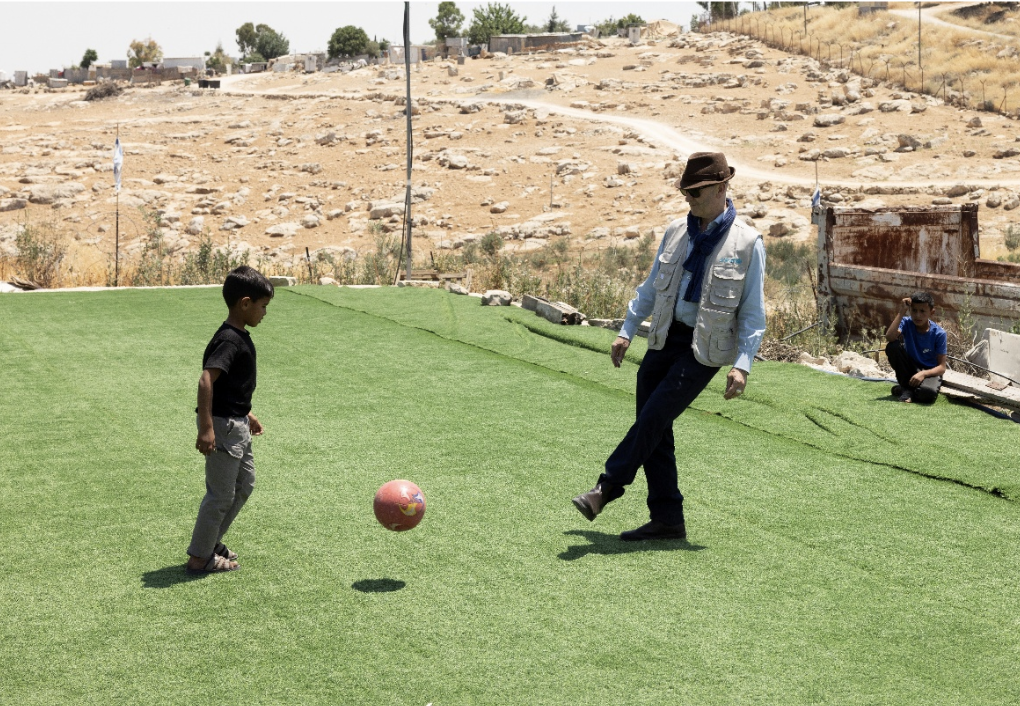
I visited this centre on a recent trip to the West Bank. I played football with the children, and it was clear that this place has become a lifeline for them. So many children across the West Bank have been cut off from their schools due to attacks, demolitions and roadblocks. Places like this one provide the chance for kids to play, take part in safe activities and have a sense of normalcy.
Both this community centre and the football pitch are under a demolition order. They could be taken away from these children at any moment.
Settler attacks and militarised operations have escalated sharply across the West Bank, including East Jerusalem.
Since October 2023, at least 258 children have been killed and more than 2,100 injured. Just days before I visited, a seven-month-old boy died after being shot by Israeli forces while sitting on his mother’s lap in the backseat of a car. He had not yet had the chance to take his first steps.
Advertising helps fund Big Issue’s mission to end poverty
Advertising helps fund Big Issue’s mission to end poverty
Children I spoke to told me they felt frightened after being threatened by settlers on a regular basis, or having dogs set on them. In Hebron’s H2 district, I walked through a militarised zone where checkpoints and barriers govern even the simple act of a child getting to school. This is creating a system of intimidation that is not treated like the emergency it is.
UNICEF UK CEO Dr Philip Goodwin playing football with a child in the occupied West Bank. Image: UNICEF/2026/Ahed Izhiman
This horror extends to how children are treated when they are detained. Nearly 350 children from the West Bank are currently held in military detention, the highest number in eight years, for alleged security-related offences. They are subject to violence, ill-treatment and harsh conditions. Only 7% of those held have been convicted of any crime, and half – 180 children – are held under administrative detention orders, without any charge or trial, regular access to legal counsel nor the right to challenge their detention.
What struck me most, beyond the visible damage, was the psychological weight children are carrying. Continuous exposure to raids, intimidation and displacement is driving a serious mental health crisis: sleep disturbance, societal withdrawal, deep-rooted fear. Children should be free to learn, to play, to imagine a future. Yet, many have learnt that stepping outside can lead to violence, arrest, or worse.
Keep reading the journalism that powers our mission
Register free to continue and learn more about the stories, campaigns and the support we provide, helping people facing poverty across the UK.
As CEO of UNICEF UK, part of my responsibility on visits like this is to bear witness – to make sure these children’s voices aren’t drowned out by the news cycle or lost in a sea of statistics. Because that is exactly what’s at risk of happening.
Children are losing their lives to violence, too frightened to walk to school, and their only safe spaces could be bulldozed or cut off by new access restrictions tomorrow. This should cause global outrage and condemnation.
Advertising helps fund Big Issue’s mission to end poverty
UNICEF’s teams continue to work across the West Bank and East Jerusalem every day, providing child protection, education, health, water and sanitation, and mental health support to families who have been displaced or are living under threat.
Israeli authorities have legal obligations to uphold child rights in all areas within their jurisdiction or effective control, including occupied territories – and they must take immediate and decisive action to stop the killing and maiming of Palestinian children and to protect their homes and schools in line with international law. Member States with influence must also use their leverage to ensure the same.
The alternative is to let this continue to be treated as normal. It is not, and it must never become so.