To the second point, there really is no consensus. Bill Gates, for example, has suggested taxing the machines that major organisations will use to replace humans. Those corporations will be saving huge amounts of money, so for the greater good some of that should return to national exchequers. This gets close to the idea of massive taxes on the super wealthy to help support those with less.
A refrain that returns when this is floated is that such taxes will drive the wealthy away and damage the economy. It is hard to find evidence to support that thesis. And the counter makes more sense – we can’t afford to maintain the superwealthy. A weird tremulous fear of upsetting them is holding nations back.
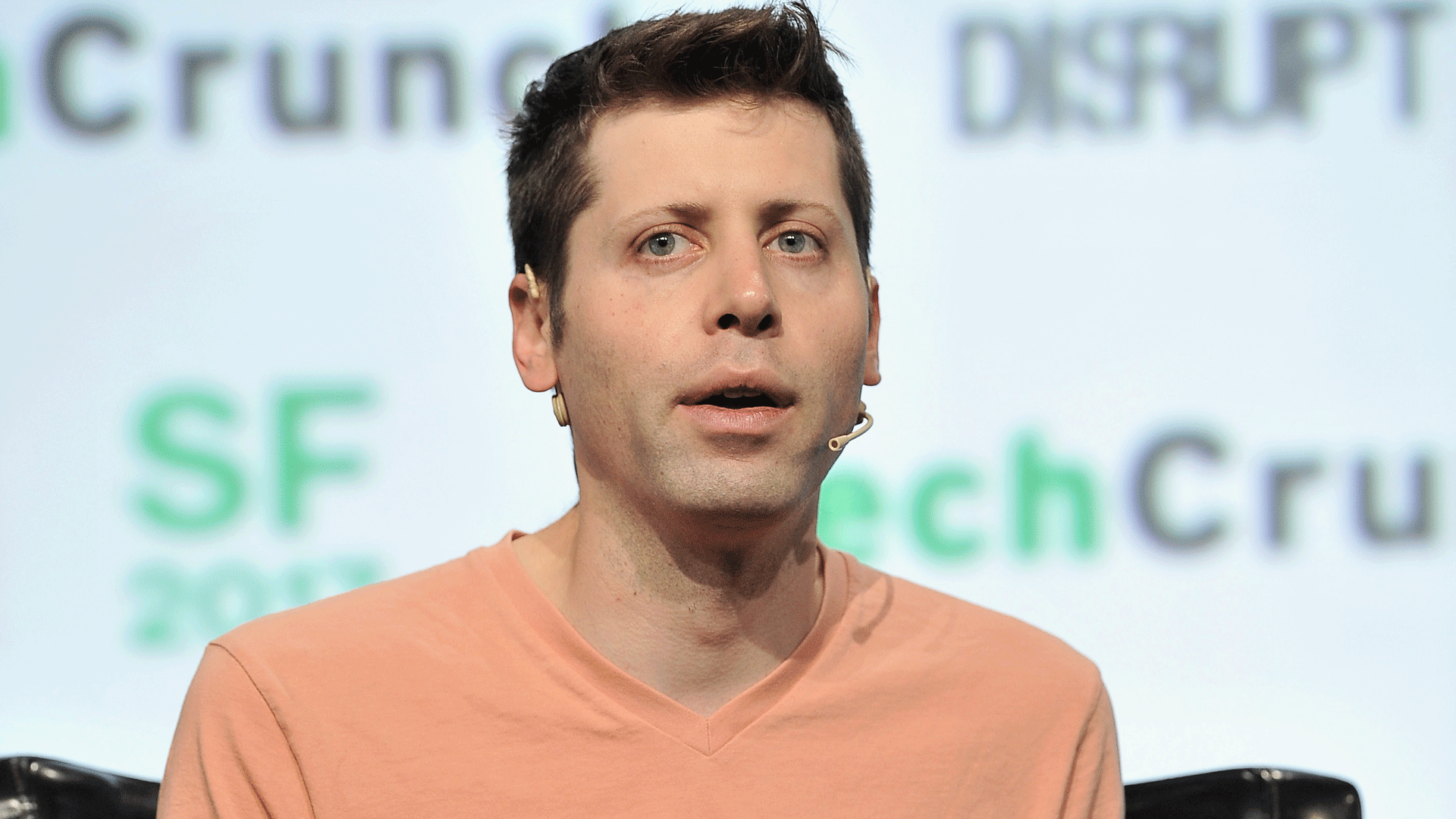
Which brings me to Sam Altman. He’s a tech billionaire. Sitting beside the monster funds of Musk or Bezos or Zuckerberg, Altman is small beer. He’s worth just a couple of billion dollars. But he’s more interesting than most of the others. Rather than getting lost in self-serving boys’ toys vanity projects, he is attempting to wrestle with big oncoming global problems.
Keep reading the journalism that powers our mission
Register free to continue and learn more about the stories, campaigns and the support we provide, helping people facing poverty across the UK.
Altman’s great success has come through AI. His company, OpenAI, is responsible, among other things, for ChatGPT. He has driven the future. And clearly he sees what a box he has opened.
Some level of universal basic income will be necessary to people, he believes. Altman has been working with a major-scale UBI trial for several years. So far, $60m has been put into it. And last week the first findings were published.
The project involves 3,000 people in parts of Texas and Illinois. They have been given $1,000 a month since 2020. Participants are aged between 21 and 40 and are on around average income, which was set at $29,991 a year.
There is also a control group who were given just $50 a month.
The results are, so far, not massive. They show that those with the $1,000 monthly boost were more likely to look to move home, to spend more on dental care and to give more money to help others. The idea that universal basic income means people will bin work and instead sit at home in their pants playing computer games is not borne out. Within the higher income group, people worked 1.3 hours less a week than the control group. But they were using their time to find other things to do outside of work, to broaden their lives.
This was not the case for the lower income group.
There are more results to come with deeper analysis in the coming months. One thing is clear though – when people have money, they are more likely to live better. Surely helping that happen is worth sticking with.
Paul McNamee is editor of the Big Issue. Read more of his columns here. Follow him on Twitter.
Do you have a story to tell or opinions to share about this? Get in touch and tell us more. Big Issue exists to give homeless and marginalised people the opportunity to earn an income. To support our work buy a copy of the magazine or get the app from the App Store or Google Play.