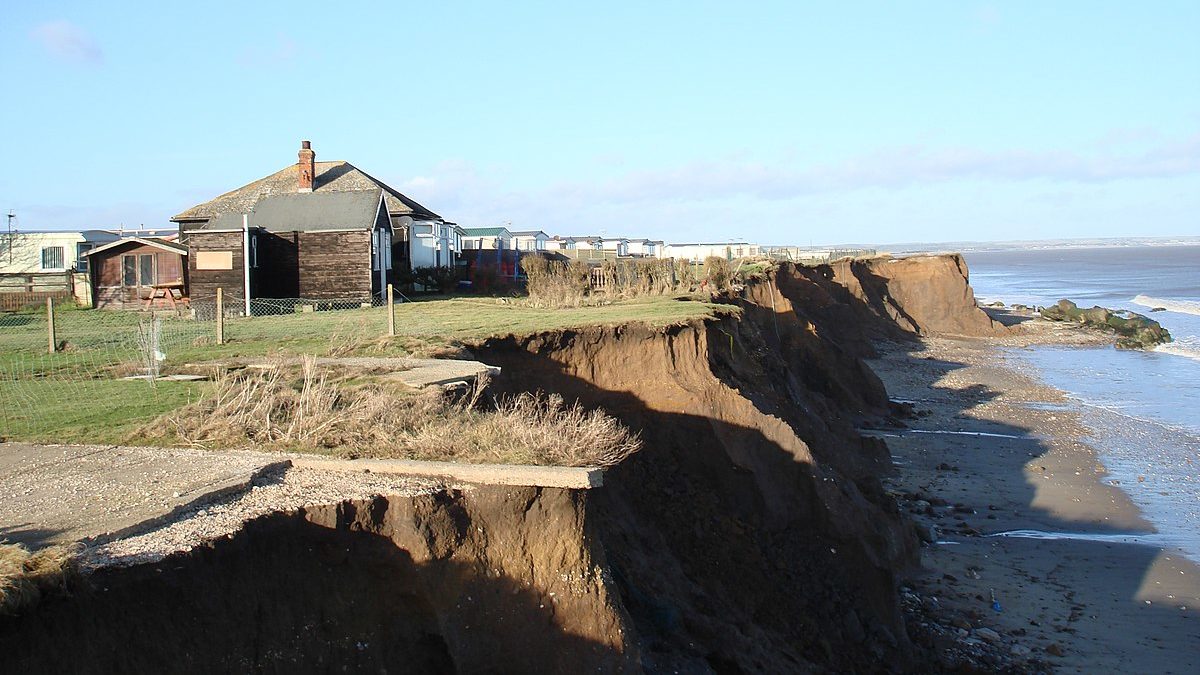
East Yorkshire is home to one of the fastest-eroding coastlines in Northern Europe, the result of climate change-induced flooding. Image: Tracey Anne Taylor (cc-by-sa/2.0)
“Let me come now to the hardest of all inconvenient truths, which is this: in the long term, climate change means that some of our communities cannot stay where they are,” Bevan will tell a conference in Telford today.
In a prepared speech released before the event, he will outline the actions the EA will take in the coming years to protect communities from the impacts of flooding, erosion and rising sea levels. This includes a new national assessment of flood risk and long-term investment scenarios.
According to the EA, around 5.2 million homes in the UK are currently at risk of flooding, with thousands of homes built on flood plains every year despite the long-term risks.
If current planning outcomes continue, the EA projects that the number of homes at risk of flooding could double in the next 50 years.
Advertising helps fund Big Issue’s mission to end poverty
Advertising helps fund Big Issue’s mission to end poverty
Flooding and erosion caused by rising tides along the coast is particularly challenging for local communities. It is no longer considered financially viable to protect 114 miles of UK coastline from flooding, with parts of the North Norfolk and East Yorkshire coastline worst affected.
In 2019, the village of Fairbourne in Wales became the first in the UK to be “decommissioned” due to climate change. Residents have been told they will have to leave the area by the mid-2030s when flooding is expected to submerge the village entirely.
Neither the EA nor the government has indicated if, or when, other parts of the UK may be similarly “decommissioned”.
Keep reading the journalism that powers our mission
Register free to continue and learn more about the stories, campaigns and the support we provide, helping people facing poverty across the UK.
Bevan said it was time to “start the conversation” about the options available to communities threatened by coastal flooding, stressing that the “communities themselves” must decide what actions to take.
“When we do eventually get to decisions on any relocation of communities, they must take full account of the views of the people who live there: no-one should be forced from their homes against their will,” he said.
In March, the government unveiled a £36 million Coastal Transition Accelerator Programme to help threatened areas “explore innovative approaches” to adapting to coastal erosion. The initial focus areas will be the East Riding of Yorkshire and North Norfolk.
Information about the programme indicates that interventions may include moving infrastructure “[away] from the highest risk areas” as part of a “managed transition” for communities, though Bevan said it remains “far too early to say” which communities may have to undergo relocation in the long term.
Advertising helps fund Big Issue’s mission to end poverty