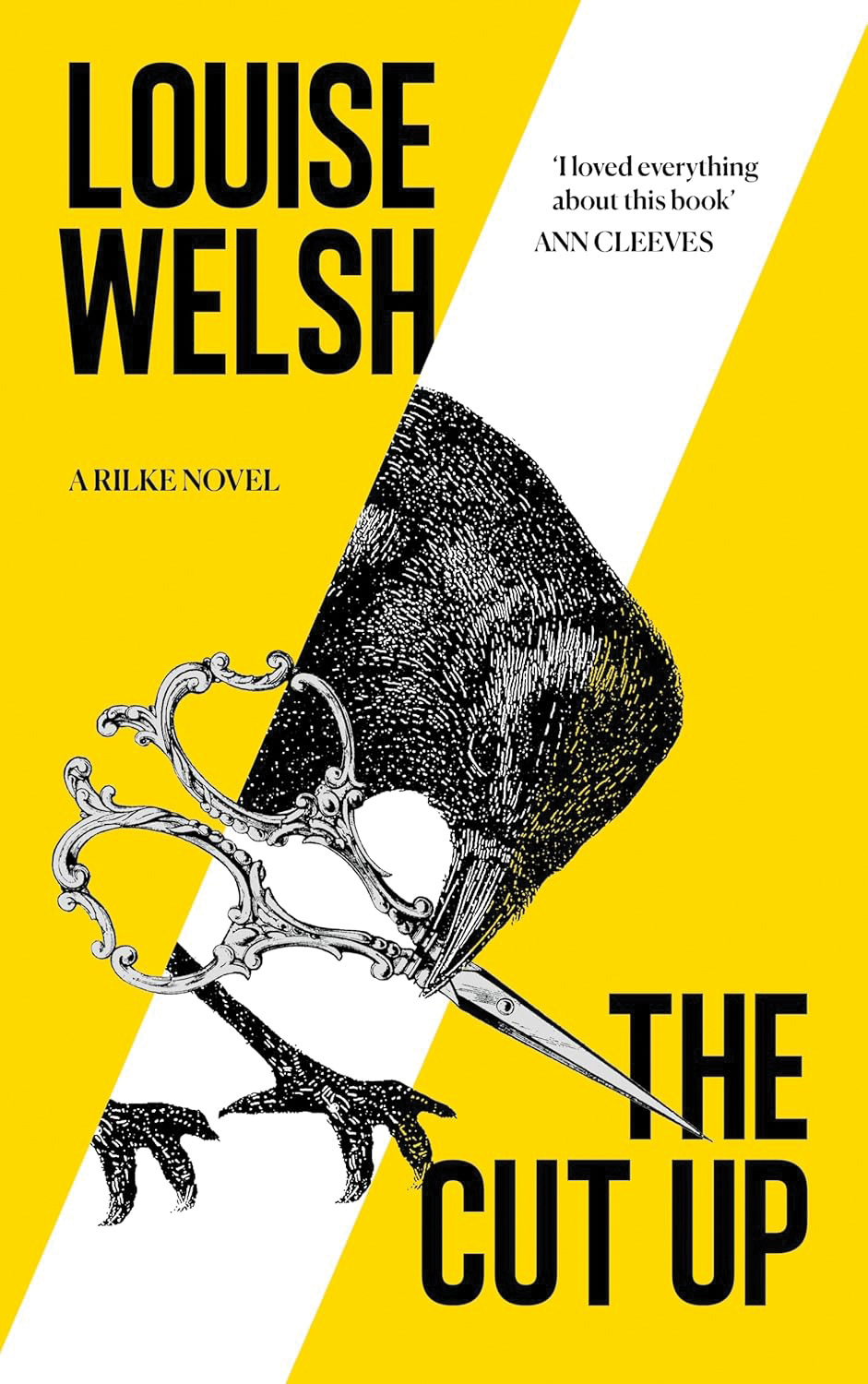
A strong sense of place is one of the many reasons we read fiction. A good novel, such as Louise Welsh’s latest, The Cut Up, can help us find out how a city ticks, expose the real place behind the tourist brochures.
Welsh’s debut novel, The Cutting Room, launched her on Scotland’s literary scene 24 years ago, becoming a modern classic. It featured Rilke, an acerbic, gay auctioneer navigating Glasgow’s seedy underbelly to solve mysteries close to his dark heart.
Welsh only returned to Rilke’s world with The Second Cut after a gap of 20 years, but now she has delivered a third slice of slippery and morally dubious adventures, as Rilke – now older and not necessarily wiser – has to negotiate his way through a maze of intrigue once again focused on Bowery Auctions, the business that allows the reader into the murky world of Welsh’s Glasgow.
Read more:
- Top 5 crime novels set in Glasgow, chosen by Novak and Mitchell author Andrew Raymond
- Doug Johnstone: How a stroke led to my first contact with aliens
- Why I mapped the whole of Scotland by hand
The inciting incident is beautifully delineated. Rilke finds a customer of the auction house dead outside, a vintage hat pin embedded in his eye. Rilke last saw the hat pin in the hair of his boss Rose, so he removes and hides it before calling the police. This split-second decision creates repercussions throughout the smart, propulsive narrative, ripples that spread out to become waves that disrupt all aspects of Rilke’s life.
Welsh employs many of the tropes of classic noir in The Cut Up – Rilke squeezed between the bad guys and the police, the moral uncertainty of his actions, a wonderfully vibrant cast of deadbeat and lowlife characters who become the beating heart of the book.