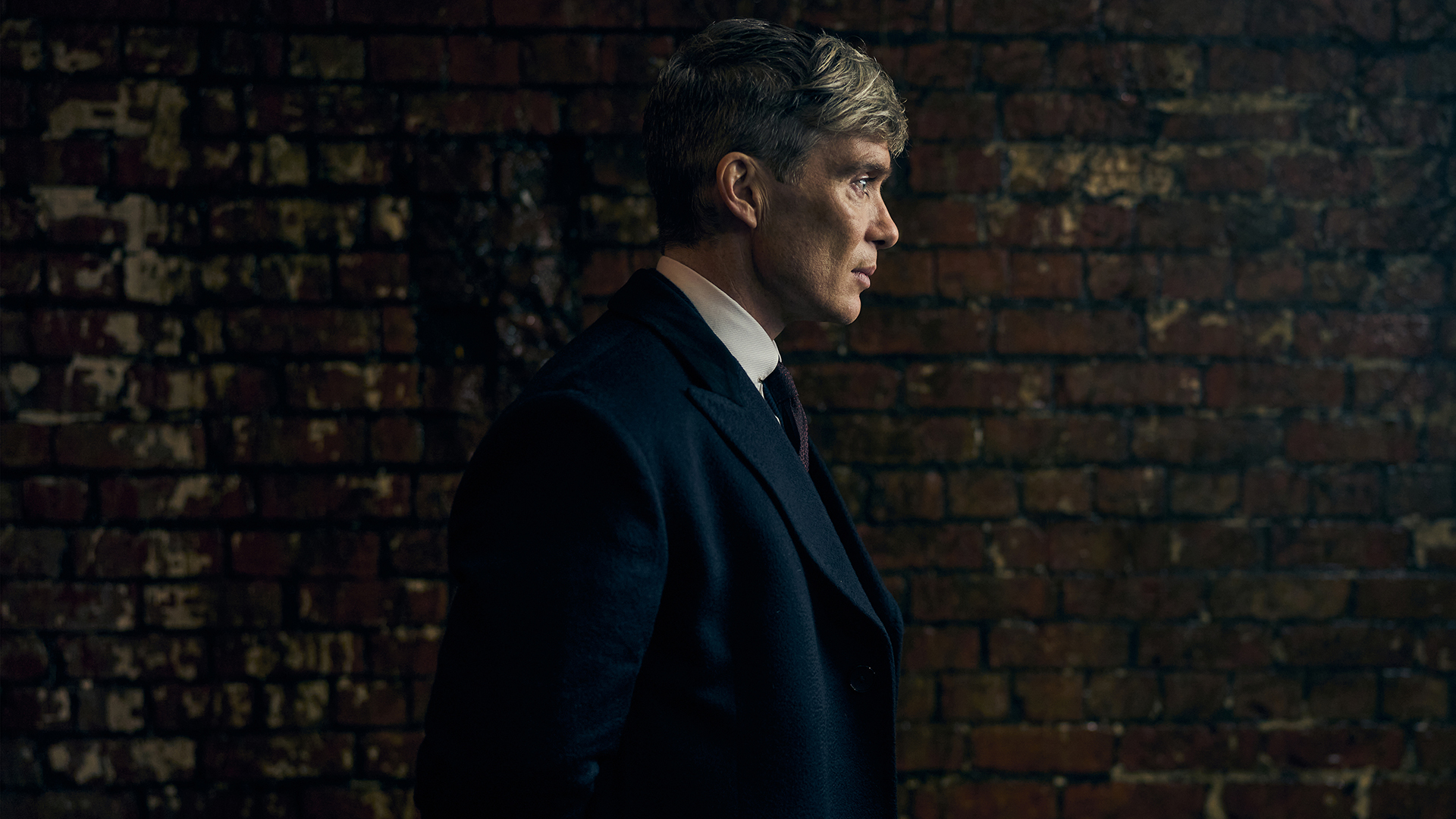
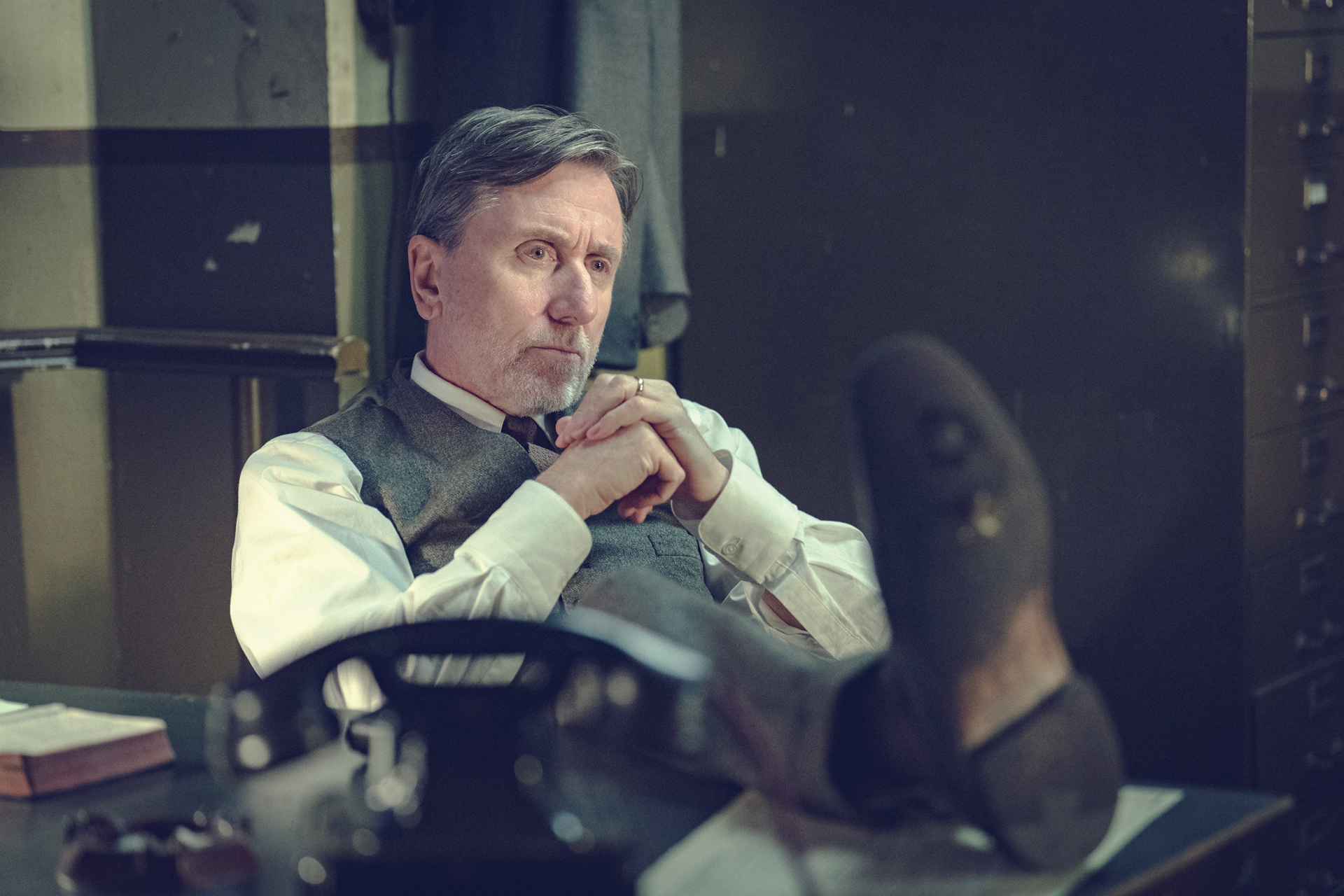
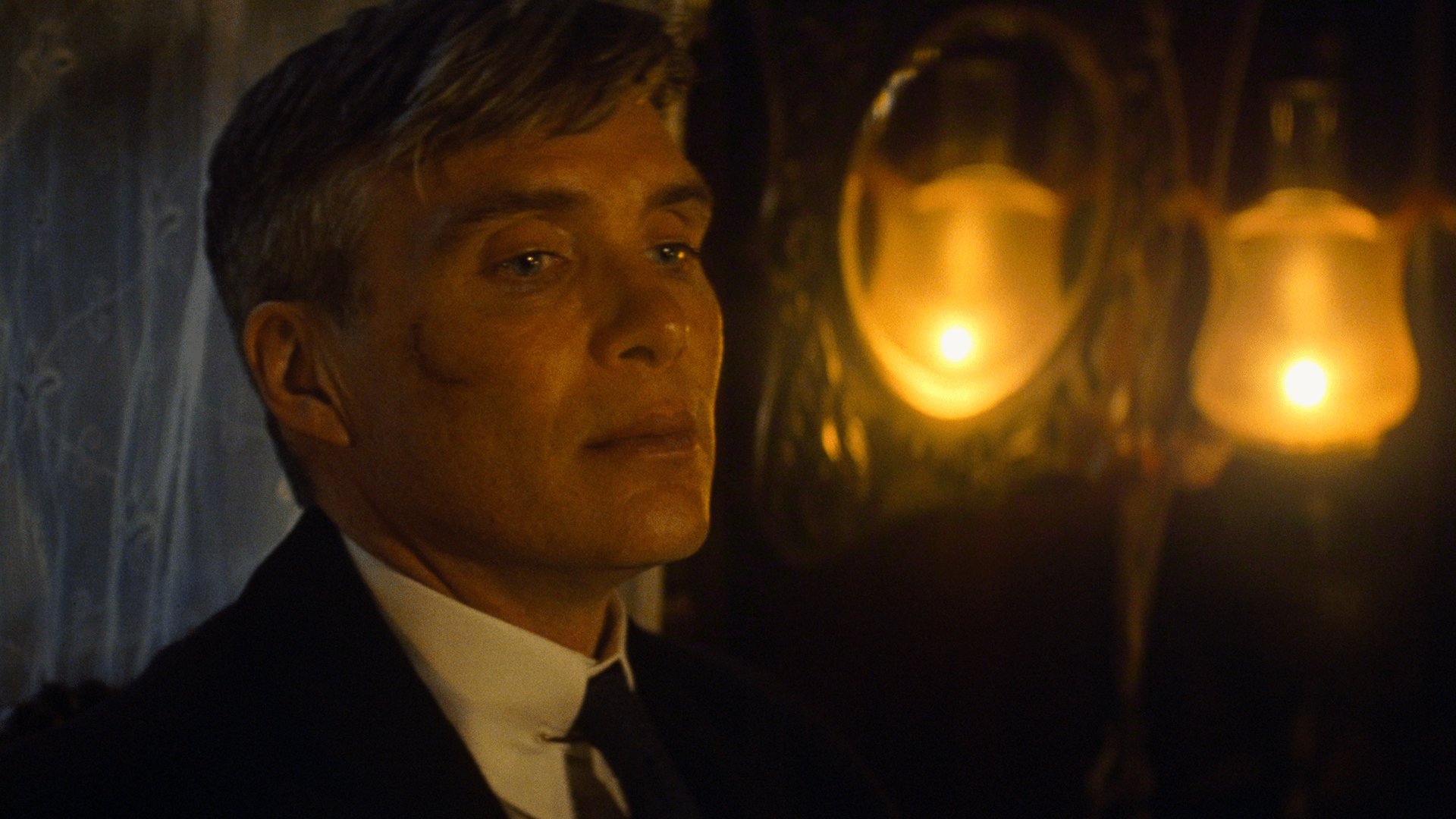
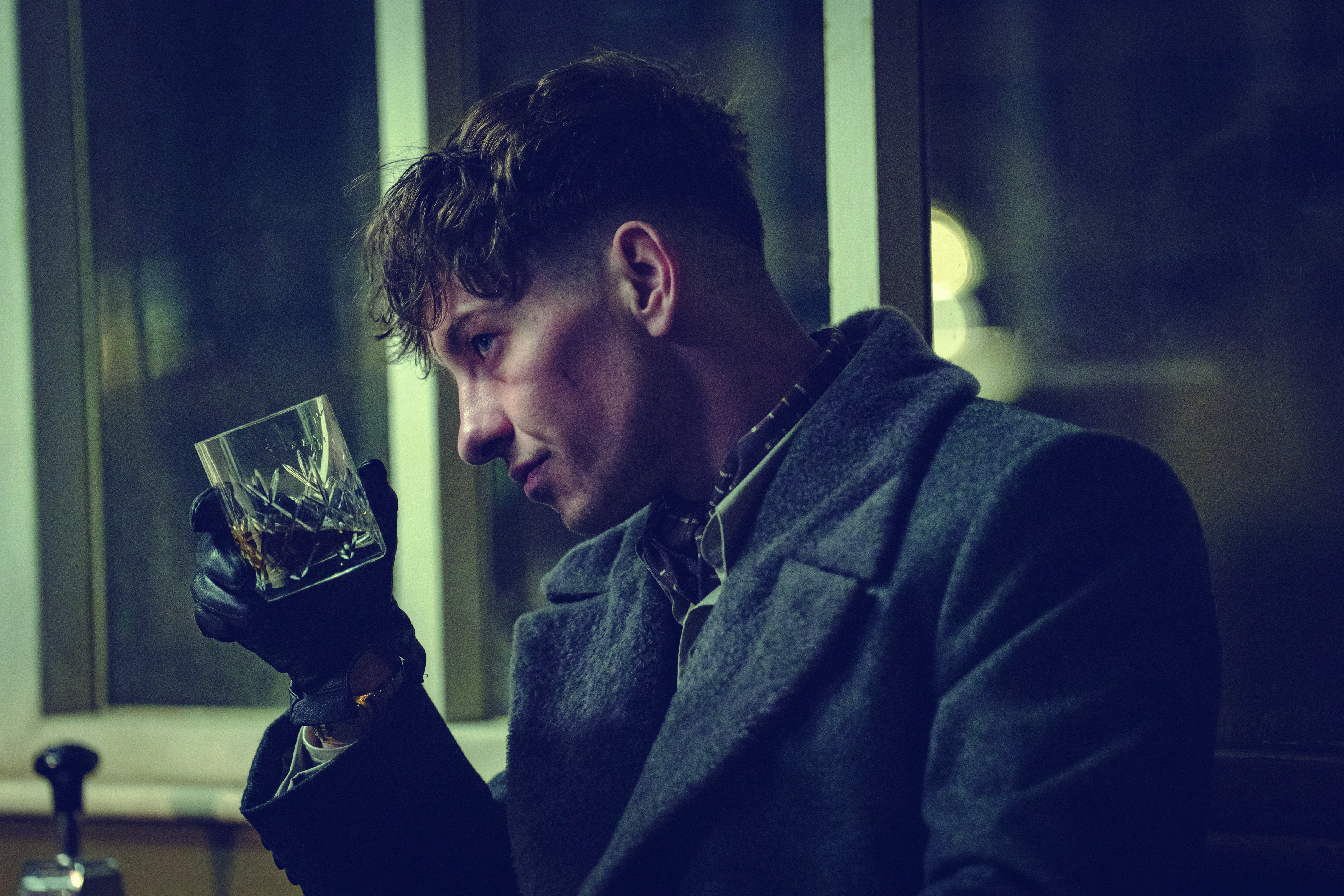
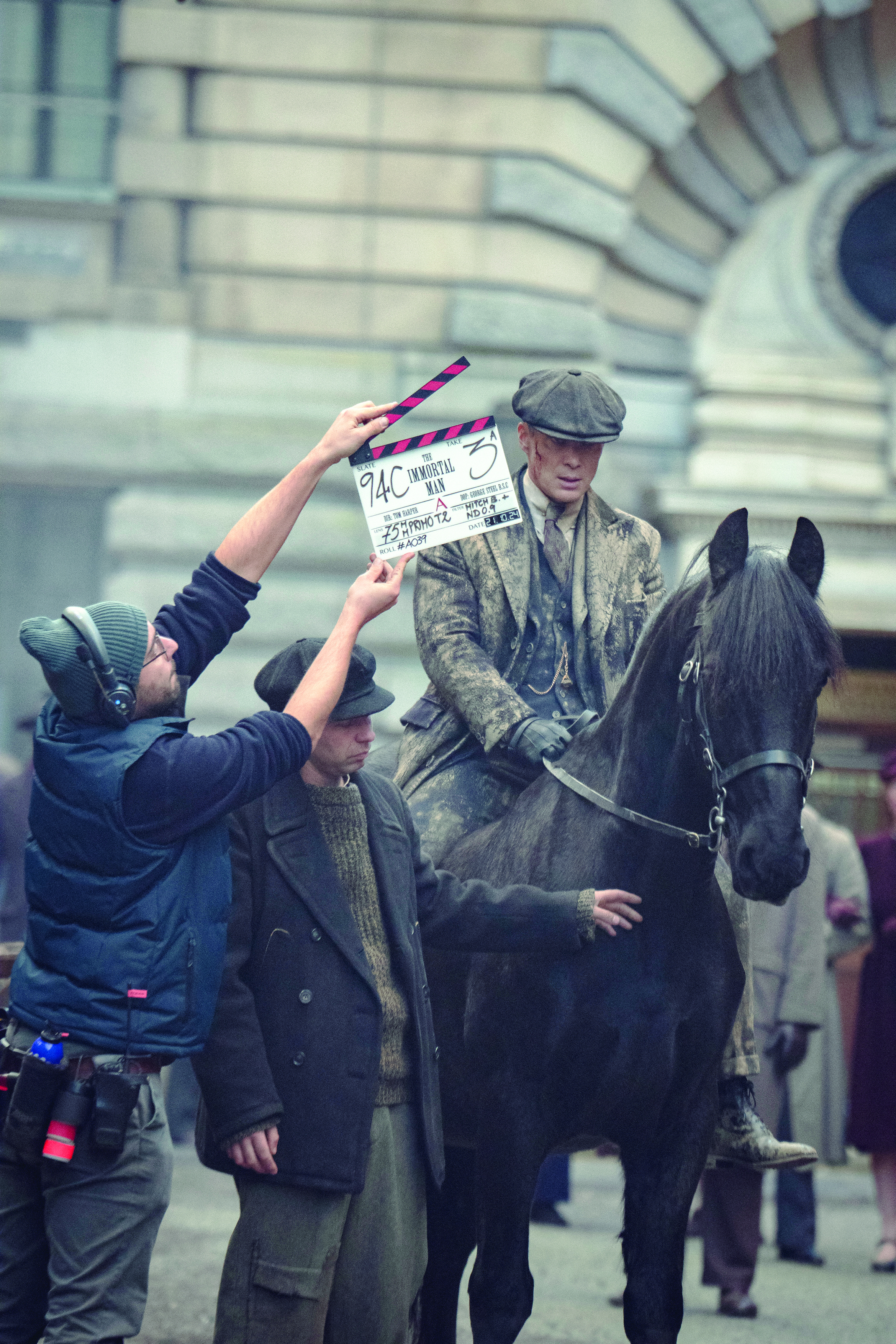
Cillian Murphy in Peaky Blinders: The Immortal Man. Image: Netflix
Share
When Peaky Blinders first aired on BBC Two back in 2013, its creator Steven Knight already had lofty ambitions. He said at the time that he would like to end with a movie set during the Second World War, after having covered the entire interwar years through the eyes of Tommy Shelby and his gang across multiple series.
Knight smiles, recalling his vision for a show which averaged a handy, but hardly exceptional, 2.38 million viewers for its first series. “Leonard Cohen said all you need to be a writer is arrogance and inexperience. That displayed both!”
Yet somehow, Knight’s audacious plan has come true. And after six series, graduating to BBC One and more than doubling its audiences for the most recent two outings, it arrived on the big screen before a final resting place on Netflix.
It is not just the size of the audience that has expanded since the early days of Peaky Blinders. To say the stakes have been raised for Peaky Blinders: The Immortal Man is a massive understatement. Because whereas series one concluded with Tommy and his crew attempting to take over some betting pitches at Worcester Races, now the Peaky Blinders have the power to decide whether Hitler and fascism triumph in the Second World War.
But although the world depicted in the show has grown exponentially, for Knight the key to continued success is bringing it all back home.
Advertising helps fund Big Issue’s mission to end poverty
Advertising helps fund Big Issue’s mission to end poverty
This is personal for Knight. It always has been. His mission on making a film, was, he says, “finding ways to keep it local as well as global. It’s the same people, the same family, same locations – but the world has now come to Small Heath.”
The film opens at Sachsenhausen concentration camp in Germany, where forged banknotes are being manufactured on an industrial scale. It’s a depiction of the real-life Nazi plan to flood the British economy with forged currency, thereby creating hyperinflation and economic chaos – winning the war with banknotes rather than bombs, as Tim Roth’s ‘charming’ fascist enabler John Beckett calls it in the new film.
But within minutes of screen time, the action is back in Birmingham. Again, like so much of Knight’s tale, it is based in reality.
Continue reading for free
Registration is free and takes less than 30 seconds.
Our supporters make Big Issue’s work possible. Join us to see the impact we’re having together and discover more ways to help people facing poverty access income, opportunity and support.
The manufacturing industries and redeployed car factories of the West Midlands were vital to keep the British war machine rolling. And the bombing of the Birmingham Small Arms Factory in Small Heath, which was among the largest munitions factories in the world at the time, on 19 November 1940, was devastating to both the local community and the British war effort.
“I wanted to start with that, base it on a family story,” says Knight. “It was a story I knew well because my mum worked at that factory during the war. Around 50 people were killed – they had been offered the chance to go to the air raid shelters. But they chose to work on to help the war effort.”
Advertising helps fund Big Issue’s mission to end poverty
The Birmingham Blitz is not taught in schools, where we hear about the Blitz in London, the evacuation of kids to the countryside and Winston Churchill’s speeches. “We rarely mythologise ourselves,” says Knight. “Although I do think that Peaky Blinders is going some way towards that now. We are telling our story. I mean, this is the birthplace of the industrial revolution.”
In Tommy Shelby, the enigmatic, smart leader of the Peaky Blinders, Knight and actor Cillian Murphy co-created one of the great long-running on-screen anti-heroes. His journey, so compelling across six seasons, concludes with an epic story of fathers and sons, ruin and redemption, legacy and loss.
“I’ve never wanted to be part of the thing where working-class people are either comic figures or scary figures,” says Knight of his central character. “I mean, the Peakys are scary, but we get to know them and I always wanted to do justice to the emotions and the passions and the ambitions of working-class people that are more than the product of where they’re from.
“If Tommy Shelby is anything, he says – I think – ‘I’m not a traitor to my class. I’m just an extreme example of what a working man can achieve.’”
But as the film opens, Tommy is a virtual recluse, living quietly with the ghosts of his past in his crumbling old mansion house, writing a memoir to try to make sense of his life. Meanwhile, back in Birmingham, his estranged son Duke is leading a new-look Peaky Blinders.
Duke, played with a winning mix of danger and charisma by Barry Keoghan, is out of control, with none of the vague sense of honour among thieves that Tommy practised. So it is that when fascism, in the form of John Beckett, comes knocking, Duke opens the door to a mutually beneficial collaboration.
Advertising helps fund Big Issue’s mission to end poverty
“I wrote the character of Beckett as a toff, but Tim Roth wanted to play him as coming from the same class as Tommy. The way he plays it is quite charming – you can imagine being persuaded by him. And I wanted him to represent fascism in a way. He’s someone people can be beguiled by. And that’s a scary thing.”
By contrast, Duke displays the sort of misguided alienation that still sees young men radicalised to this day. “The world don’t give a fuck about me, I don’t give a fuck about the world.”
Local veterans of the First World War are disgusted when Duke and his gang raid the recently bombed munitions factory and loot weapons. Local MP Ada Shelby (Sophie Rundle) – another who has risen to great heights from unlikely beginnings – tries and fails to persuade her brother Tommy take Duke in hand.
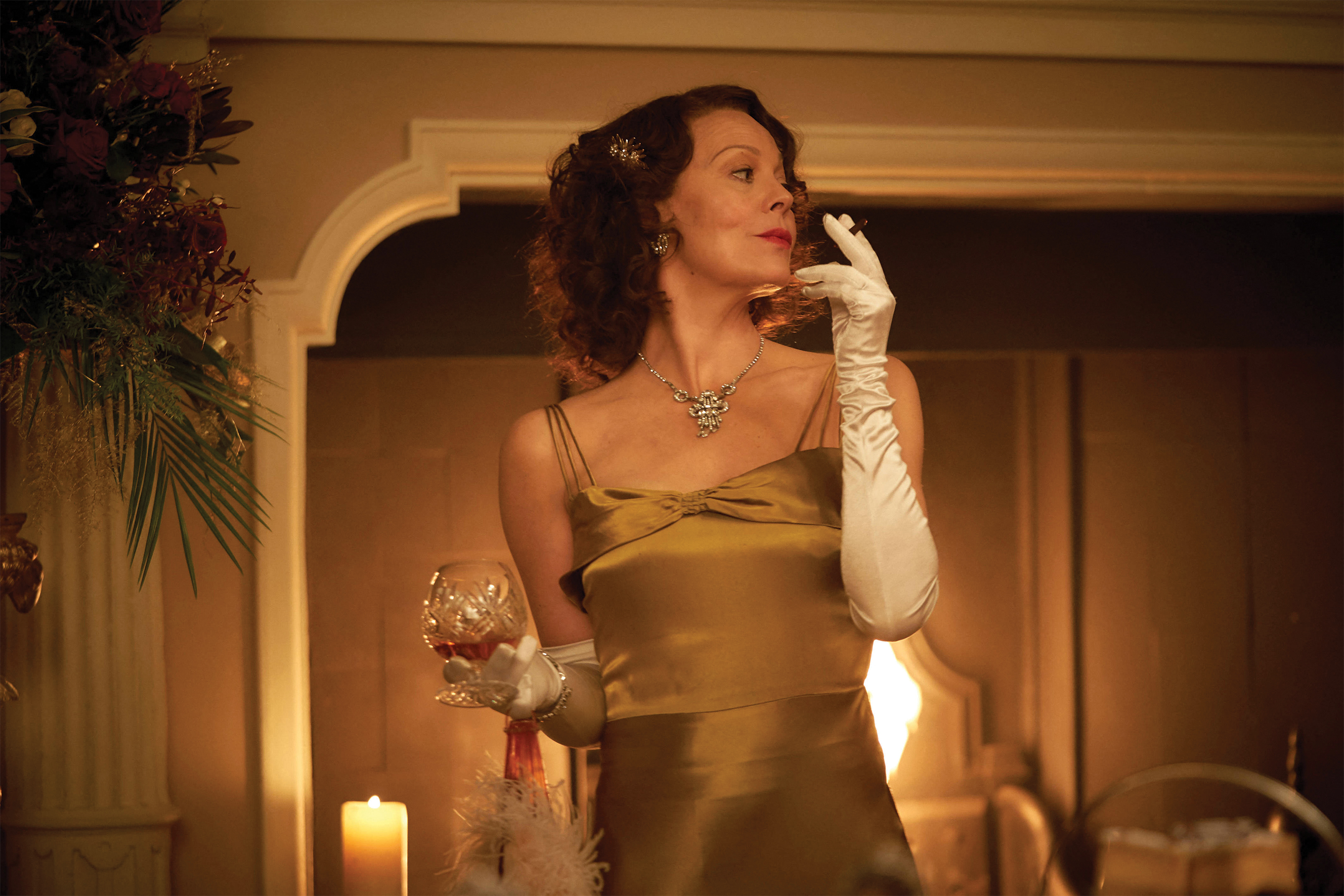
Only Kaulo (Rebecca Ferguson, stealing every scene she’s in), Queen of the Palmer Gypsies and identical twin of Duke’s late mother, is able get through to Tommy – channelling some of the magic and mysticism of the late, great Polly Gray (played so memorably by Helen McCrory).
Roth, Ferguson and Keoghan bring movie star heft to help Peaky Blinders make the jump to the big screen appear effortless. For, with Murphy spending the first half of the film alone in a big house, fighting ghosts, smoking drugs to dim his pain, it was vital Keoghan could take charge of the gang.
“They are among the best actors on the planet,” says Knight. “It really helps to have Cillian, because everybody respects him. So we get the cream of the acting profession.
Advertising helps fund Big Issue’s mission to end poverty
“Barry, I think, is the very best of his generation. After seeing the very first rushes, I knew he was the only person who could have done it. Because he’s got the face, he’s got the look, and Barry’s also from a quite difficult place himself – and he brings all of that to this role.
“It feels like a world where the rules are being erased, you know. And I think Duke represents that. Duke also knows his dad fought fascism in the last war – so when he agrees to work with Beckett, it’s to spite his dad’s legacy.
“It’s about legacy and succession and how you pass the crown on. So Duke’s mum died, his dad left him, he was brought into the Peaky fold and in the intervening years, his dad has gone away again. So he feels abandoned. And Barry was able to explore all that. It’s then a question of redemption. Is it possible for those two people to come back together?”
Murphy has won an Oscar [for Best Actor in Oppenheimer] in the time between filming the final season of Peaky Blinders and making the film. But his participation was never in doubt.
“When he was winning his Oscar, the next morning, LA time, I got a text saying ‘I can’t wait to get started on Peaky – which meant, you know, I’m not gonna disappear,” says Knight.
“He’s such a great professional. He leads the line so well. It’s great to see someone like that rewarded. Working with him feels effortless – we see eye to eye, we want the same things.”
Advertising helps fund Big Issue’s mission to end poverty
Murphy is also able to bring his vast knowledge of music to the table to help put together a soundtrack that would be the envy of any filmmaker. Fontaines DC’s Grian Chatten, Amyl and the Sniffers’ Amy Taylor, plus Dublin political folkies Lankum and Nick Cave, of course, feature at key moments of the film.
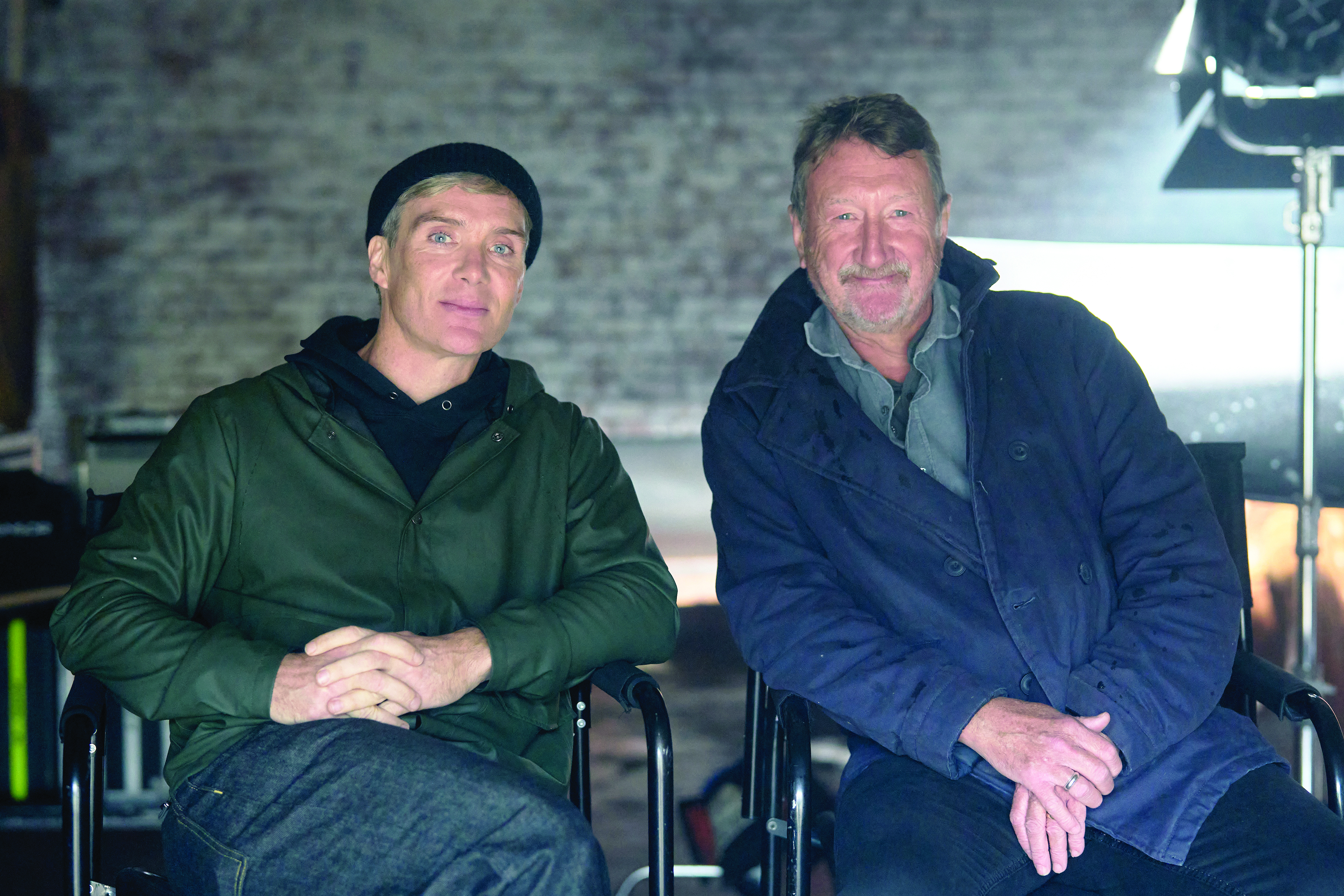
Cillian Murphy and Steven Knight
“Cillian really is the man when it comes to music,” says Knight. “He’s got an address book of the very best and coolest musicians. And because it is Cillian, they all say yes! It’s hard to remember but when we started using contemporary music on a period drama, people were shocked,” continues Knight.
“Now it’s become normal. Nick Cave even re-recorded Red Right Hand for us for the film. And the way he’s done it reflects the years that have gone by – his personal experiences. So there’s Tommy on the horse, covered in mud, and it’s the same song, but it’s now weighed down with a lot of experience.”
Writing on Peaky Blinders, Knight has always tapped into a present-day political zeitgeist. He was writing about the historical rise of fascism and nationalism in the UK, which has been mirrored since – both at home, across Europe and in the US.
He was writing about powerful people running rings around the accepted way of doing things – “for those who make the rules, there are no rules”, was a memorable line in series five – in the years before the parties in Downing Street while the rest of us were observing lockdown. Now he’s writing about people making money from global warfare.
“I’m never going to write a film about the Third World War, because it might happen,” he jokes.
Advertising helps fund Big Issue’s mission to end poverty
“It’s not for me to comment on current politics, but all I will say is that it does feel very timely to see what we’ve seen. Things go full circle. Tommy Shelby is reflecting on that in the film – he fought in the First World War. And wasn’t it supposed to be the war to end all wars?
“Yet here comes another one. And the rise of fascism again. So it’s not a conscious decision but if you’re writing, you absorb what’s happening or have these premonitions of what may happen.
“There is a collective amnesia,” adds Knight. “It seems that just after world wars, everybody goes, ‘that was insane. We must never do that again’. And that civilises the debate for two or maybe three decades. Then the idea that you can solve things with mass slaughter becomes popular again.”
From small screen drama on BBC2 to the cinema screen and global domination via Netflix, this has been quite the journey for Knight and Murphy. While it’s the end of Tommy Shelby’s involvement in the story, plans are afoot for two further television seasons – both to be filmed, as was The Immortal Man, at the Digbeth Loc Studios, Knight’s own film studios in the West Midlands.
For now, though, Knight is delighted to see Peaky Blinders in the cinema.
“I really love that the fans who have been watching it on TV and communicating virtually are going to be able to go to one place and watch it together,” he says.
Advertising helps fund Big Issue’s mission to end poverty
“There’s gonna be a lot of people dressing up, which is really good. The cinema strikes back, you know? That’s what cinemas can do – you get a community of people together to watch in the same place.”
And if they’re not a Peaky Blinders fan already? There still might be something in this tale of redemption, of a working-class superhero putting his iconic costume back on to swoop into action.
“My daughter normally finds my stuff boring,” reveals Knight. “But she loved it. She said it reminded her of Batman!”
The Peaky district
Call it the Peaky Blinders effect. In the West Midlands, the creative industries support around 50,000 jobs and generate £1.1 billion in annual revenue. Since the first series of Peaky Blinders aired in September 2013, there has also been a 50% rise in visits to the region from the US.
In 2023, Steven Knight opened Digbeth Loc Studios in Birmingham. Peaky Blinders: The Immortal Man filmed there, as will Knight’s next two new series of Peaky Blinders, set after the war. UB40 are also recording their new LP there, while Masterchef relocated to a new purpose built studio at Digbeth Loc in 2024.
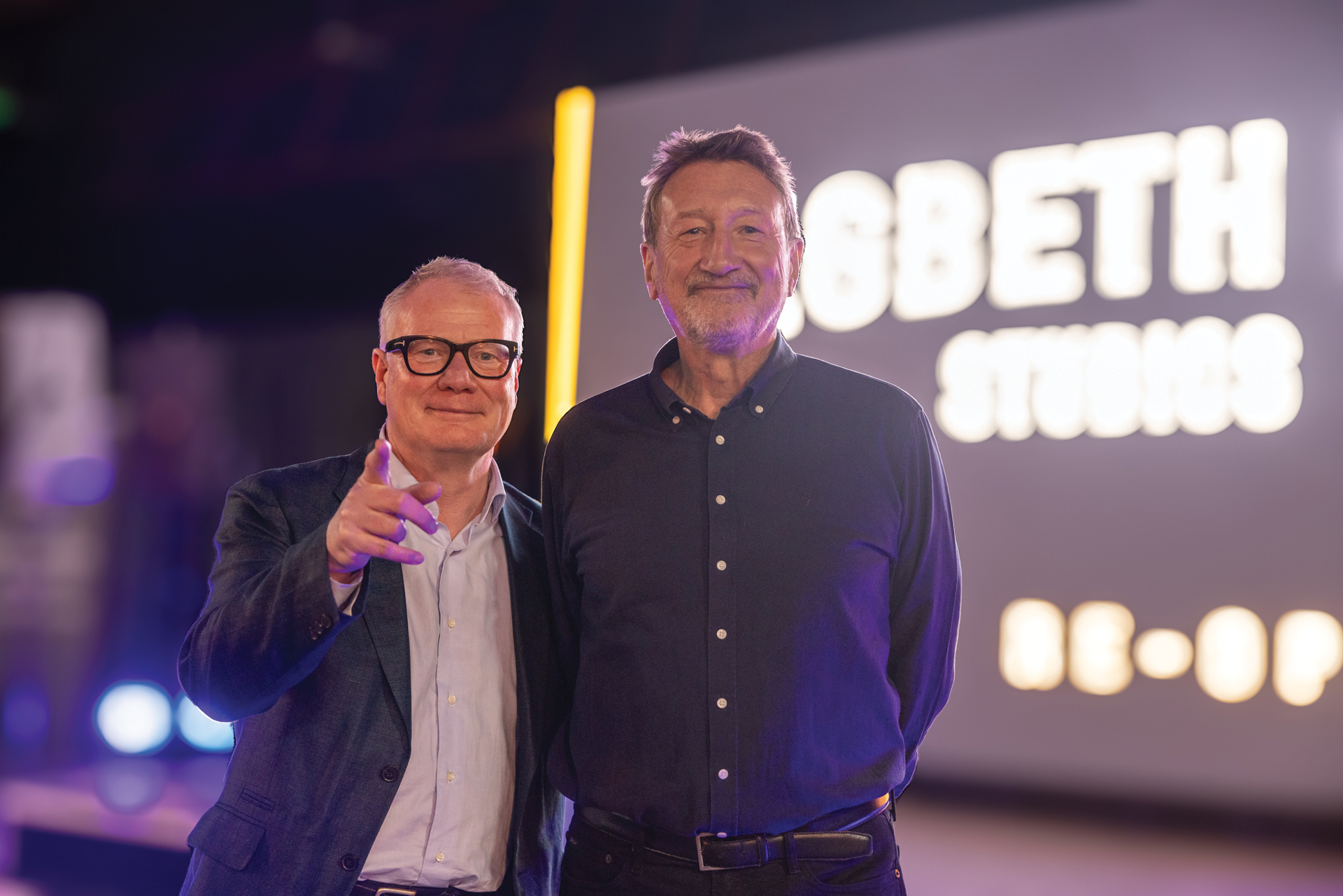
Richard Parker with Steven Knight at Digbeth Loc Studios
Mayor of the West Midlands Richard Parker told Big Issue: “The global success of Peaky Blinders has been a huge boost for our region. It’s brought in more visitors and created real momentum for our creative industries.
Advertising helps fund Big Issue’s mission to end poverty
“We’re on the cusp of something big, and Steven Knight’s Digbeth Loc Studios is at the heart of my plan to build a world-class film and TV industry here. It’s not just Steven backing that plan, the BBC is doubling its production spend and the government is putting £25 million into our creative economy.
“Alongside blockbusters like Peaky Blinders, we have brilliant independent studios doing amazing work. The importance of our creative sector to our economy is only going to keep growing as more productions choose the West Midlands, creating good local jobs and ensuring the next generation of talent can build exciting careers right here.”
For Knight, this is a mission. “It’s very important to me,” he says. “We are expanding Digbeth Loc Studios – I want it to be for film and TV, the visual arts, we have music here, and I’m in conversation with the Royal Shakespeare Company to bring some training facilities here.
“We’re saying to people who grow up here to include it in your careers options, whatever your skill level. The film business is very broad – you can be a carpenter, an electrician, a producer. Whatever you’ve got, we need it. And we want local people. We want people walking or cycling to work here. Birmingham has always been about making things – so we want to start making even more culture here.”
Peaky Blinders: The Immortal Man is on Netflix from 20 March
Advertising helps fund Big Issue’s mission to end poverty
Change a vendor’s life.
Buy from your local Big Issue vendor every week – and always take the magazine. It’s how vendors earn with dignity and move forward.
You can also support online: Subscribe to the magazine or support our work with a monthly gift. Your support helps vendors earn, learn and thrive while strengthening our frontline services.
Thank you for standing with Big Issue vendors.
Advertising helps fund Big Issue’s mission to end poverty