“This historic action will make renting fairer, safer and more secure for millions, so people can settle, put down roots and build their lives.”
Big Issue founder Lord John Bird said the move to ban no-fault evictions will “lift the sword of Damocles from over the heads of renters at long last”.
He added: “This is true homelessness prevention – turning off the tap and halting the flow of millions of households being unfairly pushed out of private rentals and into homelessness.”
Continue reading for free
Registration is free and takes less than 30 seconds.
Our supporters make Big Issue’s work possible. Join us to see the impact we’re having together and discover more ways to help people facing poverty access income, opportunity and support.
What has the Renters’ Rights Act changed?
The Renters’ Rights Act will bring in a swathe of new measures to protect England’s 11 million renters.
Fixed-term tenancies will be abolished, replaced instead with rolling tenancies with tenants able to end a tenancy at two months’ notice.
Renters now have the flexibility to end any tenancy with no more than two months’ notice, as fixed-term agreements become invalid from today.
Advertising helps fund Big Issue’s mission to end poverty
The law will give tenants the right to request to keep a pet and has pledged to introduce Awaab’s Law and a decent homes standard into the private rented sector in the future to drive up standards.
It will limit rent increases to once per year and deposits to four week’s rent as well as blocking landlords and letting agents from holding bidding wars. Tenants will also have a greater ability to challenge rent hikes.
The Renters’ Rights Act will ensure people on benefits or families with children are not unfairly blocked from getting a rented home.
Employment minister Dame Diana Johnson told Big Issue: “Today is a landmark day for families across England. From this moment, it is illegal for landlords to turn away families simply because they have children or receive benefits, a discriminatory practice that has for too long pushed vulnerable households into insecurity and hardship.
“A stable home is the foundation on which children can thrive, and this change alongside our child poverty strategy – which will lift 550,000 children out of poverty – will make a real difference to families.”
Rogue landlords who break the rules will face tougher fines – up to £40,000 for repeat offenders while tenants may be able to seek rent repayment orders for up to two years of rent, rising from one.
Advertising helps fund Big Issue’s mission to end poverty
What do experts think of the Renters’ Rights Act?
Pro-renter campaigners are celebrating the introduction of the Renters’ Rights Act.
Clara Collingwood, director at the Renters’ Reform Coalition, said: “It’s taken years of campaigning by renters’ organisations to get us to this point but thanks to this legislation, today we are significantly closer to securing decent, secure homes for every renter.”
Labour pledged to immediately abolish no-fault evictions in its 2024 manifesto after the Conservatives’ Renters Reform Bill failed to pass into law.
Government ministers have framed the Renters’ Rights Act as a response to homelessness.
Official statistics released the day before the no-fault evictions ban showed 4,960 households threatened with homelessness due to service of a section 21 notice between October and December 2025. However, that was a 15% fall from the same quarter last year.
Crisis chief executive Matt Downie said: “Private renters will finally be able to breathe a sigh of relief without the threat of a ‘no fault’ eviction or an unfair rent increase pushing them into homelessness.”
Advertising helps fund Big Issue’s mission to end poverty
Generation Rent’s chief executive Ben Twomey added: “Section 21 evictions forced renters to live in fear of being turfed out of our homes, preventing us from raising valid concerns with our landlords. At last, this outdated and unfair law has been sent packing.”
Read more:
Rosie Worsdale, senior policy adviser at the Joseph Rowntree Foundation, suggested that there could be much-welcomed economic benefits for the government.
“A fairer, more secure private rented sector won’t just benefit individual renters, it’s critical for our society and our economy,” she said. “Our homes are vital for our health and our ability to work. Banning short-notice evictions will help renters stay in work and be more productive. It will also reduce renters’ uncertainty, leading to better mental health and wellbeing.”
But the new legislation is not without its challenges.
TDS Charitable Foundation research found two-thirds of renters have not heard of the act or are unclear what it means for them.
Advertising helps fund Big Issue’s mission to end poverty
Dr Jennifer Harris, head of policy, research and social impact at the TDS Charitable Foundation, said: “The government must avoid assuming its work is complete.
“Whilst many of these reforms will undoubtedly empower and support tenants, their impact will depend on tenants fully understanding their new rights and having the tools to exercise them effectively.”
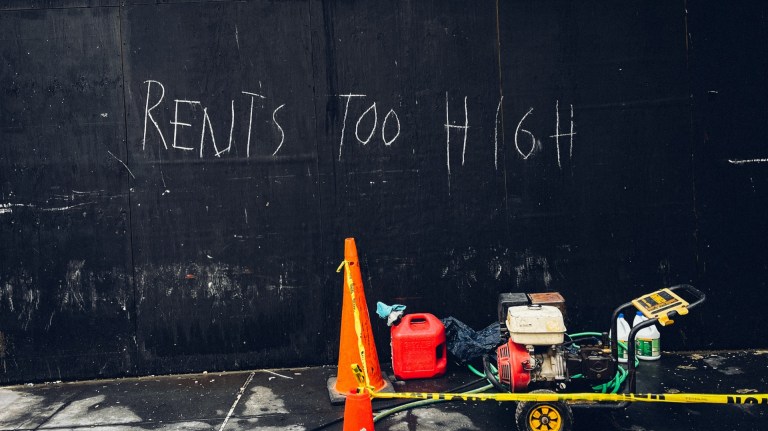
The law also does little to address affordability concerns with rents at record-high levels.
Labour’s efforts to build 1.5 million homes by 2029 and boost social housing will be key to bringing down rents.
But, so far, the government has been unwilling to lift the freeze on local housing benefit, leaving low-income tenants struggling to keep up with rising rents.
Dr Daniella Jenkins, executive director at the Women’s Budget Group, said: “The next challenge is affordability: housing remains unaffordable, especially for women.”
Advertising helps fund Big Issue’s mission to end poverty
Women’s Budget Group research in April 2025 found the average rent for a one-bedroom flat consumes around 47% of women’s median earnings, compared to 34% for men.
“Women are also more likely to rely on social security, meaning they are disproportionately affected by the government’s decision to freeze local housing allowance rates. That decision is becoming increasingly untenable,” said Dr Jenkins.
“With the war in Iran disrupting fuel supplies and intensifying the cost of living crisis, households are bracing for further rises in essential costs. The government must revisit unfreezing LHA rates.”
Meanwhile, landlord lobby groups have warned about the prospect of landlords selling their homes and leaving the private rented sector as well as fears over the impact on the courts.
Community union Acorn warned this week that the proportion of cases involving section 21 notices reported by ACORN members has increased from just over one in five in October to nearly one in three by January.
Ben Beadle, chief executive of the National Residential Landlords Association (NRLA), said the Renters’ Right Act will be judged on whether it roots out rogue landlords, gives responsible landlords the confidence to invest and the chance to reclaim their property quickly.
Advertising helps fund Big Issue’s mission to end poverty
“On all three tests, the jury is very firmly out. We will be monitoring developments closely to assess whether the act is working as intended in practice,” said Beadle.
“The NRLA will continue to provide landlords with all the resources they need to prepare and plan for all these changes as early and effectively as possible, as well as hold the government’s feet to the fire in ensuring that, when implemented, they command the confidence of responsible landlords.”
Time will tell how the Renters’ Rights Act works in practice. But, for now, renters can breathe a little easier and celebrate the end of a gruelling campaign.
Do you have a story to tell or opinions to share about this? Get in touch and tell us more.
Change a vendor’s life.
Buy from your local Big Issue vendor every week – and always take the magazine. It’s how vendors earn with dignity and move forward.
Advertising helps fund Big Issue’s mission to end poverty
You can also support online: Subscribe to the magazine or support our work with a monthly gift. Your support helps vendors earn, learn and thrive while strengthening our frontline services.