Drop the debt
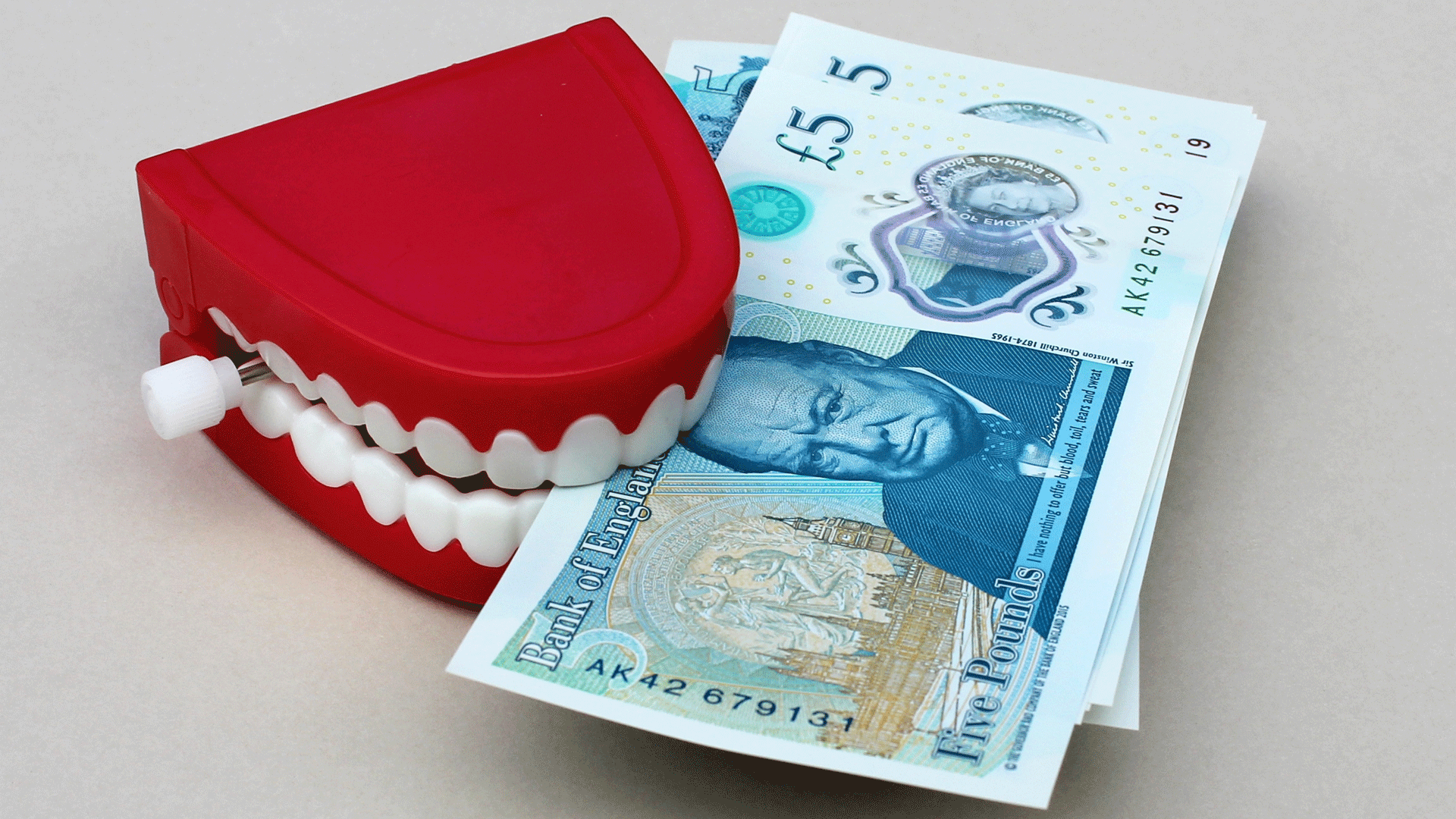
Recently the Bank of England announced that the UK’s national debt payment this year would be a staggering £100 billion. This was later amended by another august financial body to a probable £10.4bn/month (nearly 25% more). If we stick with the Bank of England’s figure of ONE HUNDRED THOUSAND MILLION POUNDS STERLING to be paid to the UK’s creditors, the total insanity rings loud and clear. Think of how many people and institutions have to work to create this colossal sum in taxes and other means.
To me, the only way the UK can extract itself from this financial nightmare is to appoint someone with serious business understanding and business acumen to look into government spending and see how much is frittered away on unnecessary projects and quangos. Of course, any request for belt-tightening would immediately be interpreted as ‘austerity’, and we all know what a mess one government made of that word and its consequences.
REM
Principles for life
At one point it looked like vegan food and animal-free products were really catching on. Then they kind of died a death. The problem was all the major companies started making their own vegan foods, then interest waned, so all the independent brands were bankrupted by the major food corporations, who simply stopped making them. Now there are nearly no vegan food products in most supermarkets and what there is can often be very expensive. You can still get an odd option or two in a pub or restaurant but most fast food chains have barely any vegan options.
Everyone seems set on meat and mass plastic use, where if, we as consumers stopped buying plastic and really made the effort to support alternatives to animal-based products, not only would the prices come down, but the demand would increase and we could really make a difference. Why is this important? Well, much more than just animals suffering for our food, there is the very real problem with the CO2 emissions that meat and other products cause.
Going vegan reduces your carbon footprint due to there being less emissions of harmful gas, and less methane from cows. It cuts land use by 75%, reduces deforestation as there is no need to produce animal feed, and decreases the levels of pollution in the water table.