Advertising helps fund Big Issue’s mission to end poverty
Art

We speak to the PhD student behind this artificial intelligence masterpiece

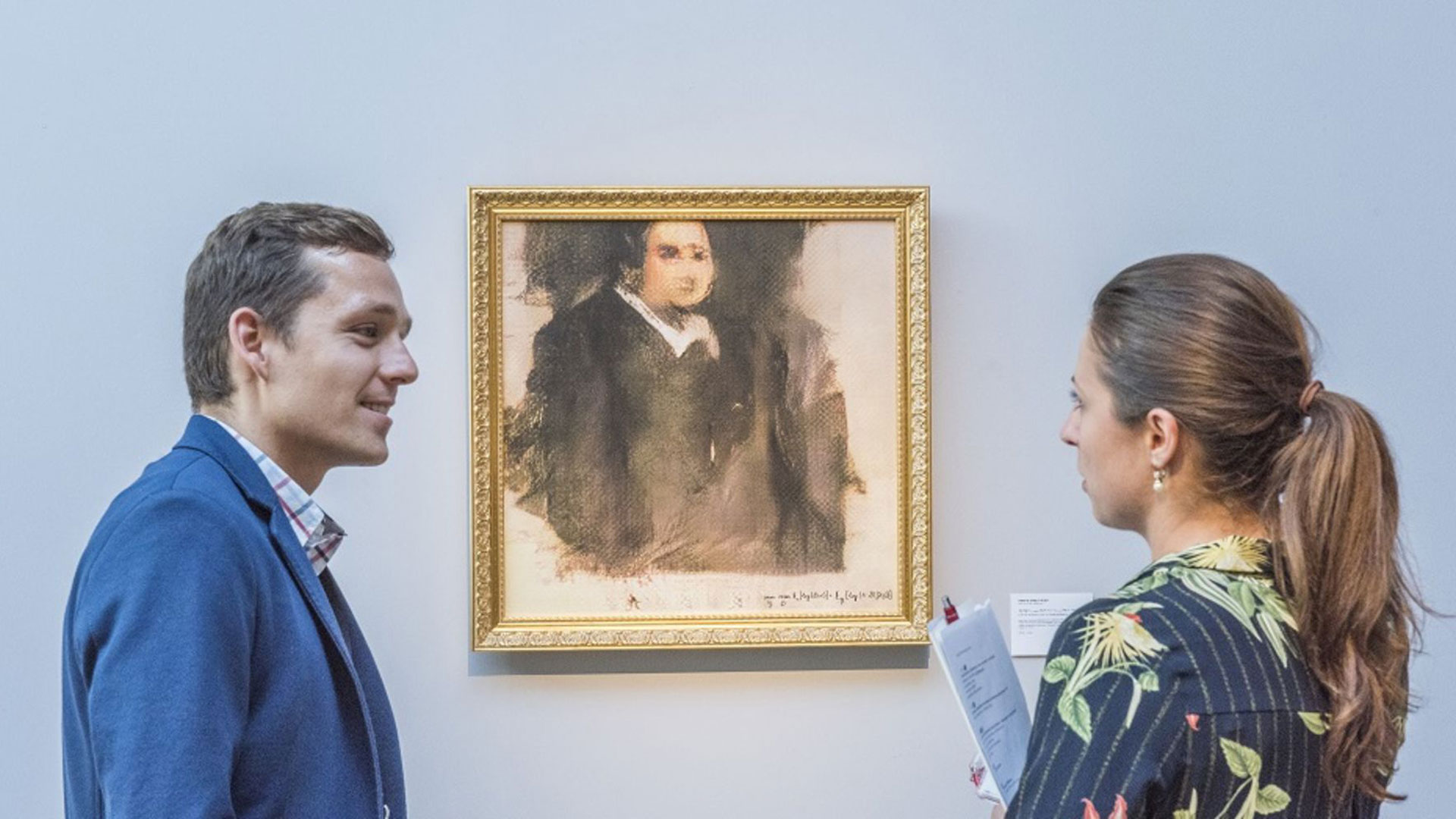
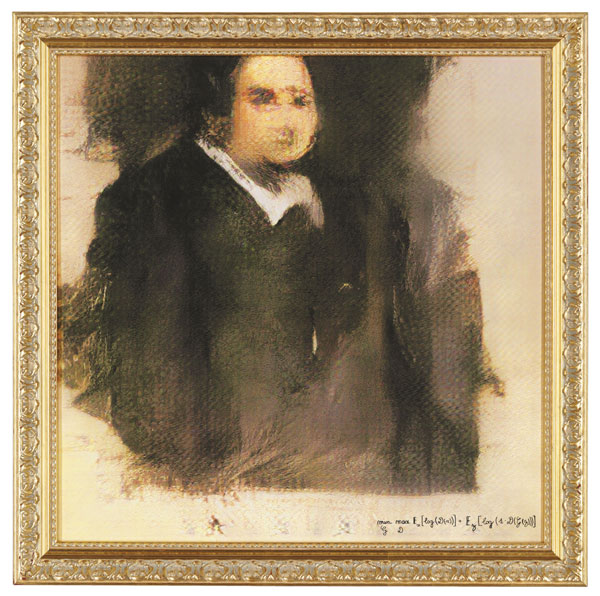
The portrait of Edmond De Belamy wasn't even painted by an artist – but that didn't stop it selling for hundreds of thousands of dollars

When this painting of Edmond De Belamy was due to go under the hammer at Christie’s this week, it was expected to sell for around $10,000. In fact the portrait went for a staggering $432,000. Despite the astounding price, this is not the badly framed work of an old master but by an artist born out of our brave new world.

The portrait was created by artificial intelligence designed to generate images that mimic data inputted by programmers at French-based collective Obvious – in this case thousands of real portraits.

Hugo Caselles-Dupré, a PhD student working with AI who took care of much of the technology behind the picture, explains how the pioneering work fits into the evolving conception of art.
Ai-artist-embed

What was the process involved in creating this picture?

The AI is basically a computer program that can autonomously learn to create images – like portraits in our case. You need to feed the data, tune the algorithm so that it works best, select the preferred output image. It is only the visual creation process that is made by the computer.

The idea is that you have one part of the algorithm, the generator, that tries to generate images that could have belonged to a dataset of images, here portraits. The second part, the discriminator, tries to tell the difference between a real portrait, and one generated by the generator. The goal of the generator is to fool the discriminator. In the end you get relatively realistic portraits, completely computer generated.

Advertising helps fund Big Issue’s mission to end poverty

Is the algorithm effectively the artist?

No, the algorithm has no intention. We make conceptual art, meaning that the interesting part of the work is more the idea rather than the actual image. We showcase, with our collections of portraits, what an AI algorithm can do today. Given proper data, and proper code implementation, it can generate these images. We signed the frame with the formula at the core of the algorithm because it was an easy way to show that the image itself was computer generated.

In the future, how will AI art evolve?

Who knows? We can only guess. I’m a PhD candidate in Machine Learning so I’m familiar with the state of the art of AI research. It progresses rather quickly. Also, there is a lot of investment in AI research. So I would expect some breakthroughs in the years to come, which will allow artists to use more sophisticated AI tools, and thus it should evolve quite strongly.We are in the continuity of this movement which grows as years pass.

obvious-art.com

Advertising helps fund Big Issue’s mission to end poverty

Do you know how Big Issue 'really' works?

Watch this simple explanation.

Recommended for you

View all
Artist Philip Colbert: 'There’s a fascism of seriousness'
Thirty giant, surrealist lobsters interact with the Roman ruins at the Archaeological Park of Pompeii
Art

Artist Philip Colbert: 'There’s a fascism of seriousness'

Bradley Foxwell: the homeless artist showing off his work on the side of canal boats
Canal Boat Contemporary uses London's network of waterways to bring the art to the people
Art

Bradley Foxwell: the homeless artist showing off his work on the side of canal boats

10Foot: 'All the disasters of this country are entirely predictable, preventable and intentional'
10Foot sculpture Faerie Newbuild
Museum of Homelessness

10Foot: 'All the disasters of this country are entirely predictable, preventable and intentional'

‘The people made me a star’: On her 100th birthday, why Marilyn Monroe still matters
Photography

‘The people made me a star’: On her 100th birthday, why Marilyn Monroe still matters