Read more:
Late Victorian Britain was an avowedly abolitionist nation. The erection of a statue to Colston involved a deliberate ‘forgetting’ of the source of his wealth in focusing on his philanthropism. For Colston had made his money from the slave trade, serving as deputy governor of the Royal African Company, whose business lay in the transportation of African slaves to the Americas.
Bristol today is home to a large Caribbean community, and has long been a centre of social justice campaigning. A convenient ‘forgetting’ of the role of the slave trade in Bristol’s story was no longer tenable, and the sight of one who had profited from it memorialised in bronze raised a disquiet that would lead eventually to iconoclasm.
Keep reading the journalism that powers our mission
Register free to continue and learn more about the stories, campaigns and the support we provide, helping people facing poverty across the UK.
In my book Voices in Stone, I have sought to tell the story of statues from the perspectives of their full lives, to understand why some pass unnoticed into the urban background, while others experience such violent ends. It is a story of hubris.
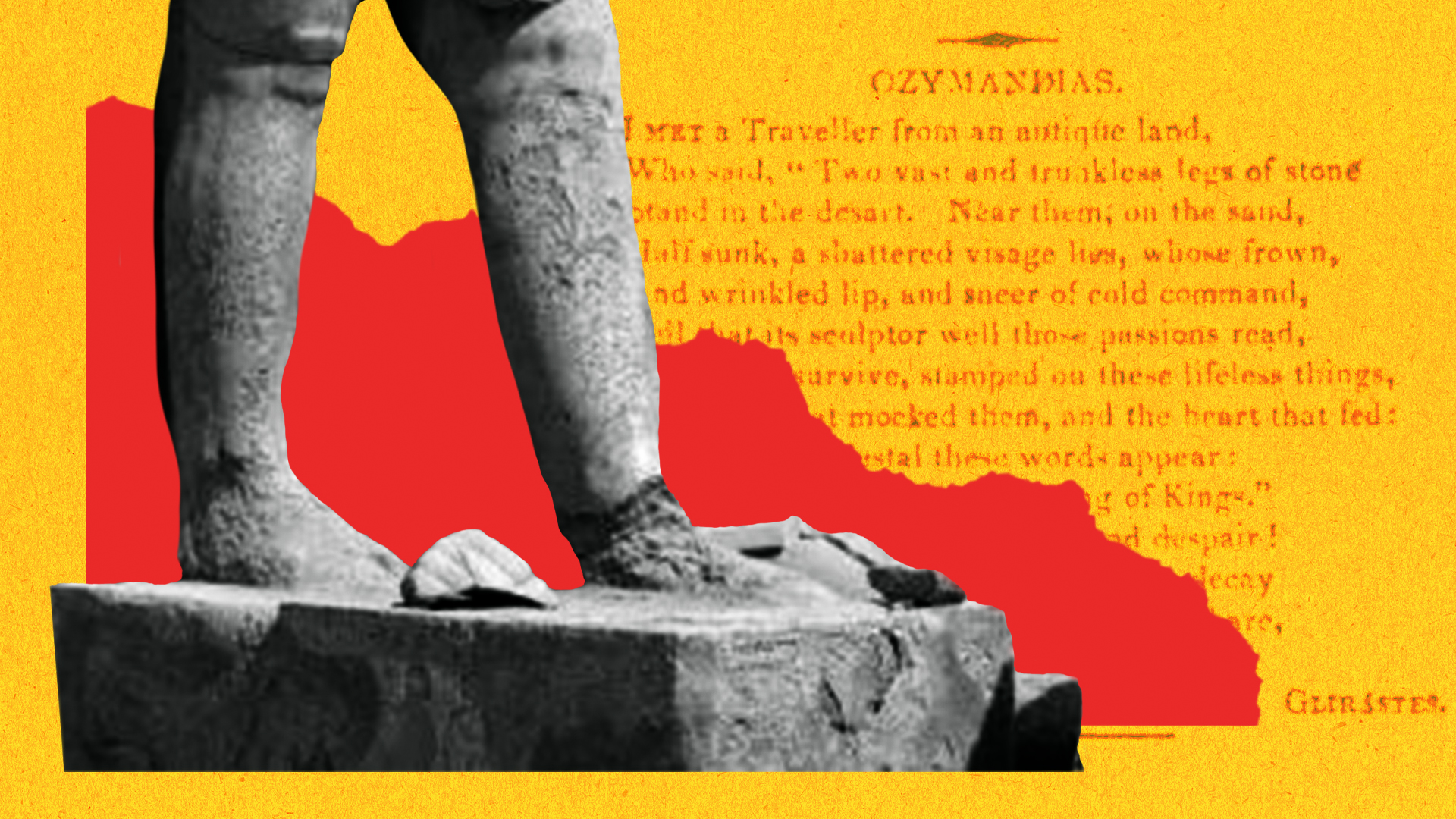
Typically carved and cast from durable materials like marble and bronze, their originators hope the statues will project admiration for their subject far into the future. Shelley’s poem Ozymandias beautifully demonstrates the weakness of that assumption. Taking its cue from a statue of Egyptian Pharaoh Ramesses II, Shelley describes the boastful inscription on the pedestal: “My name is Ozymandias, King of Kings: Look on my works, ye Mighty, and despair!”
Yet the statue itself is in ruin, “two vast and trunkless legs of stone” standing in the desert, with a half-sunk head nearby.
Advertising helps fund Big Issue’s mission to end poverty
As the values and heroes of society change, the unchanging statues appear out of step. The statue may simply appear quaint and out of touch, or, as with Edward Colston, may take on a toxic quality. Sometimes its effect may be revelatory, as the statues of ancient Greece and Rome inspired Renaissance and Neoclassical artists.
Statues may be commemorated, an act that alters their meaning. The Vietnam Veterans Memorial in Washington DC was controversial on its unveiling in 1982. One veteran complained that the modernist design resembled a “black gash of shame and sorrow”.
Yet beneath the names of US serviceman engraved on its black granite walls, friends and relatives left personal artefacts: photographs, letters, teddy bears, medals. The monument became a shrine, not cold and abstract but personal and humanised.
During their lifetimes, statues may be moved, to less salubrious locations, or into museums where, lacking any further commemorative ambition, they become objects to be scrutinised for artistic or historical value. They can be interfered with through vandalism, rubbing of their private parts in a curious attempt to generate good fortune, or through unexpected embellishments.
An equestrian statue of the Duke of Wellington in Glasgow has been adorned so frequently with a traffic cone that the assemblage has become a symbol of the city. We continue to erect statues, initiating new statuary biographies whose subjects will be worshipped, loved, assaulted and ignored by the generations to come, their voices in stone projecting forward to future audiences, to be greeted with appreciation, hostility and indifference.
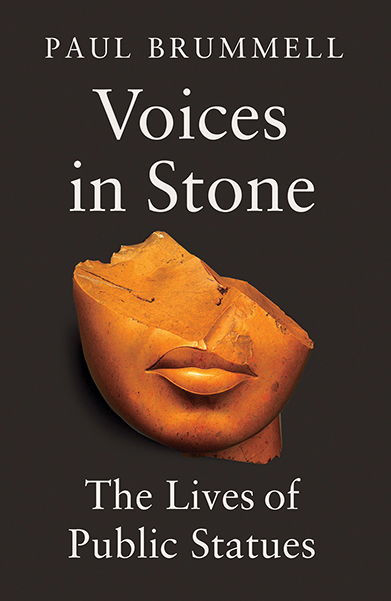
Voices in Stone: The Lives of Public Statues by Paul Brummell is out now (C Hurst & Co, £25).
Advertising helps fund Big Issue’s mission to end poverty
You can buy it from the Big Issue shop on bookshop.org, which helps to support Big Issue and independent bookshops.
Do you have a story to tell or opinions to share about this? Get in touch and tell us more.
Change a vendor’s life.
Buy from your local Big Issue vendor every week – and always take the magazine. It’s how vendors earn with dignity and move forward.
You can also support online:
Subscribe to the magazine or support our work with a monthly gift. Your support helps vendors earn, learn and thrive while strengthening our frontline services.
Thank you for standing with Big Issue vendors.
Advertising helps fund Big Issue’s mission to end poverty