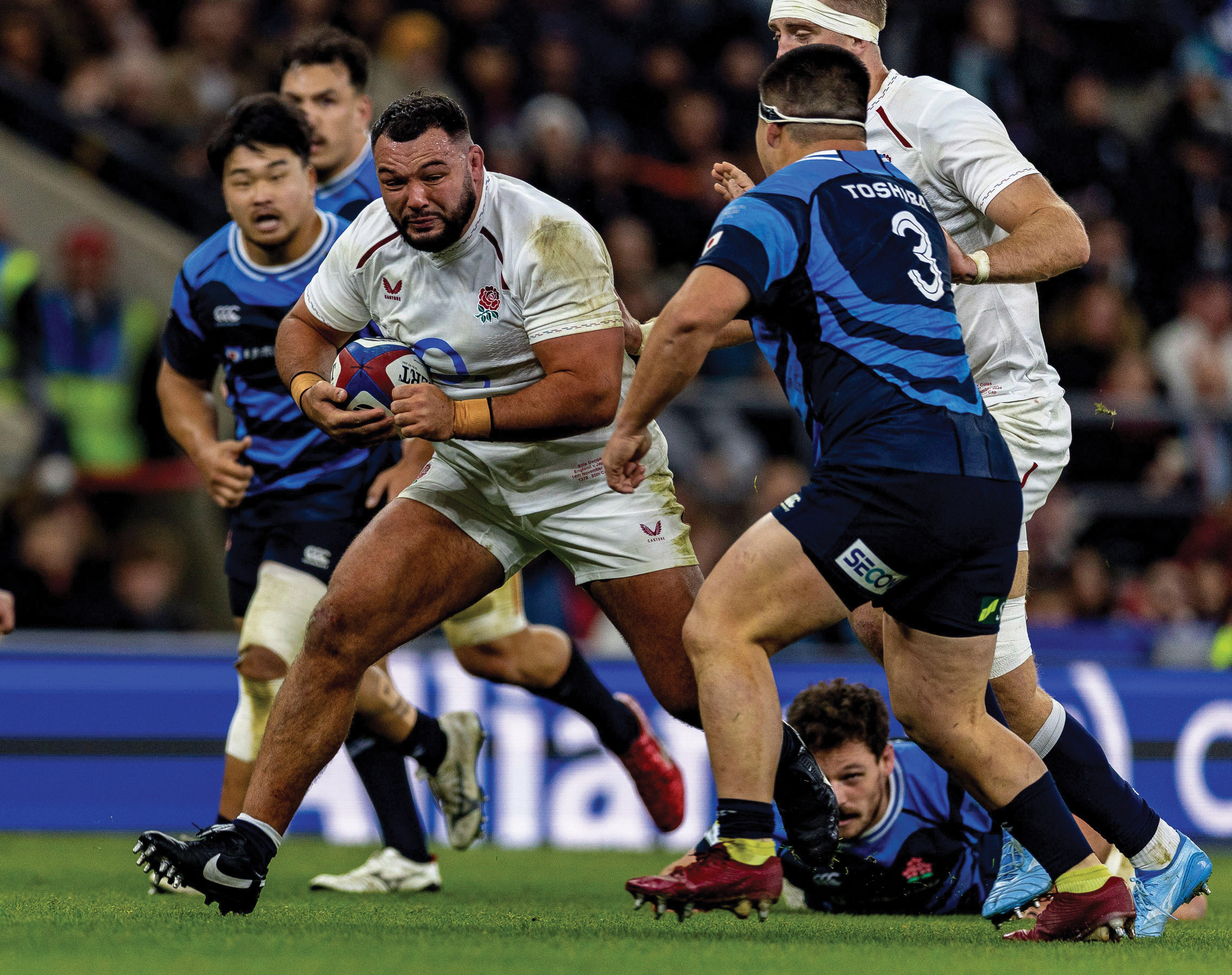
England rugby star Ellis Genge. Image: Alex Davidson - RFU / The RFU Collection via Getty Images
Share
Bristol Bears, England, and British and Irish Lions ace Ellis Genge is not your typical rugby union player. For a start, he grew up on a council estate in Bristol and was state educated – unlike well over half of this year’s England Six Nations squad.
He did take up a scholarship to study Sports Science at 16, boarding at Hartpury College in Gloucestershire, after pummelling some poor poshos in a trial match. But up until then, Genge had come up the hard way. Before becoming a professional rugby player, he worked his socks off, earning a few quid locally, putting his strength to use.
Now established as one of the giants in the England team, Genge has plenty to occupy him away from the pitch. Not only is he a father of three, but he also runs a number of local businesses in Bristol and a fund to help pave the way for future generations to follow in his fast-for-a-front-row-forward footsteps.
Rugby typically starts at about 7.30am each day and finishes around 2.30pm. So it’s just about planning and having open comms with everyone involved in the businesses I’ve built up so we can all be proactive. This week the brake pads have gone in our van, so I’ve got to sort that. But the most important job is being a dad. It’s the most emotionally taxing and difficult job anyone can have.
So that’s about four businesses, three kids and a rugby career…
Advertising helps fund Big Issue’s mission to end poverty
Advertising helps fund Big Issue’s mission to end poverty
But scheduling in professional sport means we always know where we have to be. It’s going to be a rude awakening for me when I finish. I struggle in my time off – I feel awkward sat at home doing nothing.
Why did you set up the Genge Fund?
Every interview I’ve ever done [including this one, sorry] I’m asked about not having a typical route into rugby. So I thought about how I bridge some of the gaps. The Genge Fund distribute funds to existing charities in Bristol. I just thought, I’ve got a reasonable platform, people trust me, and I want to help out.
Keep reading the journalism that powers our mission
Register free to continue and learn more about the stories, campaigns and the support we provide, helping people facing poverty across the UK.
I did a few years labouring, drywalling and shopfitting when I was 16, which is hard graft – it rips your hands to pieces. When I was younger, I’d earn, like, £60 a day on the wheelbarrow and the shovel. It wasn’t something I aspired to do. I wanted to be like all the lunatics in my area, to be honest. I wanted to be a bad boy, as cringey as that is to say as a 31-year-old. You’d see them driving around in nice cars, living the life.
Sadly, yes. And it took me getting it wrong a few times to realise. My old man was a great father figure – he is a grafter. He’s a plumber, but I didn’t think that was cool. Now I think it’s wicked that he’s a plumber. Now I think being hard working, getting your head down and having a set of rules you abide by is actually the coolest thing you could do. Contributing to society, paying your tax, working hard. When you’re young, where I was from, you’re like fuck the system and all that. We all need to get our heads down and work together because, as you know, the country’s on its arse.
What would you say if you could go back in time to talk to your younger self?
Me and my mates, we didn’t listen to anyone, we were absolute bandits. But we need to go a bit deeper, look at how we’re educating young men who don’t have male role models in their life – about how to act and articulate themselves, and the challenges and pressures they’re going to face.
Ellis Genge playing against Japan at Twickenham, November 2026. Image: Martin Edwards / Alamy
You don’t have the typical English rugby player background – you see that as a strength, though, right?
I was chatting to my psychologist about that. I almost leaned on that, said it’s unfair people got given a leg up and were born into money. He said, “Well, do you ever think they look at you and think how unfair it is that you’ve got this intrinsic motivation and fire and raw aggression you can turn on because of the way you’re wired?” I’d never thought of it like that. So now I reframe those thoughts and use them as a power.
Who saw potential in you when you were younger?
Alan Martinovic. He was at Bristol for a bit, but he’s got the most incredible eye for talent I’ve ever seen. He could spot talent a mile off. He was scouting to select people from [private day school] Colston’s, which is now called Collegiate because of the Edward Colston statue situation. They played against Keynsham, which was the local club I played for. I was 16 and labouring for money that summer. I had this vendetta against anyone who was privately educated. So I wanted to fucking play and cause damage – and I did. On that day, although he was scouting for the other team, Alan walked over to my mum, who was easy to spot being one of the only mixed-race people in the crowd, and said he could give me a full scholarship to Hartpury. Before that, I was probably going to be doing a plumbing apprenticeship.
How do you think the sport could be more accessible?
The top of the sport is in tatters, let alone the bottom. We pour money into both ends and don’t get very far. The commercial viability of rugby hasn’t changed for 30 years. The deals are still the same. A big insurance firm or a smart suit brand. I’m not knocking them, that’s the market. But look at the way football’s moved on and how cool the branding is for them. So it’s probably out of our hands. But players like HP [Henry Pollock] are a great example of what people want. He does his thing but he backs it up on the pitch. It could quickly turn sour if he wasn’t performing, but if you keep winning, the rest skyrockets.
How do you respond to setbacks?
Becoming a dad helps. Probably the biggest pressure you can have is to provide and be a role model. So I’m resilient, but I’m a very emotional man. I’ve learned over the years that bottling it all up isn’t good. Because you let it all out at the same time. I don’t have the meltdowns I had when I was 20.