Advertising helps fund Big Issue’s mission to end poverty
Film

The Lost Children of Tuam: How one woman's fight for justice led to a national reckoning for Ireland

Amateur historian Catherine Corless has been described as "Ireland's Erin Brockovich". The dramatisation of her long and painstaking fight to shine light on a buried horror makes for a strangely life-affirming watch

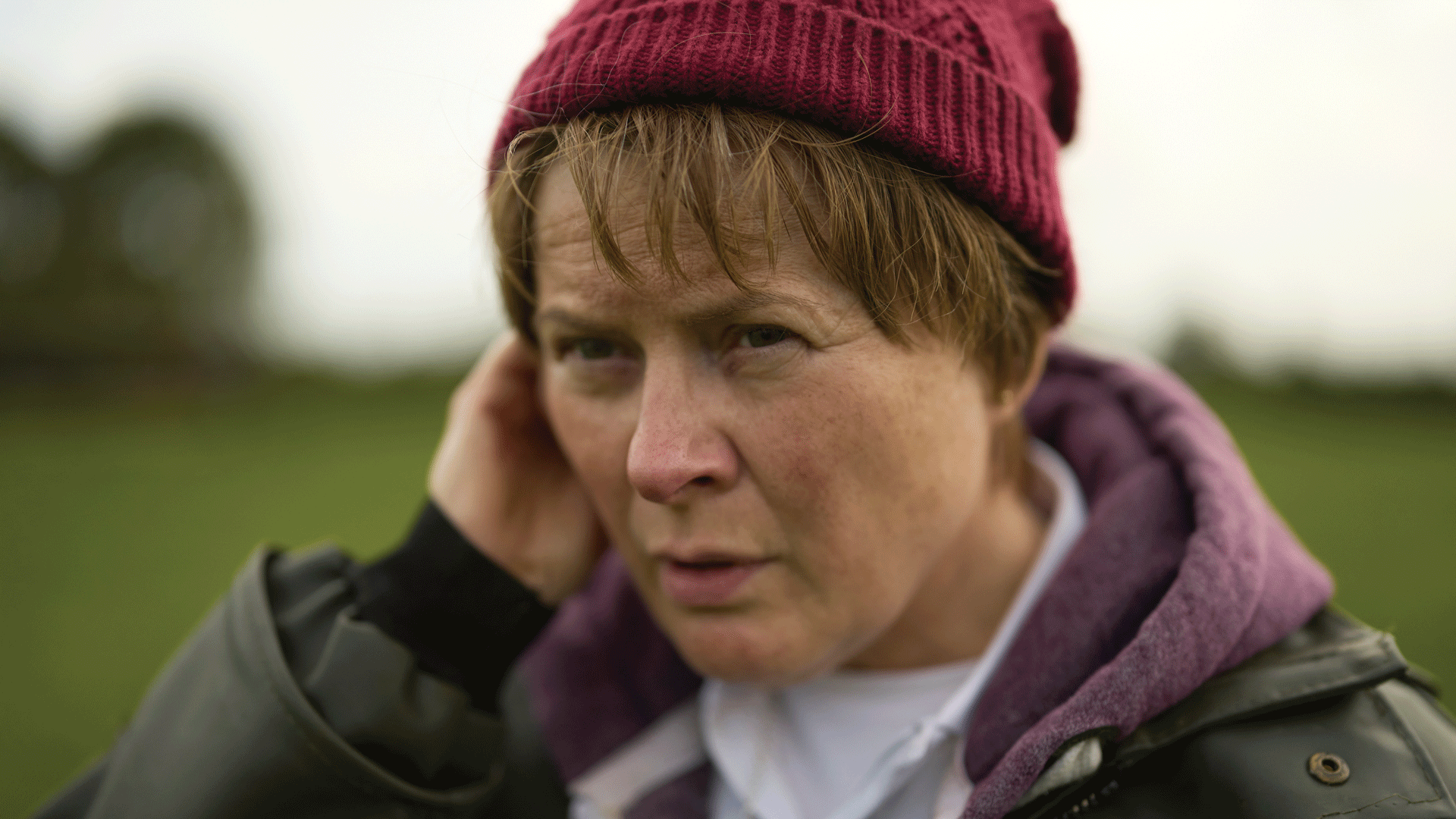
Monica Dolan plays Catherine Corless in The Lost Children of Tuam

Monica Dolan plays Catherine Corless, who received several honours for her work. Image: @ENDA BOWE

In the glass-half-empty world of 2026 it can often feel as if things are getting worse and there is not much we can do about it. Actual accountability is frustratingly rare. The people and institutions that have been inflicting harm for years seem able to avoid the most basic reproach or censure, inoculated from scandal by a noxious cloud of power, privilege, influence and affluence. It is – not to put too fine a point on it – a huge bummer. 

Which is why there is something life-affirming about a film like The Lost Children of Tuam, which takes a horrifying subject and shines a determined, unwavering light on it. The hero of the story – although it’s clear she would never describe herself as such – is self-taught Irish historian Catherine Corless (played by Monica Dolan), who grew up in rural Galway near the town of Tuam.

We first meet her as a 50-something in 2010; she has signed up for evening classes and is embarking on a local history project.

One potential topic dates from the 1970s, when two young boys discovered a cache of human bones in the grounds of the defunct St Mary’s Mother and Baby Home, a shelter for unwed mothers run by Catholic nuns. The local council claimed the unmarked remains must date back to the Irish famine of the 1840s.

But as Corless digs deeper into the official records, she discovers compelling evidence that the bones were discarded after the construction of St Mary’s in 1925. 

So begins a laborious process of checking if each death certificate from the home can be paired with a confirmed grave. Some officials are happy to help. Other institutions, notably the Bon Secours order that oversaw St Mary’s, stonewall her requests. Talking to locals about what they might remember from the era is also inconclusive (as one pensioner ominously remarks, those were “very different times”).

Advertising helps fund Big Issue’s mission to end poverty

But Corless, whose mother was labelled illegitimate and raised by foster parents, is determined to bring the truth to the surface, even though her supportive husband Aidan (Andrew Bennett) is concerned about her being immersed in so much trauma.

Read more:

The results, painstakingly pieced together on the family’s kitchen table, reveal both an alarmingly high mortality rate at St Mary’s and a damning absence of any burial records. At first, it seems unthinkable that 200 babies could die in care and simply be discarded. Ultimately, the death toll over the course of the home’s 36-year history is revealed to be four times the original estimate.

Keep reading the journalism that powers our mission

Register free to continue and learn more about the stories, campaigns and the support we provide, helping people facing poverty across the UK.

By this time Corless is a campaigner for justice as much as a historian, and we share her frustration as she waits for someone with authority to acknowledge and act on her research. But when a newspaper splashes with her findings, it triggers a chain of events that eventually leads to a national reckoning with how Ireland’s unmarried mothers were marginalised and shockingly mistreated in the not-so-distant past.

Director Frank Berry’s unobtrusive staging, paired with the film’s time-skipping structure, underlines the sense that these things don’t happen overnight and life goes on in the meantime. While her desire for justice could seem compulsive, Corless fits in her research work around her day-to-day life.

We have become so used to obsessional heroes on screen who are willing to sacrifice everything to achieve their goal that seeing someone methodically work towards something monumental while still keeping up with chores on the family farm is inspiring. Surely we could all do more to steer the world towards righteousness.

The emotive subject of Ireland’s historical attitude to ‘fallen’ women has previously been explored in fictionalised dramas such as Peter Mullan’s The Magdalene Sisters (2002) and Netflix’s Small Things Like These (2024). With its methodical pacing and focus on procedural detail, The Lost Children of Tuam – produced by Liam Neeson,
and undoubtedly a better use of his star power than another creaky action movie – feels like a quieter but no less essential companion piece. It is summed up by Dolan’s understated but very moving lead performance as a woman who refused to look away after stumbling on a horrifying truth.


Do you have a story to tell or opinions to share about this? Get in touch and tell us more. 

Change a vendor’s life.

Buy from your local Big Issue vendor every week – and always take the magazine. It’s how vendors earn with dignity and move forward.

You can also support online:
Subscribe to the magazine or support our work with a monthly gift. Your support helps vendors earn, learn and thrive while strengthening our frontline services.

Advertising helps fund Big Issue’s mission to end poverty

Do you know how Big Issue 'really' works?

Watch this simple explanation.

Recommended for you

View all
The Uprising director Paul Greengrass: 'A world so sharply divided is going to be angry'
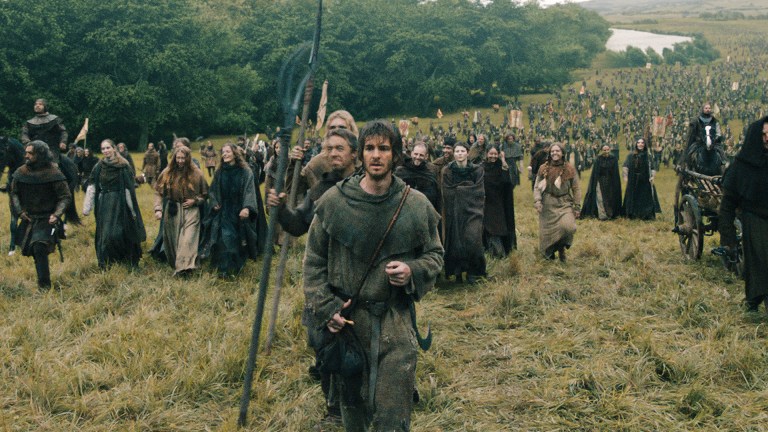
Andrew Garfield’s Ploughman leads the way in The Uprising
Film

The Uprising director Paul Greengrass: 'A world so sharply divided is going to be angry'

Mel Brooks at 100 - the trailblazer who never forgets the importance of love in comedy
Comedy

Mel Brooks at 100 - the trailblazer who never forgets the importance of love in comedy

How To Live On Earth is the new environmental documentary film we all need to watch
Benedict Cumberbatch on the steps at the Natural History Museum in London
Film

How To Live On Earth is the new environmental documentary film we all need to watch

Free Nelson Mandela shows how exposing injustice and building power is not the same as going viral
Nelson Mandela in Glasgow's George Square, 1993
Rachel Palma Randle

Free Nelson Mandela shows how exposing injustice and building power is not the same as going viral