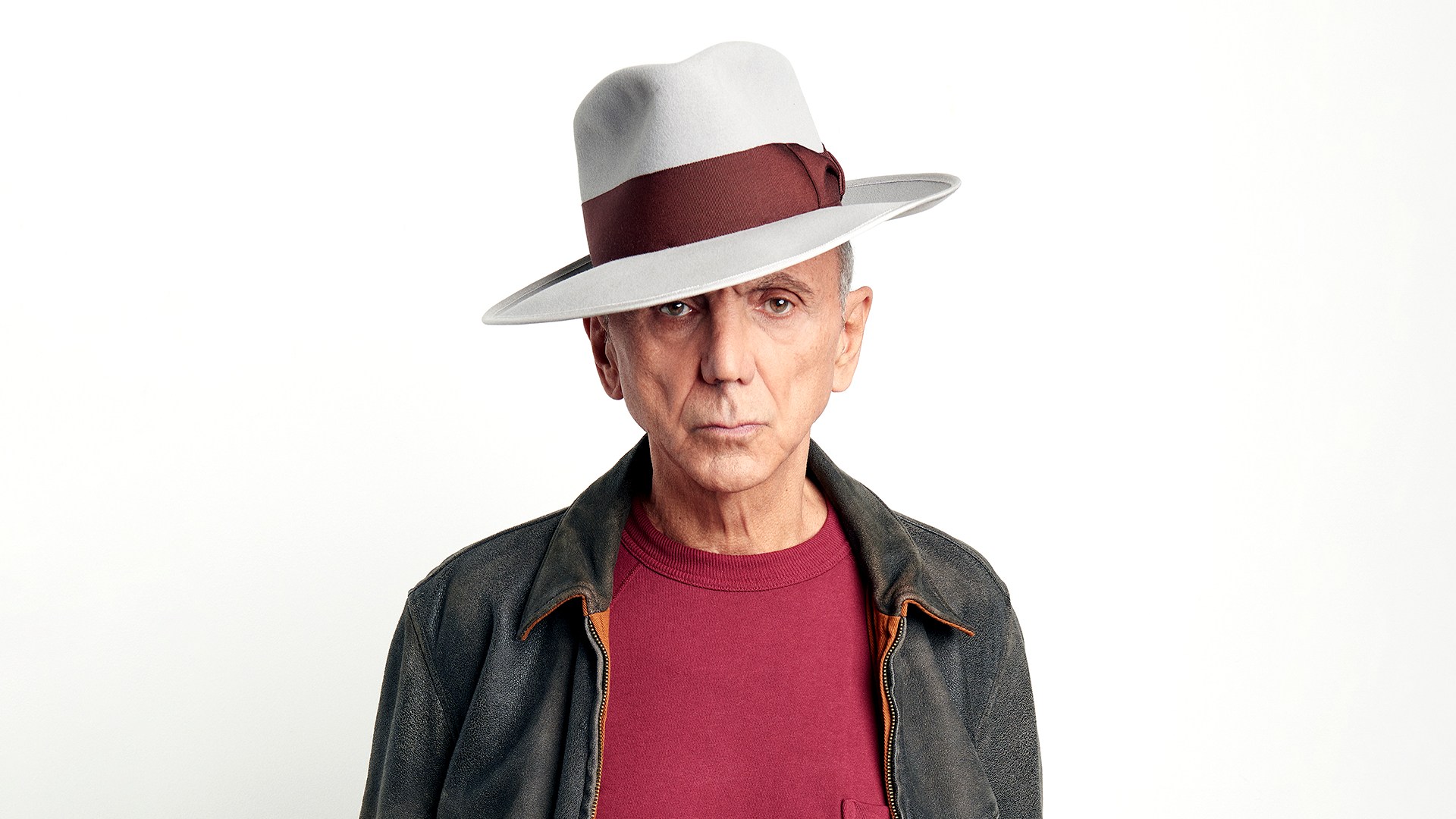
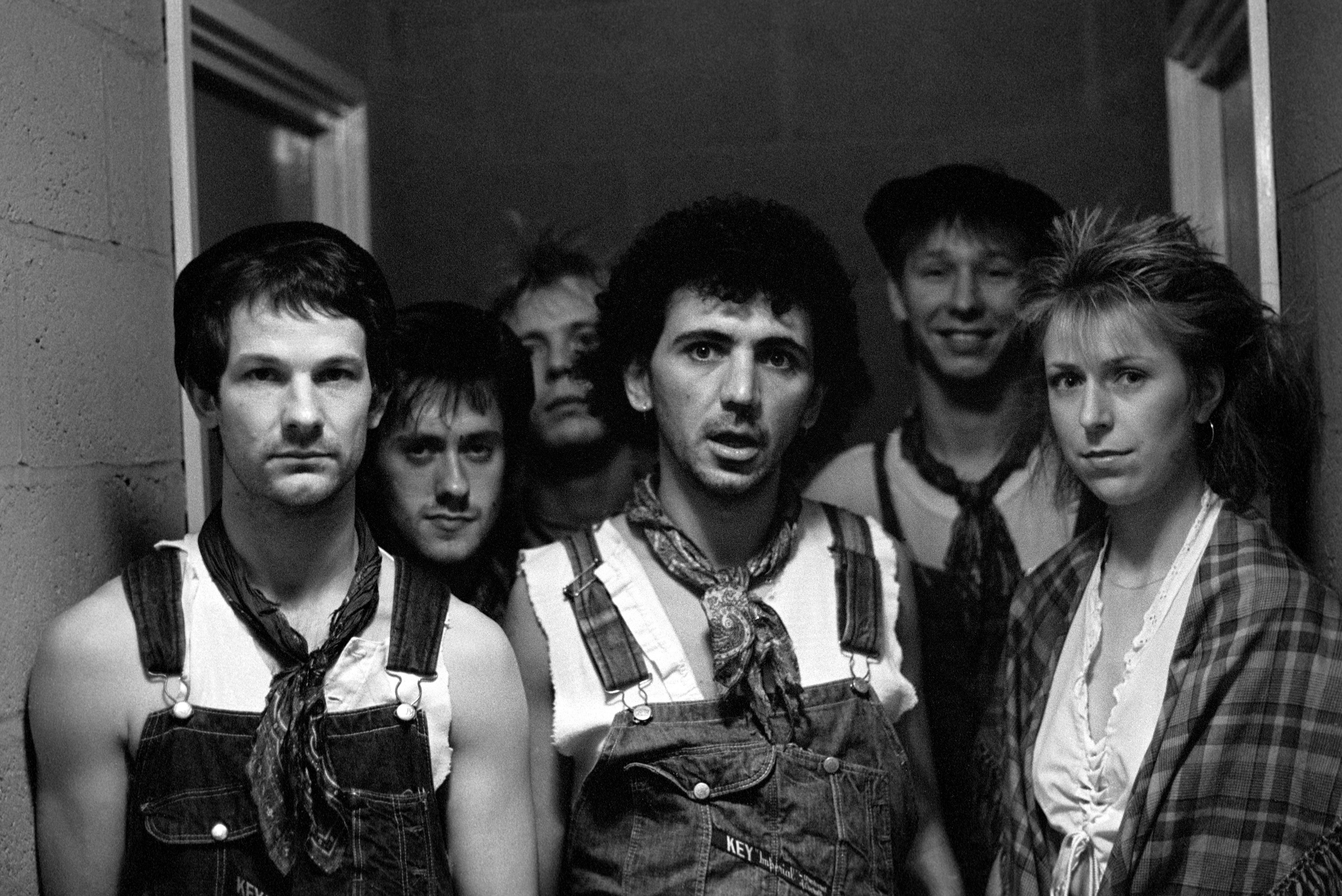
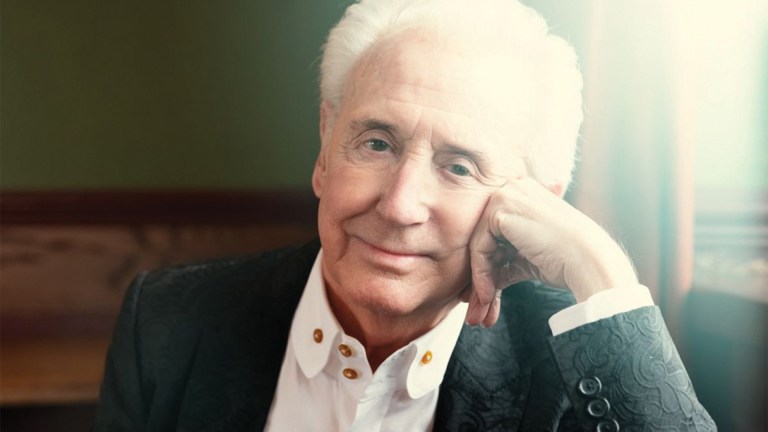
Everybody knows Kevin Rowland. Or at least they think they do. That’s Kevin Rowland in dungarees with dark curly hair, kicking up a storm under a Silk Cut sign on the street outside a corner shop in 1982 with his raggle-taggle Celtic soul brothers, pleading with Eileen to, you know, come on.
Such is the dominant place in British culture of Dexys Midnight Runners’ most successful hit, with an extra side of the infamous, playful darts-hero Jocky Wilson photo on Top of The Pops during a performance of Jackie Wilson Said, that the rest of the output of Rowland and his band is frequently overshadowed.
Yet he has created a legacy that makes him one of the most influential, messy, dynamic, stylish characters in British music. And while that old image is fixed in aspic for many, he has never been still, never at peace, mutable, challenging orthodoxy and norms, impulsive.
“I don’t really look forward,” he says. “Even five years seems like a long time.”
We meet today in East London, not far from his home, to discuss Love, the new collection from Dexys Midnight Runners. It is the fourth album under the Dexys Midnight Runners moniker – the first new one since 1985’s Don’t Stand Me Down – but the seventh from Dexys as a whole, coming after The Feminine Divine of three years ago. There are also two solo Rowland albums. “It’s quite a good body of work, really,” he says, quietly.
Try to establish some kind of Homeric arc to explain why Rowland has returned now to the Dexys Midnight Runners name and he’ll gently burst your balloon. The reason is simple: a young neighbour knew of Dexys Midnight Runners but didn’t associate it with Dexys. So, expediency won.
Advertising helps fund Big Issue’s mission to end poverty
Advertising helps fund Big Issue’s mission to end poverty
Kevin Rowland (centre) with the Too-Rye-Ay Dexys line-up in 1982. Image: Andre Csillag / Shutterstock
Love, produced by Belfast DJ, soundtrack creator and studio titan David Holmes, is a big album. Holmes is a longtime fan – Dexys fans are a committed, devoted and discerning tribe. Taylor Swift’s longtime collaborator Jack Antonoff is another devotee.
“I’d met [Holmes] in the early 2000s,” explains Rowland. “He was DJing at a party. He made it clear that he liked Dexys a lot. Then he said, ‘Do you want to work together?’ And it just never happened.
“He contacted me about two or three years ago and said he’d like to make an album with me from scratch. I said, ‘I’m just working on something now. I’ve got some songs…’”
Keep reading the journalism that powers our mission
Register free to continue and learn more about the stories, campaigns and the support we provide, helping people facing poverty across the UK.
Holmes is a smart choice. Better known for soundtrack work, the albums he has made and produced reflect his deep knowledge of lost and obscure classics, a northern soul and punk sensibility and always something widescreen. They are records you want to sink into. And so it is with Love, mining Philly Soul, for bounce, there is a warmth and lushness that finds the Dexys DNA, and brings something else.
It is the record only an older man could create, reflective but also restive. It is, I suggest, anchored by the trinity of Rowland’s lifetime big themes: Ireland and identity, his relationship with his father, and relationships with women. But there’s also a strong sense of ageing – of a man looking back with hindsight.
Read more:
Advertising helps fund Big Issue’s mission to end poverty
“I’ve never even thought about it like that. I’m too close to it. At some point I realised that the album was going to be called Love, and it was going to be all about different types of love. I thought I was going to write about childhood love, which I did with My Life In England Pt. 2. I made a list of all the different kinds of love. Some of them we fulfilled and some of them we didn’t. I thought I was going to write one to my mum, but nothing came. Whereas the one with my dad, it just came.”
Once A Man, Twice A Child is the album’s anchor. It deals with Rowland making peace with his father, John, after a troubled and turbulent lifelong relationship, then nursing him following a stroke, to the end of his life.
That relationship is the thread through Bless Me Father, Rowland’s blazing autobiography from 2025. It is a brutally honest book. Aside from the ongoing battles with his father, who frequently reached for the belt, we see a child of Irish immigrants who himself had lived in Mayo as an infant, never really settling in Wolverhampton or North London. Immersed in the Irish diaspora but feeling lost at a time when the Irish were poor and third-class in England. Constantly getting into fights; thieving, getting arrested, failing at school, yearning for women. Living in a homeless hostel for a time. Creating the idea and identity of Dexys. Falling into dark drug addiction. Going broke. Joining a quasi-cult and enduring wilderness years – “I did spend quite a lot of time just sitting down, watching the telly, daytime TV, not feeling very positive” – then re-emerging with what has become his rich third act.
Are there regrets that he hadn’t been able to fix the relationship with his father sooner?
“I think I’d gone beyond that. There were relatives of mine who were closer to my dad than I was, had more in common with him than I did. I remember thinking, OK, I’m never going to be close to my dad. When that happened, it was a revelation.
“Because I really did try. Tried to do the things he wanted, tried to talk to him about the things he was interested in, which I wasn’t that interested in. I was just glad we had those moments [at the end]”.
Advertising helps fund Big Issue’s mission to end poverty
He has described his father, a builder, as a perfectionist. It’s a label that has been attached to Rowland: one he acknowledges. He created the Dexys sound and the Dexys look. Clothes are very important to Rowland. Today he shows up in pink shorts and a loose-patterned blue Hawaiian-style shirt. He’d had trousers ready, he says, but it was too hot.
It was Rowland who moved from the dock-worker look around Searching For The Young Soul Rebels, in 1980, to the familiar dungarees for Too-Rye-Ay in 1982 and the American Ivy League preppy look of 1985’s Don’t Stand Me Down. It was his insistence on sound that created the northern soul stomp and sweep of the first album, the Irish-infused second, the clean studio precision of the third. A recording process that was protracted and difficult and, in the end, as Rowland refused to promote it, precipitated Dexys commercial decline.
This time, Irish identity, that deep furrow into which he’s worn an enduring groove, shoots through Love – so much so that two tracks built on it bookend the album.
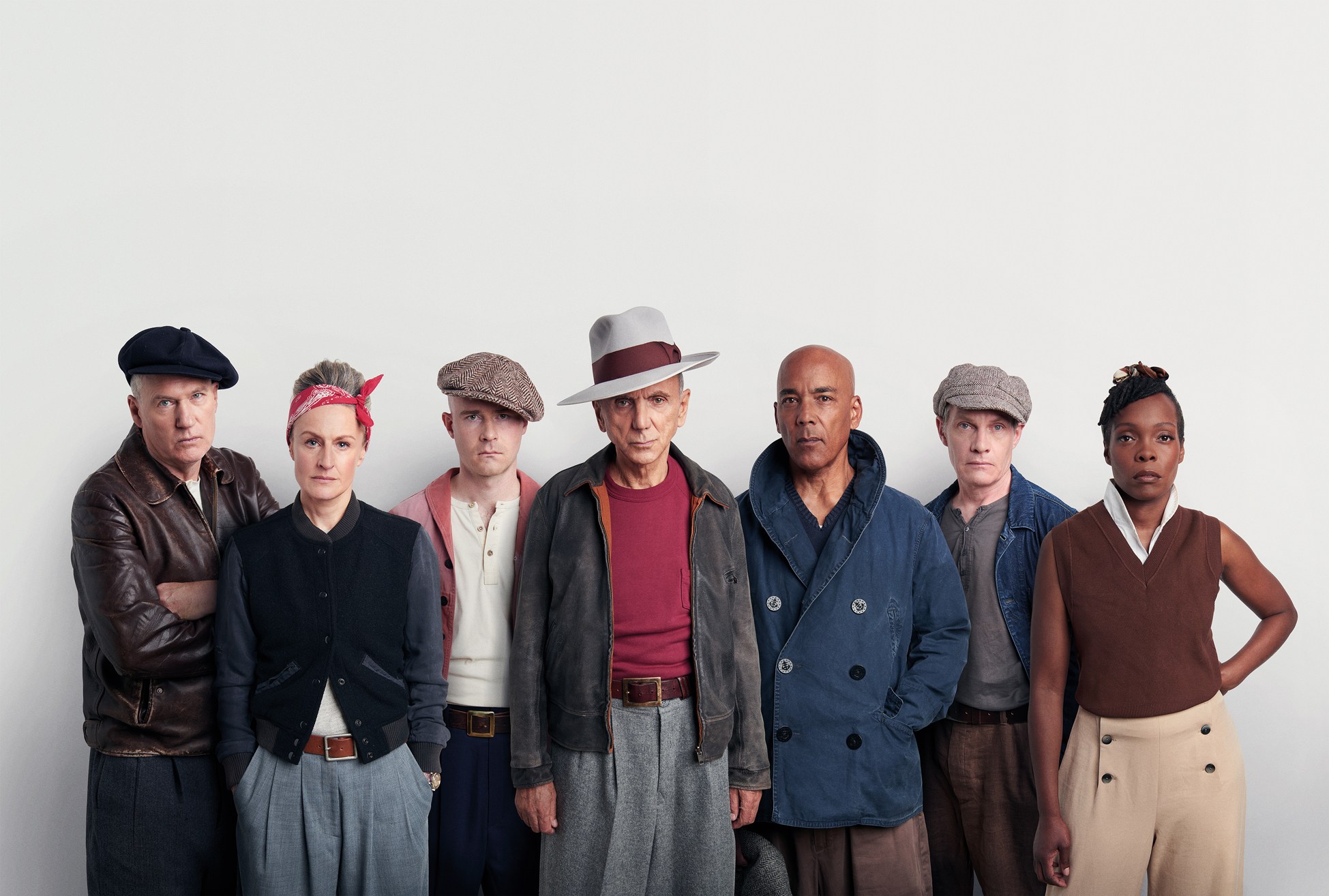
The current Dexys line-up, Rowland again at the centre. Image: Nick Johnston
The opener, My Life In England Pt. 1, which originally appeared over 20 years ago, is freshened up and used as the lead single. It details the immigrant story, when the Irish had to keep parts of their identity quiet: ‘I hadn’t long arrived from Ireland…/songs like Kevin Barry were not allowed.’ It is Rowland at core, personal and universal; at his best there is a timelessness to what he does. Currently, there is a modish chic to splitting the G and wearing GAA tops and being Irish in the UK, thanks to, among others, Fontaines DC, Paul Mescal, CMAT and Kneecap. “I have total support for them. I love what they’re about,” says Rowland of the Irish language rappers. This was not always the case.
“When we first really started to put some Irish into our music, with Too-Rye-Ay, my manager said to me, ‘Don’t do that. They don’t like the Irish here.’
“But I had a need at that point to just say, ‘I’m fucking Irish. And you can fuck off.’ This was before The Pogues or any of that. It was a very different climate. At that time, in London, in Wolverhampton, it was so different from what it is now. Irish people were absolutely at the bottom of the pile, and black people, and that was it. They were poor. There was a lot of alcohol in it.”
Advertising helps fund Big Issue’s mission to end poverty
The politics of Ireland had appeared previous to this with Dexys. The cover of Searching For The Young Soul Rebels features a news photo of Anthony O’Shaughnessy, a Catholic boy in Belfast fleeing his home as The Troubles ignited in 1971. The back cover is in the Mayo county colours.
“I knew that the way Irish people were being portrayed in England was just fucking crazy, just ridiculous and far from the truth. I knew that they weren’t fucking pigs or animals. They were good people, the Irish. I knew about all the beauty that goes on in Ireland, and all the great culture that’s just been completely overlooked.
“You know, it was Irish jokes, the whole thing. So, at every opportunity, I wanted to try and put something about Ireland in.
“Playing the Shamrock Club in Birmingham, playing the National in Kilburn – we were the first sort of non-showband and non-Wolfe Tones to play there. And then others started. The next one was The Undertones, which was nice. But people did not want to hear about Ireland, anything to do with Ireland, at that time. It was not welcome.”
The album closes with My Life In England Pt. 2, focused on “lovely Margaret”, the object of Rowland’s ardour when he was 12. The reprise also tackles Gaza. ‘This world’s so fucking crazy/and innocent people being starved.’
“It’s a slaughter, isn’t it?” he says. “People are being slaughtered. I just think there’s not much I can do, but I have to do any little thing I can – do benefits for Gaza that Chris Sullivan organises, and to put that in [the song], to say that.
Advertising helps fund Big Issue’s mission to end poverty
“I wouldn’t do a whole song, say, like Stand Down Margaret by The Beat, or something. I just wanted to put that in.”
It closes with a refrain of ‘Rise up, people in England’, an open call.
Ageing bothers Rowland a lot. ‘I hate getting old/it happened so fast/where did it go?’, he asks mournfully in Old Love. Rowland has just turned 73 and, despite some health issues in recent years, could easily pass for 10 years younger.
“I think it’s how people perceive you,” he says. “You’re not in the game any more. You know what I mean? They don’t notice you.
“You talk to young people, it’s all about them. You’re not there, really. You’re just there to support them. That’s how it is.”
Despite that all, though, it’s hard to believe he’ll ever stop searching for the young soul rebel. It’s in him.
Advertising helps fund Big Issue’s mission to end poverty
After the interview, we go for fish and chips (Rowland is no longer vegetarian) and eat while sitting in a park chatting about Irish politics and reunification. Like much with Dexys, it is unexpected and rather lovely.
Would Kevin think of settling in Ireland during his final days?
“I did think about Ireland, but I found it fucking chilly. Honestly, it’s just too cold! Other than that, I’d live there. I love it.