
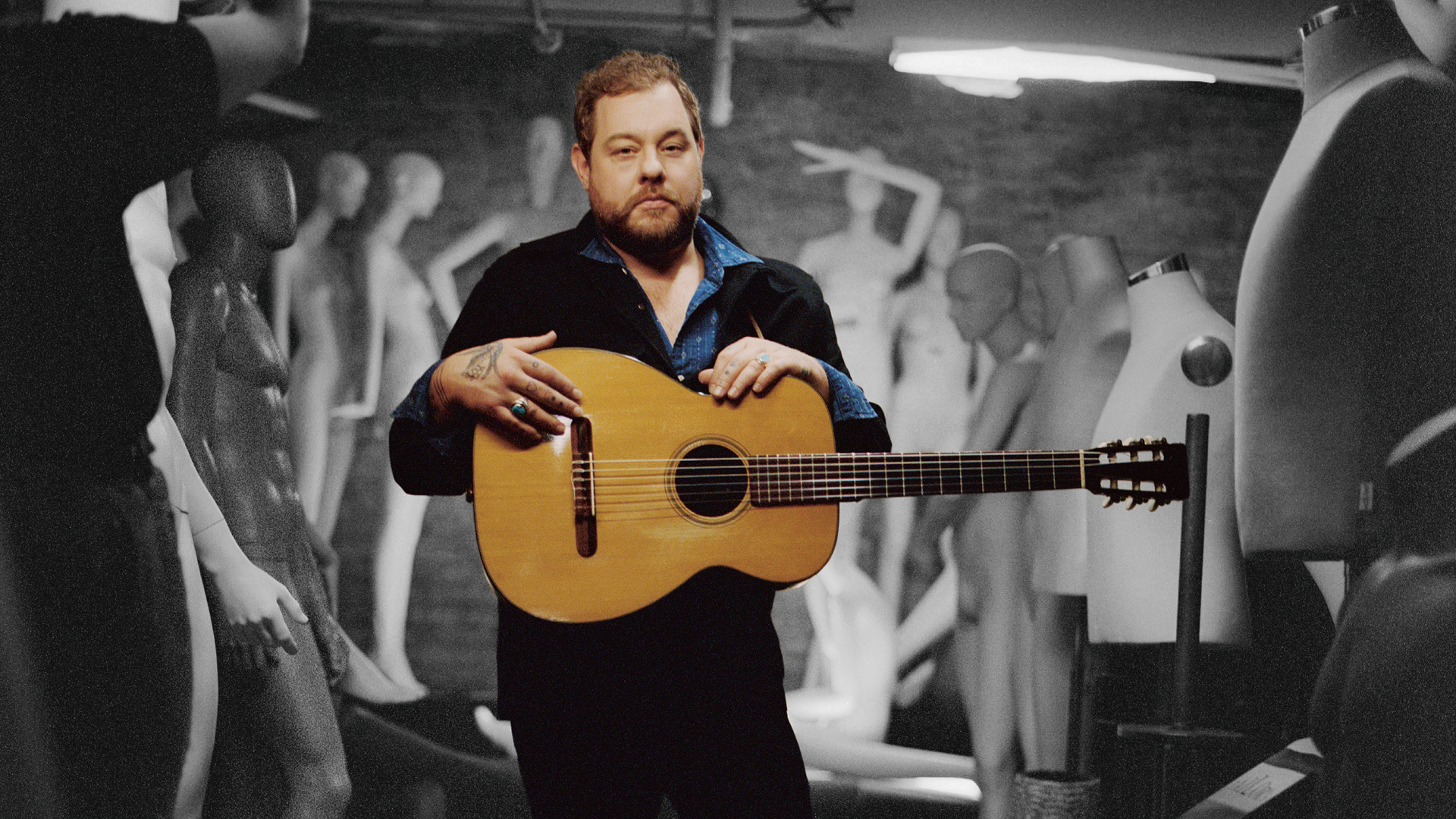
“I’d say my worst vice is still drinking,” admits Nathaniel Rateliff, even if sessions on an exercise bike and a generally improved attitude to self-care have become new features of the bear-like Missourian’s life lately. “I just do it less,” he adds. “I’m just not trying to drink myself to death these days.”
The passing of American musician and record producer Richard Swift in July 2018 was a wake-up call to a lot of people close to a man renowned for his work with artists ranging from The Shins and Damien Jurado to The Black Keys. His had been a prolific career cut short at just 41 by the effects of alcoholism. Not least, it was a wake-up call to Rateliff, whom Swift considered his “lost brother”.
Both raised in strictly religious households, the pair shared a profound bond – and more than a few heavy drinking sessions – after working together intensely making Denver-based Nathaniel Rateliff and the Night Sweats’ 2015 self-titled debut album, a heart-quaking, backside-shaking rock’n’soul firecracker which has sold more than a million copies and launched Rateliff to fame after years labouring in obscurity as a solo singer-songwriter. The whirlwind that followed would see him and his crackshot seven-piece band sign to iconic Memphis soul label Stax, sell out shows around the world and open for The Rolling Stones.
Even if it’s far from the deepest regret that Rateliff harbours when it comes to how things ended with his friend – “there’s a lot of things I wish I could have done differently in Richard’s situation,” he sighs – he admits to wishing he had found the time while he still had the chance to work on the solo record that Swift had always talked about producing for him.
Two years later, and almost seven since Rateliff’s last solo album, And It’s Still Alright finally fulfils a pledge to his “lost brother” to get back to his soul-bearing folk and blues roots, as the Night Sweats are left to lie fallow for a while.
Trading blaring horns for lush strings, and raucous rhythms for acoustic finger-picking and strumming, it’s a warm, tender record, steeped if not in Swift’s talents as a producer, then at least in his memory. For Rateliff, it’s an important opportunity to reflect on loss and grief, and in turn challenge us all to think a little bit deeper about how we contend with such emotions. “I feel it’s important that we start to be able to be vulnerable to those sort of feelings,” Rateliff says. “We don’t allow ourselves to talk enough about the process of grief – how we look past it and still try to find hope and joy in our lives.”