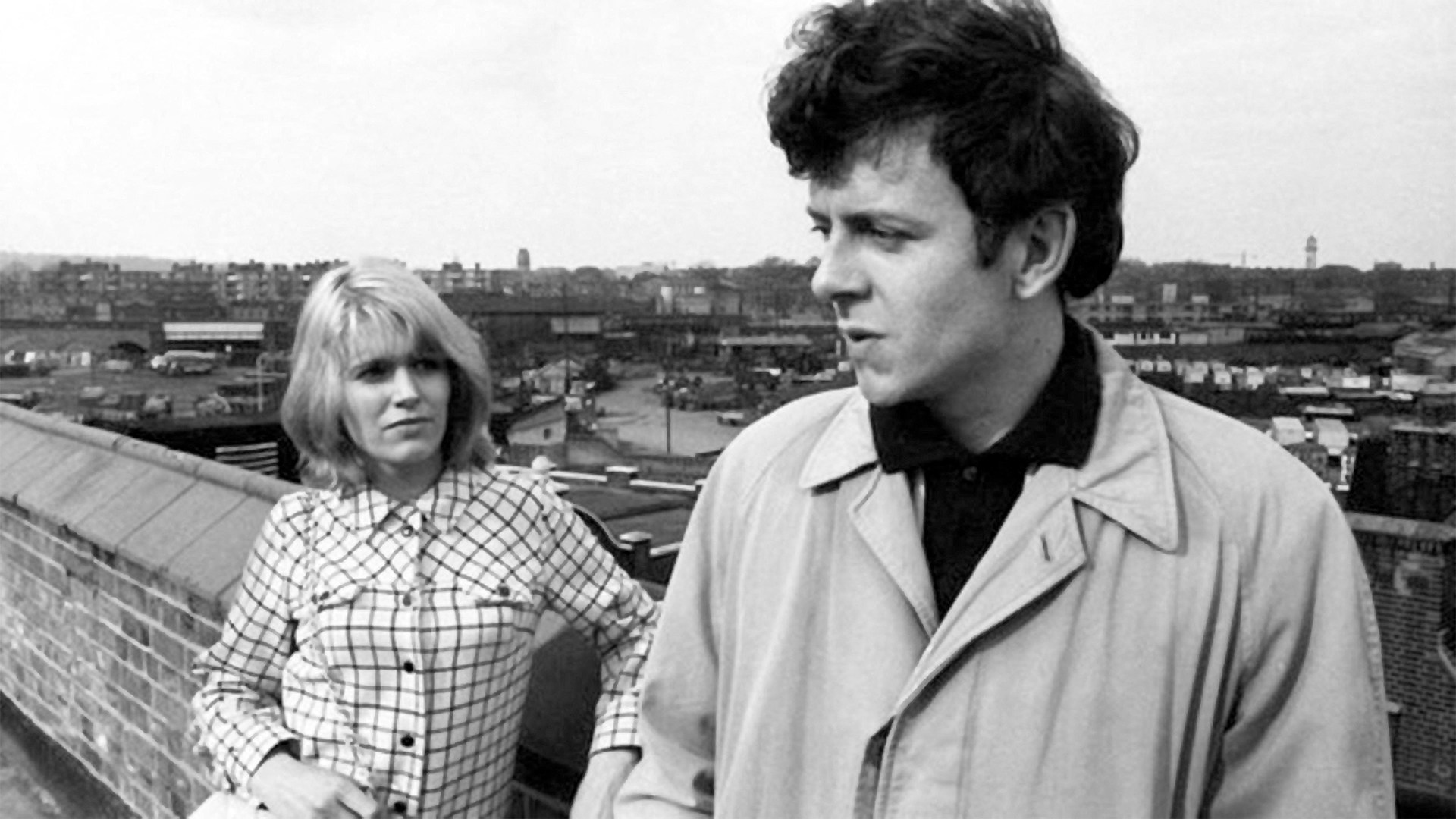
On the morning of 17 November, a new story took over the headlines and remained firmly in the spotlight for months. Cathy Come Home had taken the viewing public by storm, shaming the establishment and permanently changing perceptions of homelessness and its causes. It was a groundbreaking moment in television programming that would impact public policy over decades.
Read more:
Loach filmed Cathy in a realistic documentary style often with unknowing members of the public in the background. This was the case in the final sequence, as Cathy wanders the streets after dark before seeking shelter in a railway station where her children are removed from her by social services. Her abject suffering at that point in the narrative, heartrendingly portrayed by Carol White, is recognised as one of the most powerful dramatic moments ever shown on British TV.
Keep reading the journalism that powers our mission
Register free to continue and learn more about the stories, campaigns and the support we provide, helping people facing poverty across the UK.
As for the unwitting and unaware-of-the-camera extras who were the onlookers of this distressing scene, not one of them came forward to assist the pathetic sobbing and broken young woman sitting on the bench alone, her children gone.
Cathy Come Home was a groundbreaking example of TV drama that provoked political and public debate and pressure for action and change. In today’s more complex viewing environment it is perhaps more difficult to achieve the same immediate impact. But when writers, directors and cast gel together in something exceptional the tradition lives on. Mr Bates vs The Post Office (2024) and Adolescence (2025) are perhaps the best two recent examples in the UK.
Loach has been dismissive of what Cathy actually achieved in practice, citing the end of family separation in temporary accommodation as the only tangible reform to come out of it. But this claim is too modest. Cathy had a real, positive and immediate effect on political and public attitudes towards homelessness. Shelter, launched by coincidence a few days after the broadcast, enjoyed a huge boost in support. Crisis, founded in 1967, was directly inspired by Cathy.
In terms of legislation the drama’s influence is incontestable as demonstrated by the Housing Subsidies Act 1967, the Housing Act 1969 and, more than a decade later, the Housing (Homeless Persons) Act 1977. More recently Homes for Cathy formed in 2016, a coalition of charities and housing associations tackling homelessness, acknowledges by its very name the lasting impact of the play, although the themes running through it are still shamefully relevant to the UK here and now.
How, after six decades since Cathy aired, we are still living with a homelessness crisis and rough sleeping out of control is nothing but a national disgrace. The shortage of social housing, high private rents, child poverty, overcrowding, unsuitable temporary accommodation, prejudice, stigma, and unsympathetic officialdom – sadly we know they not only persist but in recent years have got worse by many measures.
We all know the root causes of our housing crisis, from not replacing homes sold under Right to Buy through to lack of support for social housing over decades. Then there are the consequences of Grenfell and other scandals, which have led some of our largest housing associations to adopt an almost totally introspective strategy and bring new-builds virtually grinding to a halt in some areas.
In London alone, over 200,000 people are homeless in temporary accommodation. Nearly half of these are children, and official figures show that temporary accommodation contributed to deaths of at least 74 children in England and Wales in the last five years. Have we no shame at all? It sometimes feels like that.
Labour’s bold promise to build 1.5 million homes in this parliament was, of course, very welcome but is looking very unlikely to be realised. The arrival of Andy Burnham as PM has arguably had a positive impact so far. Burnham’s aspiration to end rough sleeping by Christmas is enormously encouraging.
We still have a mountain to climb. For today’s Cathy, maybe if she’s lucky she will have her children partner with her, but living in cramped temporary accommodation. No dignity. No hope. No future. Sometimes I despair that she will never truly come home.
Do you have a story to tell or opinions to share about this? Get in touch and tell us more.
Change a vendor’s life.
Buy from your local Big Issue vendor every week – and always take the magazine. It’s how vendors earn with dignity and move forward.
You can also support online:
Subscribe to the magazine or support our work with a monthly gift. Your support helps vendors earn, learn and thrive while strengthening our frontline services.
Thank you for standing with Big Issue vendors.