Advertising helps fund Big Issue’s mission to end poverty
Health

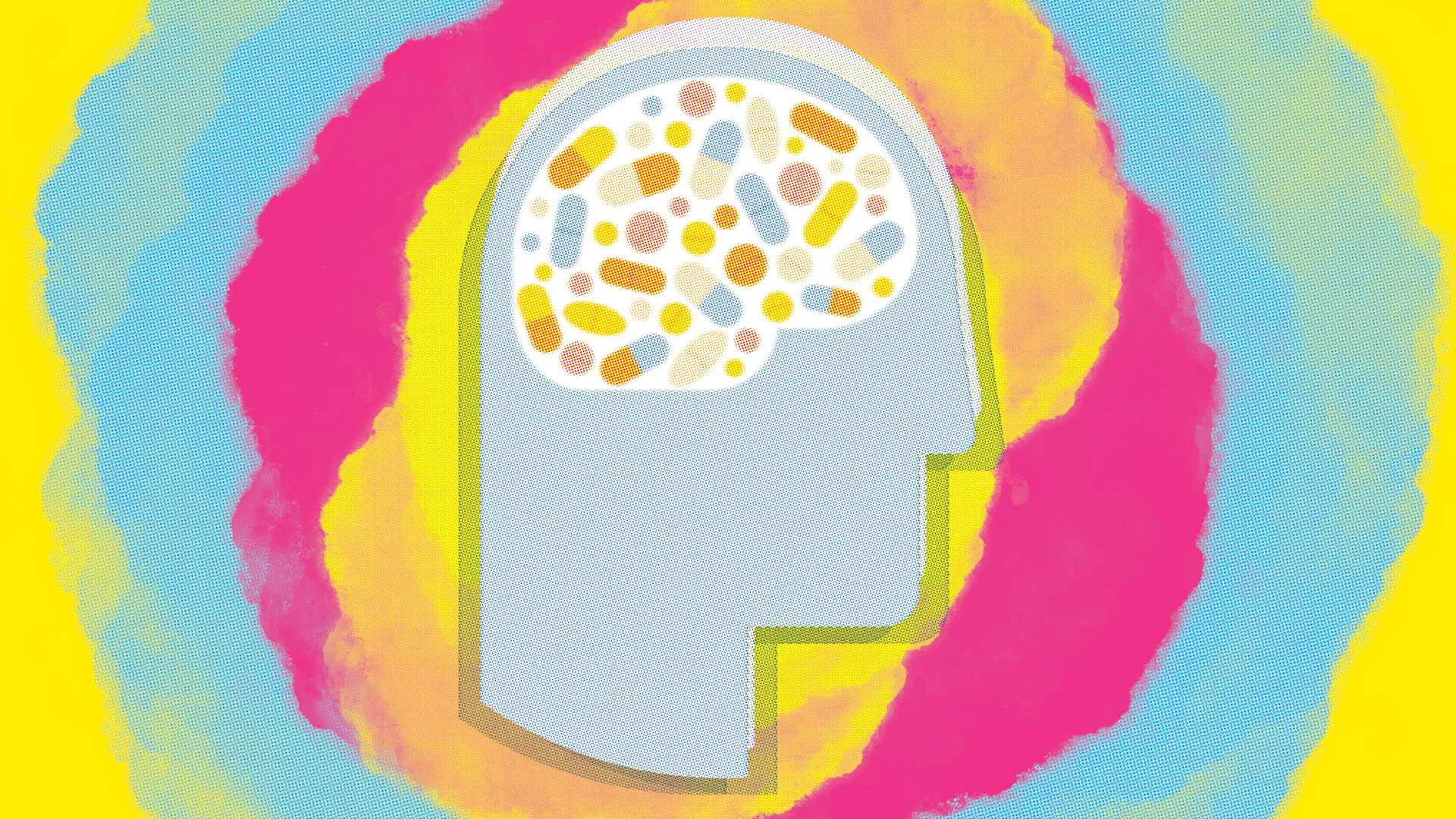
Is there a quick fix to cure addiction?

Judith Grisel used drugs for a decade. She’s now one of the world’s top neuroscientists and explains why some people get hooked on drugs while others don’t.

The Big Issue: Is there a neurological purpose for the brain allowing itself to become addicted?

Judith Grisel: I don’t think addiction itself has a purpose but the neural mechanism that results in addiction is an outcome of the neurobiology that encourages us to eat and have sex, which will help us survive. It also encourages us to explore new environments, ideas and experiences, which is good for humanity too. The tendency to like things that forward the survival of our species – it’s hardwired.

Before a person takes a substance they could become addicted to, is it already predetermined that they’re more likely to become addicted?

Anybody will become dependent if they take enough. There are genetic components but also experiential components – you might be genetically prone to stress and anxiety, you may grow up in an environment that is chaotic and insecure, and that could programme you to be more stressed or anxious. Some people are cautious, some people are naturally more impulsive. That’s good for humanity because we need a population that’s diverse. Those who are more novelty-seeking and risk-taking are at increased risk right now because there are not a lot of new lands to explore… but there are plenty new pharmacologies to exploit.

What happens inside your brain between taking a substance for the first time and becoming addicted to it?


Advertising helps fund Big Issue’s mission to end poverty

If we found a new drug today we could tell if it’s addictive based on whether
or not it releases dopamine in the mesolimbic circuit. Every drug also has
their particular effects such as relaxation or euphoria, based on their particular pharmacology. The brain adapts, in general, by downregulating the response. So if drug X produces effect Y, and you take drug X over and over again,
your sensitivity gets dampened– almost like listening to music too loud – you become tolerant and it [the effect of the drugs] is notably absent. Whatever the drug’s effects are – relaxation or increasing attention or blocking pain – the brain loses the ability to do itself. Without the drug you’re tense instead of relaxed or in pain instead of without pain. That’s dependence. You now feel the exact opposite state that the drug produced. For that reason people need to keep using the drug.

What are the biggest problems facing the UK?

The alcohol beverage industry has worked hard to interject this myth that alcohol is somehow not a drug. People misunderstand something being legal for something being safe. There’s not much of a relationship at  all. LSD is probably the safest drug and that’s very illegal, whereas alcohol and nicotine cost way more lives – car accidents, pre-natal exposure – and yet they’re legal.

Keep reading the journalism that powers our mission

Register free to continue and learn more about the stories, campaigns and the support we provide, helping people facing poverty across the UK.

Why is it important that children just say no?

We know that children are children because their brains are so adaptable. They learn like sponges. In the same way, their adaptation to the drug is much more quick, profound and long-lasting. That explains why about 90 per cent of people who have a drug use disorder start using before they’re 18. There is a gateway effect. If you start using nicotine or alcohol, there’s a general deafening of the pleasure pathway and so now they need to take more and that puts them at risk for subsequent addictions. Kids today don’t have a lot of safe ways to be an adolescent – high risk-taking, exploratory, novelty-seeking, rebellious. This is how their biology is set up. At this age they’re going to be rocking boats.
I don’t know if we need more rock-climbing walls or art schools – there have to be more ways of exploring the edge of your existence without drugs.

Big Issue vendors are back!

It’s not just the shops that are opening again. From Monday 12th April onwards,  Big Issue vendors are back in business, with a big smile and a stack of magazines. Buy from your local vendor today!

Find out more

Have you found a cure for addiction yet?

The more you know the more you don’t know, right? I’m not close. But I will say this, I don’t think the cure is inside an individual’s head. We’re not going to have a drug or a genetic manipulation or a laser that’s going to change the brain. Because it involves so much of our brain we’d basically have to chop off the head. The most direct path to addressing this is for all of us to recognise the ways that we’re either fostering or ignoring what’s right under our noses.

Judith Grisel is professor of psychology at Bucknell University, Philadelphia. Never Enough: The neuroscience and experience of addiction is out on August 8  (Scribe, £9.99)

Advertising helps fund Big Issue’s mission to end poverty

Do you know how Big Issue 'really' works?

Watch this simple explanation.

Recommended for you

View all
Why the music you love listening to right now could be a dementia lifeline in the future
Carol and Malcolm enjoying music together as part of Playlist for Life.
Michael Timmons

Why the music you love listening to right now could be a dementia lifeline in the future

'I was diagnosed with a rare dementia that affects my vision. I turned it into an art project'
Steve and his wife Aly
Dementia

'I was diagnosed with a rare dementia that affects my vision. I turned it into an art project'

Meet the people with Alzheimer's and their families coming together in a dementia run club
Dementia

Meet the people with Alzheimer's and their families coming together in a dementia run club

Researchers are doing incredible work to find a cure for dementia – but more funding is vital
Professor Katie Lunnon
Dementia

Researchers are doing incredible work to find a cure for dementia – but more funding is vital