You need to do your research online then tell your doctor what is available and ask for it, as the GP is too busy to do this. Also, there is no preventative medicine, you have to again find this out for yourself. Some doctors are not interested until you become really ill, for instance with diabetes. They are more interested when you’re on insulin.
Secondly, I am very concerned about digital exclusion. In my case, I am willing to learn computers but have little money for a computer. The main problem where I live is the lack of a 4G signal. It comes on for a few hours a day or not at all. If I need the internet on my phone I need to get a bus and go to another area. The city where I live has a bankrupt council and will close down two-thirds of libraries this autumn.
Ankaret Harmer, Birmingham
Keep reading the journalism that powers our mission
Register free to continue and learn more about the stories, campaigns and the support we provide, helping people facing poverty across the UK.
Glastonbury blues
‘There’s a place for everyone at Worthy Farm’, wrote Deb Grant in issue 1624. Well, yes, for musicians perhaps, but certainly not for fans unable to pay a minimum of £355 + £5 booking fee. I mourn the time when festivals were much more affordable or even free.
Maggie Cobbett, North Yorkshire
Sandwich generation
I am writing in response to the article on the film Sandwiches in which Naomi Westerman says that giving a sandwich to a rough sleeper implies that the giver thinks, “If I give you cash you’ll spend it on drugs.” My late mum, at 90, gave sandwiches to rough sleepers because they looked cold and hungry. I don’t think she ever thought they would spend cash on drugs. It was a simple act of kindness.
Advertising helps fund Big Issue’s mission to end poverty
Liz Phillips, Marlow
Balance the books
I enjoyed your Letter to My Younger Self interview with Malorie Blackman. Two of the photos accompanying the interview were from literary festivals. Later in the magazine, Dani Garavelli interviewed Scots Makar (National Poet for Scotland) Kathleen Jamie. The interview raises some interesting points about book festival sponsorship and boycotts. It refers to the Edinburgh International Book Festival (EIBF) and Hay Festival of Literature having ended their sponsorship deals with Baillie Gifford due to concerns about the sponsor’s alleged investment in companies with links to Israel and the oil and gas industries.
The Borders Book Festival in Melrose and Wigtown Book Festival have also ended their sponsorship with Baillie Gifford. The economy of towns such as Wigtown, Melrose and Hay will be affected adversely by having to scale back their events. Would it mean a drastic drop in revenue for the city if the EIBF were to be scaled back? A smaller book festival would free up some venues and hotel rooms to be used by those attending and performing in Edinburgh’s other festivals. However, a smaller EIBF means fewer opportunities for writers and readers. This is even more the case for the smaller festivals.
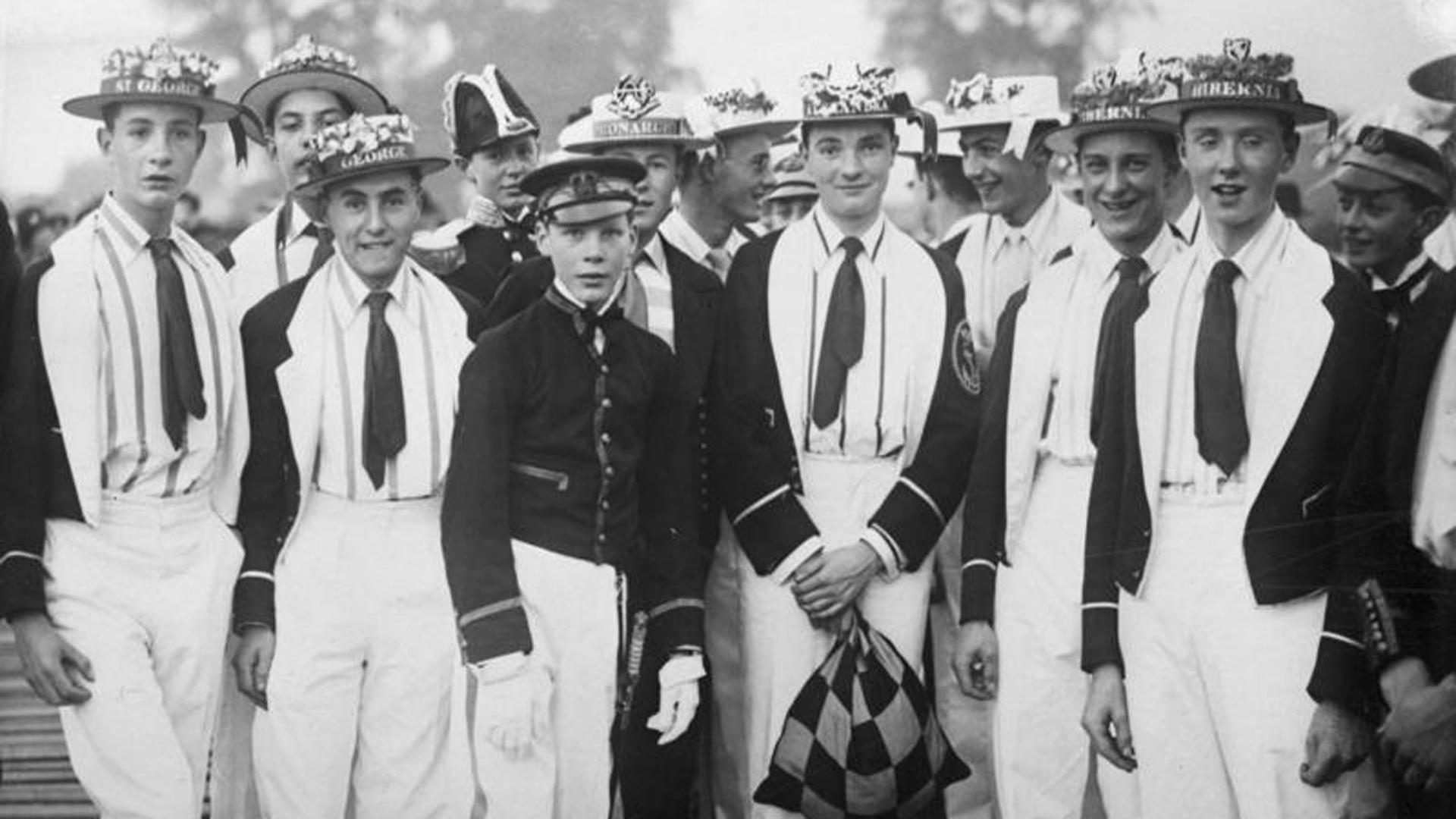
I hope that book festivals will be preserved. In future, when searching for an image of a writer reading from their work, hopefully, we will find this in the “literature” category and not “filed under history”!
Angela White, East Kilbride
Do you have a story to tell or opinions to share about this? Get in touch and tell us more. Big Issue exists to give homeless and marginalised people the opportunity to earn an income. To support our work buy a copy of the magazine or get the app from the App Store or Google Play.
Advertising helps fund Big Issue’s mission to end poverty