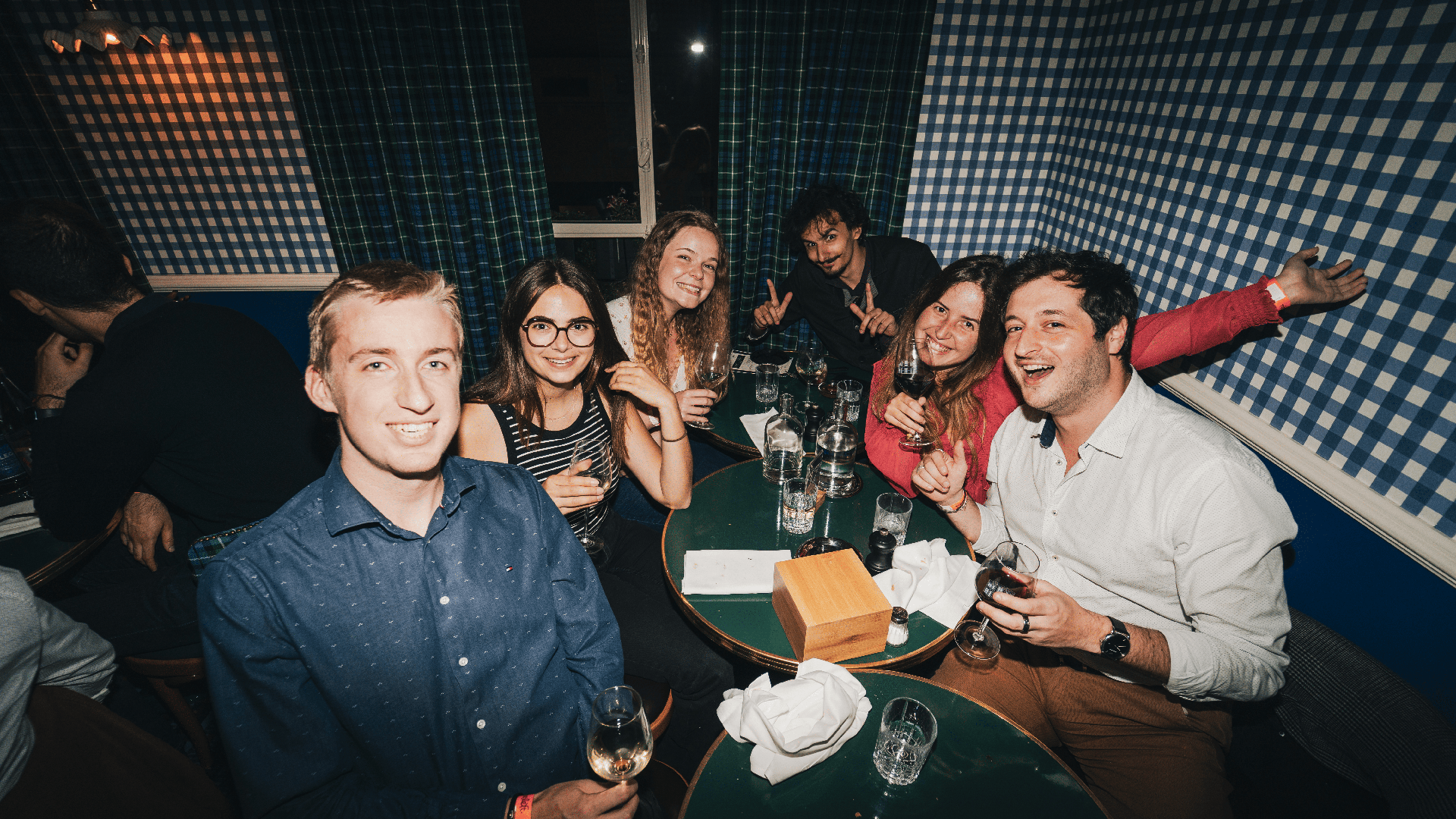
This need for in-person connections has led to a wave of innovative solutions. TimeLeft is an app that connects over 16,000 strangers for dinner every week across 300 cities in 65 countries. It starts with a personality test asking simple questions like: Are you an introvert or an extrovert? Do you like discussing the news? The app matches users with a small group of like-minded people who gather for dinner at a restaurant on a Wednesday at 7pm. The only information users receive about the other participants before arriving are their nationalities, occupations and star signs. No names. No pictures.
Rather than putting people off, this is what’s made TimeLeft so successful, according to founder and CEO Maxime Barbier. “People love TimeLeft because we are not online,” he says. “In the app there is nothing [after the personality test]. There is nobody to talk to, no chat, no videos.”
For many, the idea of meeting a group of strangers is daunting, particularly from a safety perspective, but Barbier insists that “we’ve had nothing bad happen”, and that it’s much safer than the alternatives. All diners gather in groups, never pairs, and there’s no risk of fake profiles, as everybody is meeting in person.
Continue reading for free
Registration is free and takes less than 30 seconds.
Our supporters make Big Issue’s work possible. Join us to see the impact we’re having together and discover more ways to help people facing poverty access income, opportunity and support.
The causes of loneliness are different for everyone. But is meeting strangers through an app really the best remedy? There was only one way to find out…
After a wave of nauseous paranoia, I stepped into the mid-market city-centre restaurant. I was immediately greeted with a barrage of handshakes, names, and questions. If anyone was nervous, they hid it well.
The conversation started with chat about work, holidays and the food, before starting to prod at the reasons why we’d all ended up at the table.
Advertising helps fund Big Issue’s mission to end poverty
The explanations were many. The workaholic who had become consumed by his job and lost touch with his friends; the divorcee whose friends were busy with marriage and kids; the serial traveller who’d been grounded by a climbing accident; the married woman who wanted to meet new people.
Nobody explicitly mentioned loneliness. They didn’t need to. The main, and probably only, thing everyone had in common was a shared desire for human connection.
As the night progressed, so did the depth of conversation, to an extent. How much would you pay for an Oasis ticket? The workaholic paid £1,000. Did anyone want kids? No. What did we think of Donald Trump? Nobody was willing to risk a strong view.
The conversation was laced with hints of life’s problems – romantic, financial and familial. Nobody bared all, but everybody offered enough to build friendly understanding and respect.
We left the restaurant with smiles and hugs, high on the thrill of meaningful human connection. We didn’t exchange contact details, but the app allows you to private message others later, if you both agree.
Soon, the biggest meet-up event of its kind is being planned for Christmas Day. Barbier has got an ambitious plan to book out entire restaurants for big groups in most cities instead of the usual small gatherings. He says, “Nobody should be alone on Christmas Day. Even if you’re lonely or you don’t live close to your family there will be a table waiting for you with people in the same situation.”
Advertising helps fund Big Issue’s mission to end poverty
Find out more at TimeLeft’s website or on their app. And tell us about plans to tackle social isolation at Christmas in your area via letters@bigissue.com
Do you have a story to tell or opinions to share about this? Get in touch and tell us more. This Christmas, you can make a lasting change on a vendor’s life. Buy a magazine from your local vendor in the street every week. If you can’t reach them, buy a Vendor Support Kit.