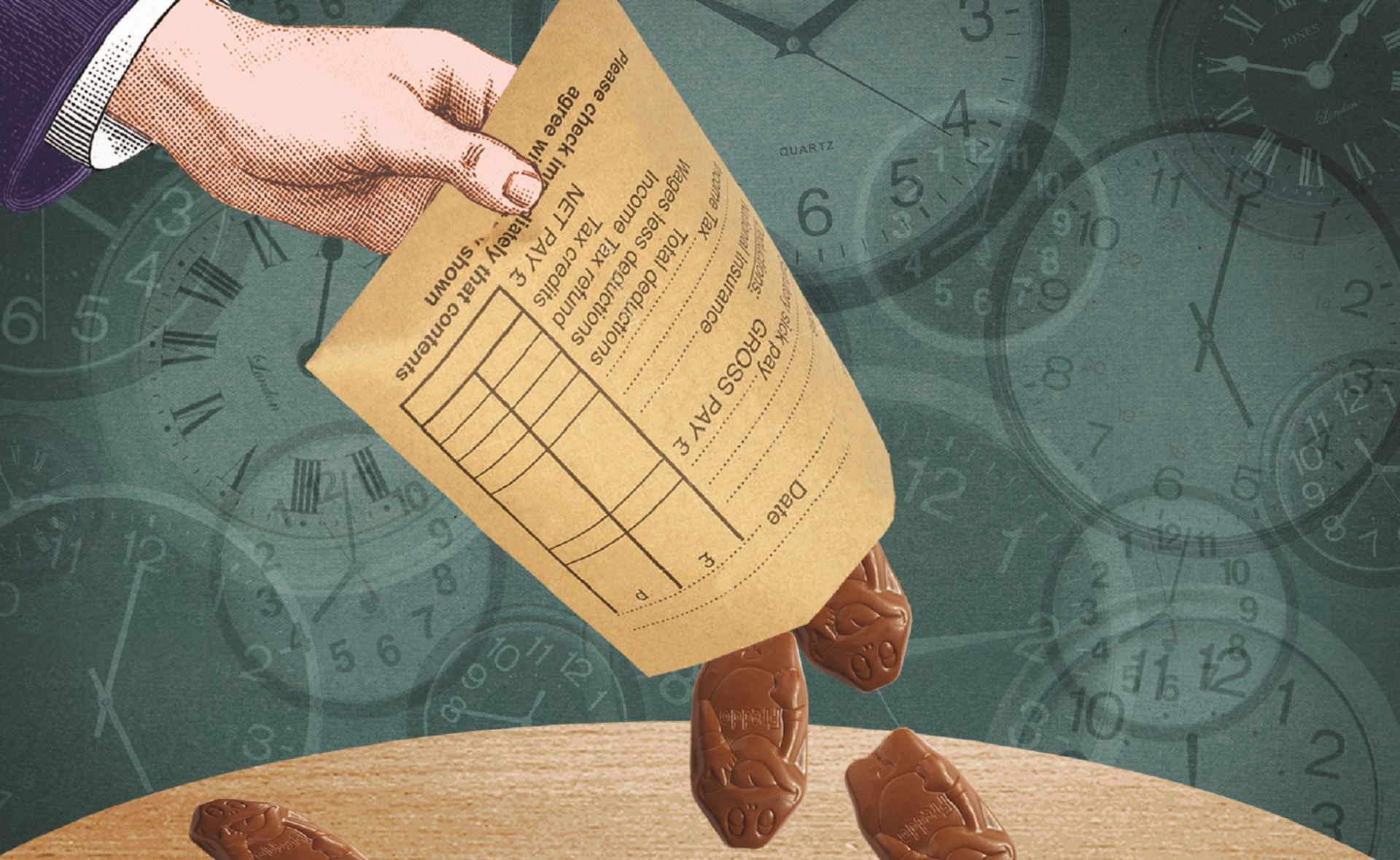
And the educational value of the Cadbury’s chocolate treat cannot be called into question – moneylens.com wrote about that back in May with: “How chocolate helped me understand inflation”.
But are Freddos a good financial indicator?
Facts. Checked.
Unfortunately, as much as we’d like it to be true, Yahoo!’s story is correct in pointing out Freddonomics’ flaws.
The theory that the price of Freddo shows that minimum wage should be £18 per hour is not a new one – it’s been knocking around the internet since 2017 despite popping up on the r/TheyDidTheMath subreddit last week.
Keep reading the journalism that powers our mission
Register free to continue and learn more about the stories, campaigns and the support we provide, helping people facing poverty across the UK.
According to the viral post, in 1999 the minimum wage was £3.60 per hour, while a Freddo allegedly cost five pence, meaning you could buy 72 with that money. Moving forward to when a minimum wage was at £7.50 per hour but a Freddo cost 25 pence, that meant you could only buy 30. In order to get the same amount of Freddos, minimum wage would have to be £18 per hour.
But the maths is dodgy to say the least, according to an investigation by Big Issue Changemakers Full Fact. A Freddo cost 10 pence in 1999, meaning you could have bought 36 of the bars with an hour’s pay, not 72. That means that minimum wage should be around £9 per hour instead – not far from the rate paid today.
The truth is that both the price of Freddos and the minimum wage have risen faster than inflation in the last two decades.
Inflation demonstrates the change of prices over time. In the current period of financial uncertainty, the Bank of England has set an inflation rate of one per cent, meaning that if you spend £100 on something this year it will cost £101 next year.
Based on the Consumer Price Index (CPI) and CPIH (including housing costs) used for official inflation measurements, if a Freddo cost 10 pence in 1999 and the price rose in line with inflation then it would have cost
14 pence in 2017 and 15 pence today.
But these days the chocolate bar costs 25 pence (or 30 pence depending where you live in the country) meaning that Yahoo!, who based their story on the Full Fact investigation, is correct with their suggestion that the price has risen five times faster than inflation.
Minimum wage has also risen much faster than the rate of inflation since first being introduced in April 1999 when it was worth £3.60 per hour for those aged 22 and over. It would be worth £5.15 per hour if it had increased at the rate of inflation. Now the national minimum wage is £8.20 for people aged 20-24, with the national living wage for 25 years old and up priced at £8.72.
So, unfortunately, the Freddo Index is as useful as a chocolate teapot.
Image: Miles Cole