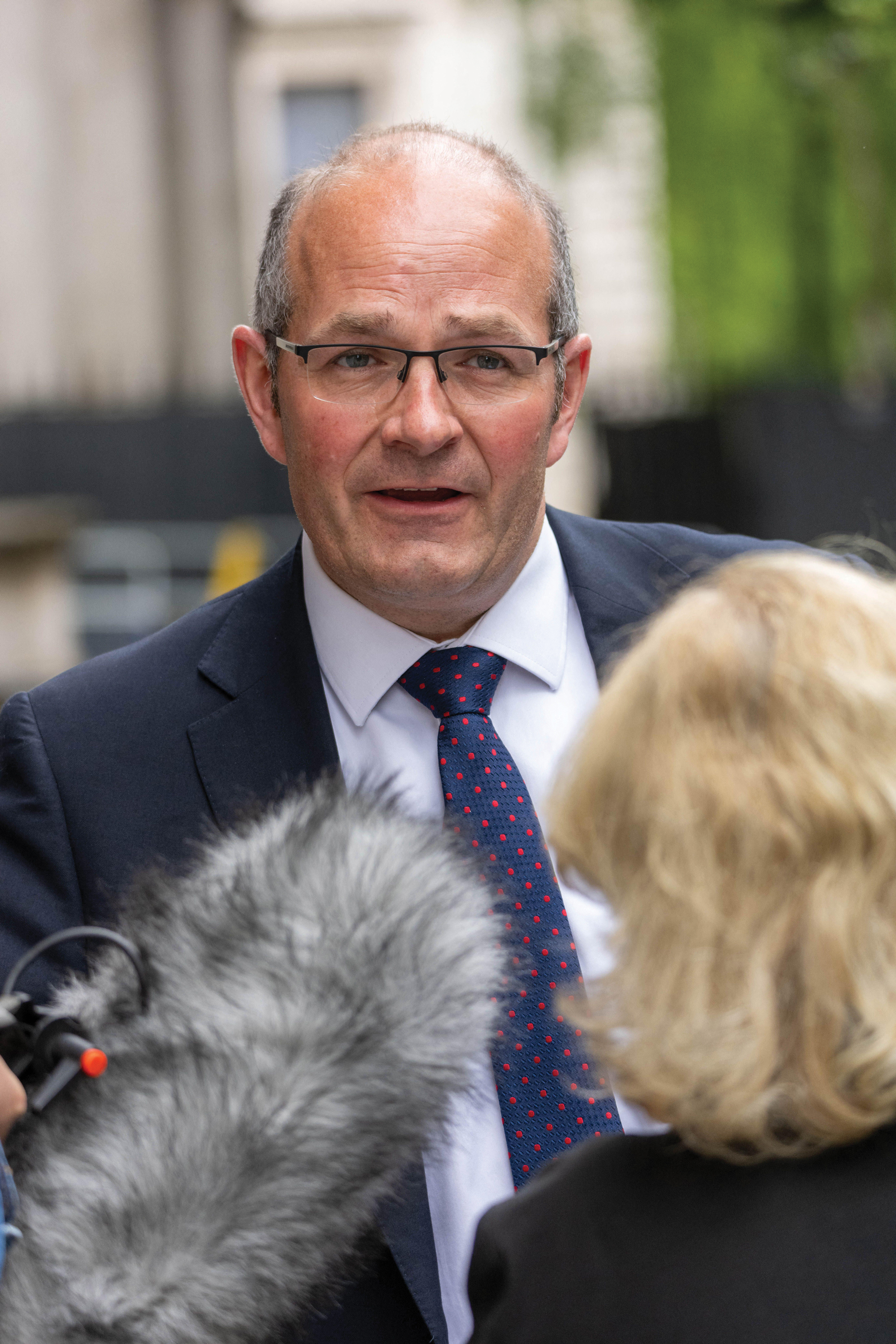
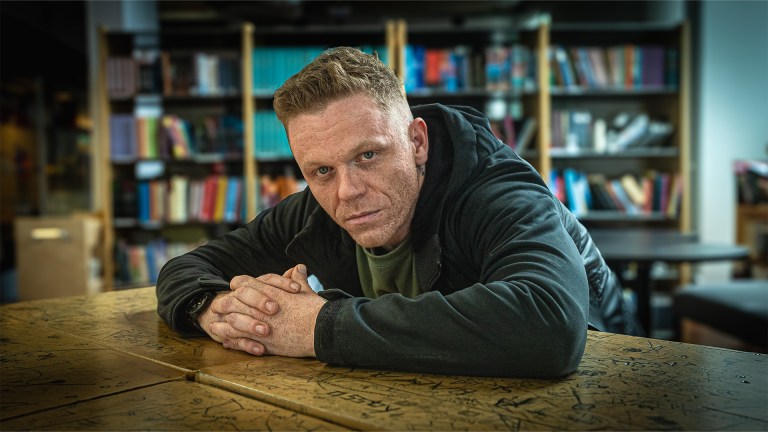
Maxïmo Park's Paul Smith. Image: dpa picture alliance / Alamy
Share
Before we left the EU, there was plenty of talk about who would benefit. The Leave campaign promised to redivert money to the NHS, rip up agricultural red tape, and “take back control” of the UK’s fishing waters. Nearly a decade on from the vote, a YouGov poll found six in 10 Britons believe Brexit has been a failure. But while some industries are still counting the cost, others are blossoming. We spoke to some of Brexit’s winners and losers.
Student Amensinor Favour Okpohs. Image: Supplied
Student Amensinor Favour Okpohs: ‘If Brexit hadn’t happened, I could have travelled to Ireland without restrictions’
Originally from Nigeria, Amensinor Favour Okpohs came to Northern Ireland to study hospitality and tourism. She now works as a sabbatical officer for the student union at Ulster University, but is still on a student visa.
The strict terms of her entry permit means she can’t visit Ireland – even when her job demands it.
“If I have an opportunity to go down south, like for conferences, events, programs, I’m not able to go with my student visa,” she tells Big Issue. “I have to apply for an Irish visa, and the first time I did that, it took me seven months to get back to get the approval.”
The Irish capital is just a few hours’ drive from Belfast, and there are – thanks to the Good Friday agreement – no visible border controls. But when Favour does get a temporary multi-entry visa, she has to travel the short distance by plane to make sure she gets a stamp in her passport.
“If I had got on the bus, in less than three hours I’d be in Dublin. But getting the flight that day it took me 12 hours to get to Dublin, because the flights were just cancelled, cancelled, cancelled, the weather wasn’t too good,” she recalls. “So it was stressful, but I had to do it for next time, so that I can get my visa next time.”
Advertising helps fund Big Issue’s mission to end poverty
Advertising helps fund Big Issue’s mission to end poverty
“If Brexit hadn’t happened, we would have been part of the European Union, and I could’ve travelled to Ireland without restrictions.”
Hannah Lamb. Image: Supplied
Flower Farmer: Hannah Lamb, Yorkshire Edible Flowers: ‘British flowers are becoming more crucial’
“British flowers are a tiny section of the market at the moment, but that is growing partially because Brexit made imports more expensive and more difficult. There have been difficulties as well, but the delays in the port and things like that have meant that British flowers are becoming more crucial for the local floral industry. But there are lots of factors, not least the hard work of British flower growers!”
National Farmers Union president Tom Bradshaw: ‘UK agricultural policy has also been completely re-engineered’
Tom Bradshaw, president of the National Farmers Union. Image: Ian Davidson / Alamy
“Leaving the EU has completely reshaped the landscape for British agriculture, and our focus remains on working with government to build a resilient and profitable future for UK farming.
Keep reading the journalism that powers our mission
Register free to continue and learn more about the stories, campaigns and the support we provide, helping people facing poverty across the UK.
“Since leaving, government has negotiated new trade agreements to replace those held by the EU. Farmers have had to remind ministers frequently that these must respect domestic production standards as well as create opportunities for high quality UK food to find new export markets.”
Former Common Agricultural Policy direct payments have been replaced by Environmental Land Management schemes (ELMs) in England, notably the Sustainable Farming Incentive (SFI).
“UK agricultural policy has also been completely re-engineered, most radically in England,” said Bradshaw. “That transition has neither been transparent nor predictable for our farmers and growers and has left us more exposed to extremely volatile global markets.
“What we need now is a clear framework of enabling policy that gives food production equal priority with environmental delivery backed by targeted investment, which we anticipate the farming roadmap could deliver later this year.”
That roadmap could see farmers once again with closer ties to the EU.
“Government is now seeking a new sanitary and phytosanitary agreement with the EU which will mean farmers and growers once more following many EU regulations,” said Bradshaw. “We recognise the significantly reduced exports to the EU but it’s vital we get the right deal for UK farming.”
Maxïmo Park’s Paul Smith. Image: By Anna Hanks from Austin, Texas. CC BY 2.0, commons.wikimedia
How has Brexit impacted you doing your job as a touring musician?
It’s increased the cost of touring in Europe, which was already a costly business. We’re lucky to have a relatively large German audience, otherwise we probably wouldn’t tour across the rest of the continent.
What have been the key changes and how has that changed your ability to tour?
We could do without the carnet (which lists all of our equipment in great detail) that we now have to pay someone to fill in on our behalf. Our tour bus takes a detour in Dover and we wait until a bemused customs official deals with it, before we catch the ferry (hoping to avoid queues, so we can arrive on time for the first concert). The cost of our tour bus has increased now that we can only use companies registered outside of the UK. Due to cabotage rules, bus and truck drivers can now only spend a minimal amount of time working in Europe. We also have to be very careful about the printing and manufacture of our tour merchandise, because we are not allowed to take anything that was manufactured in the UK into the EU. The more you order, the less the wholesale price, so we end up having to manufacture two sets and pay more overall for the same amount of merchandise that we would’ve manufactured before Brexit.
How do you feel about the impact of Brexit on the music industry / musicians?
I can’t help but feel negatively about the whole situation, since it’s affected me personally. Touring outside of the UK generates a lot of income and tax that musicians pay in the UK, so it feels like, as a country, we’ve shot ourselves in the foot. As a band, we don’t actually spend that much time outside of the UK, overall, so it’s the music industry professionals, like our crew members, that I feel sorry for, because their employment is restricted by post-Brexit rules. In purely financial terms, the music industry generates a lot of income for the UK, but it is the diminishing of a precious cultural exchange that is also of real concern for me. Politicians love talking about the value of our culture, and its associated ‘soft power’, but you have to question how much political will there is to help the culture industry with this issue.
What needs to change / what would help?
It would help to have tariff-free exceptions for music industry professionals who work within the EU. It’s quite a specialised industry that ends up suffering from broad-based rules, which lack finesse.
Andrew Hood, FIELDFISHER LLP partner specialising in Trade, Regulatory, Public Affairs and Public International Law
Andrew Hood. Image: Supplied
It was a lot of work for lawyers, but a lot of hard work, with lawyers obviously helping clients and companies navigate what might be coming against a shifting regulatory backdrop.
We provided advice to clients across lots of different industries, navigating huge amounts of uncertainty. It’s quite hard to lawyer if you don’t know what the law is going to be, what the treaty is or the regulations that are going to give effect to it, or the enforcement approach they’re going to take.
So there was quite a bit of work for law firms and for lawyers, but perhaps not as much as you might think, because with so much uncertainty, companies just often paused or waited to see.
And frankly, Brexit has had a detrimental impact on our economy. I think that is pretty clear. And if the economy is down, then legal work is down too.
Buy from your local Big Issue vendor every week – and always take the magazine. It’s how vendors earn with dignity and move forward.
You can also support online: Subscribe to the magazine or support our work with a monthly gift. Your support helps vendors earn, learn and thrive while strengthening our frontline services.
Thank you for standing with Big Issue vendors.
Advertising helps fund Big Issue’s mission to end poverty