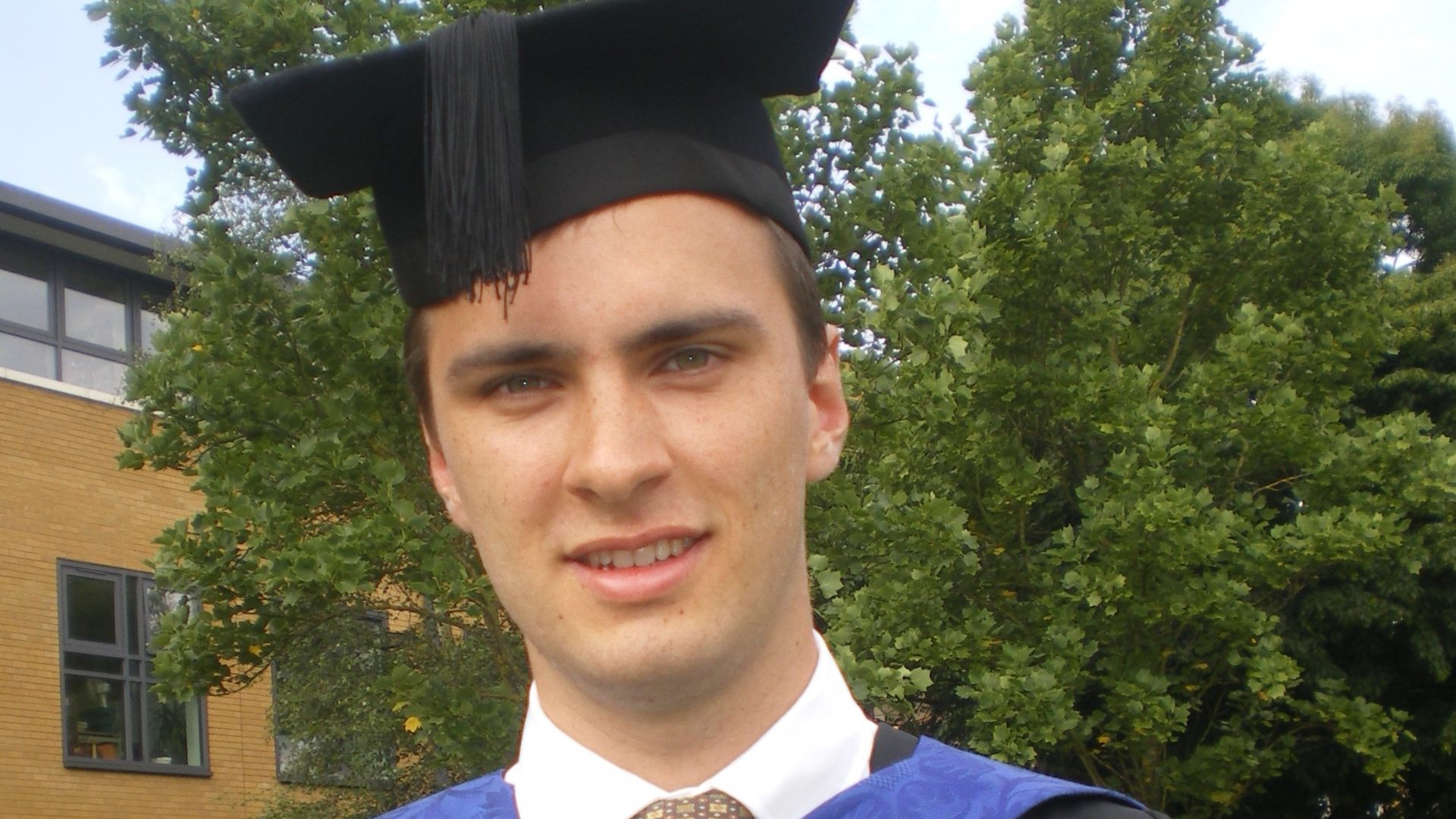
“He just found it impossible to break free,” Jones told Big Issue.
Help is available for people experiencing problem gambling. But for too long, effective policy interventions have been hampered by a lack of reputable evidence.
The new Gambling Harms Research UK Evidence Centre – where Martin is the lived experience lead – will hopefully change that. It’s the largest-ever research initiative to reduce gambling-related harm, bringing together universities across the UK in a coordinated effort to finally close the gap between research and action
“This could change a lot,” says Jones.
Advertising helps fund Big Issue’s mission to end poverty
Advertising helps fund Big Issue’s mission to end poverty
Some 58% of adults in Britain gambled at some point in the last year, a number that includes those who take the occasional lottery or football punt. But the industry makes 60% of its profits from 5% of gamblers – a minority who are disproportionately likely to have pre-existing vulnerabilities.
“[Those people] are in the rinse and repeat mode. And unfortunately, Josh was one of those,” Jones says.
Keep reading the journalism that powers our mission
Register free to continue and learn more about the stories, campaigns and the support we provide, helping people facing poverty across the UK.
Particular types of gambling encourage addiction, says Professor Heather Wardle, who will help lead the centre from the University of Glasgow. She has spent nearly 20 years in gambling research and said population-level statistics actually mask the scale of harm within specific product types.
“Gambling is just a category for lots of different types of things,” she explains. “And if you look at the different types of products, there are, some products have very, very high numbers of people who are harmed within their player base.”
In a global systematic review she co-led, 15% of people playing online casinos or slots were classified as experiencing problem gambling – not 2.7%, the figure that applies to all forms of gambling and the one that usually gets cited. “We do ourselves a bit of a disservice by talking about population-level figures,” she says.
Advertising helps fund Big Issue’s mission to end poverty
Josh first became addicted to gambling at 17, unbeknown to his parents. During his first week of university, he spent his entire term’s maintenance grant on bets. He had counselling at university, through National Gambling Clininc in London, and via a private clinic in Harley Street. But he was stuck in a vicious cycle.
The coroner recorded Josh’s death as a death by suicide. But Jones blames the industry that had callously exploited his son.
“Is it [gambling] a leisure industry or is it a harmful industry? The current establishment thinks it’s a leisure industry… it’s not,” he says. “I can’t think of any other industry where that level of harm would be tolerated as a leisure industry and I certainly wouldn’t be caught saying it brings joy to millions because it brings misery to millions.”
Why is more research into gambling needed?
The centre, led by Wardle alongside partners at King’s College London, the University of Sheffield and Swansea University, is part of a new research programme managed by UKRI and funded through the government’s Gambling Levy, which raised over £20m for gambling research in 2025-26.
It will coordinate a network of 19 innovation partnerships covering topics from gambling harms and sport to the structural drivers of harm.
Advertising helps fund Big Issue’s mission to end poverty
There has been, Jones says, “a marked tension between research funded by a charity that is funded indirectly from industry… I would be absolutely flabbergasted if more than one researcher hadn’t been asked to tone down one of their conclusions. And that’s been fairly corrosive really.”
This first-of-its-kind centre is funded by the gambling levy – a mandatory fee, ranging from 0.1% to 1.1% depending on the sector, that gambling operators must pay to fund research into gambling harms.
It comes after years of frustration among researchers and campaigners at the pace of policy change. For example, Spain, France, Italy and Belgium have all moved toward near-total bans or heavily constrained advertising regulations, but the UK has not.
Part of the problem, Wardle explains, is that the UK regulator has conflicting objectives.
“They have an overarching framework that says we want to grow the gambling industry, but we also want to minimise harms. Can you reconcile these two aims? Are they actually complementary?” she says. “We have said no. You can’t. Because a disproportionate amount of industry profits are made from those who are harmed.”
That tension is baked into legislation. There’s an ‘aim to permit’ provision in the 2005 Gambling Act that requires the regulator to facilitate gambling.
Advertising helps fund Big Issue’s mission to end poverty
That’s why, for example, local authorities can’t meaningfully restrict the number of betting shops on their high streets.
The evidence centre has no regulatory powers. But Wardle argues that the scale of government investment signals something. “If we are still in five years’ time completely hampered by this data asymmetry,” she says, “then that is of itself quite compelling evidence as to why change is needed.”
Josh as a young boy. Credit: Supplied
Jones ultimately hopes that the research created by the centre helps justify the removal of the 2005 act’s ‘aim to permit’.
“I’d [also] give the Gambling Commission a primary duty to protect against harm,” he says. “At the moment, they’re more interested in growing the industry.”
The former engineer’s experience managing hundreds of construction sites has shown him the impact legislation can have. He saw the Health and Safety at Work Act transform workplace deaths – 651 a year in 1974, around 135 today. “It absolutely focused your mind,” he says.
Every incident in the industry became a question: “Would I have spotted that? How does that relate to my site?
Advertising helps fund Big Issue’s mission to end poverty
“Whereas in the gambling industry, there is no duty of care.”
Jones has spent the last decade fighting to change that, so that no family has to endure what his has.
“If you go to events such as party conferences or whatever and talk to ordinary people walking by, most of them will say, I didn’t know gambling was such a problem,” he reflects. “But it is.”
A spokesperson for the Betting and Gaming Council said that “Any suicide is a terrible tragedy and we are not in a position to comment on any individual case.”
“The latest NHS Health Survey for England estimates that 0.7 per cent of adults are problem gamblers, and a new statutory levy is now delivering over £100 million a year for research, prevention and treatment.
“BGC members are committed to raising standards and promoting safer gambling, including enhanced protections for customers, online monitoring of play, deposit limits, time-outs and self-exclusion tools.”
Advertising helps fund Big Issue’s mission to end poverty
There are charities and support groups that offer free, confidential support to people who are gambling, and their friends and family.You can find more information on these groups here.