“Pause it for this winter, and at the same time give us the support we need financially, £20 million, to provide accommodation and wraparound support,” Khan said.
“That will avoid, god forbid, any rough sleeper losing their lives, but also avoid what you see in other parts of the country which is people sleeping in doorways, on benches and buses, and you see an increase in that in London as well.”
New data from London’s councils shows a 39% increase in homelessness presentations from September to October among those evicted from Home Office accommodation, with the situation expected to worsen in the coming months.
Keep reading the journalism that powers our mission
Register free to continue and learn more about the stories, campaigns and the support we provide, helping people facing poverty across the UK.
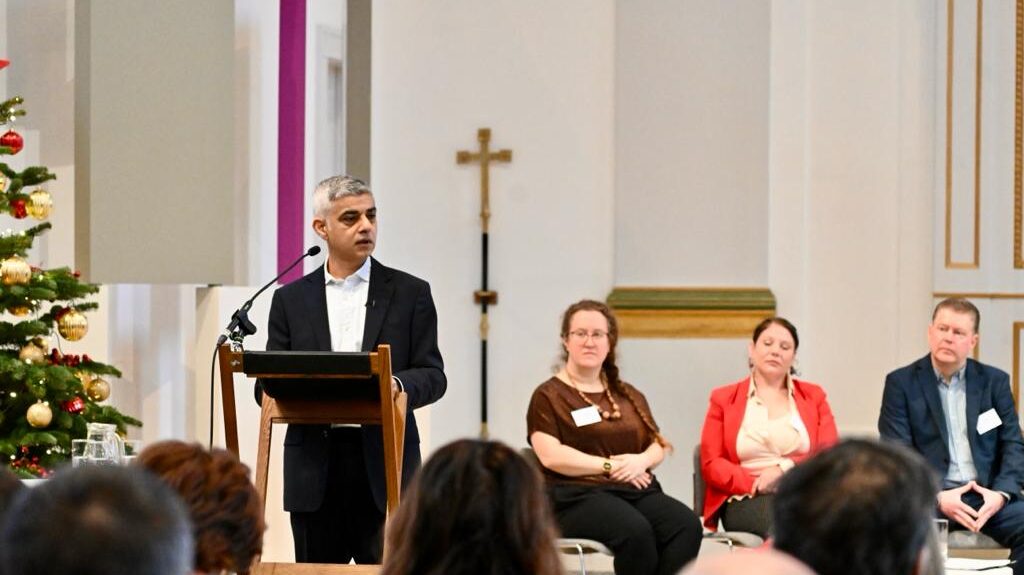
It’s one of several factors driving rough sleeping in the capital. Sadiq Khan spoke to The Big Issue at St John’s church in Waterloo as he launched the rough sleeping charter, bringing together businesses, homelessness and housing organisations and – hopefully – the public in a commitment to bring people off the streets in the capital.
The charter calls on groups of all forms to recognise the causes and challenges of rough sleeping and to put in place a network of support, but Khan admits fundamental change won’t happen without significant action from Westminster.
By Christmas, the situation could be even more severe, he warned. “I think we’re going to see a return of cardboard city in London,” Khan said, referencing the Waterloo settlement home to almost 200 people in the 1980s.
“We got rid of cardboard city, I think you’re going to see a cardboard city taking place very, very soon. It’s already taking place in the odd doorway, we can’t afford to extend it to the city,” said Khan.
“That means not just displacing those people sleeping rough, but preventing them sleeping rough in the first place, making sure they’ve got good, secure, safe accommodation, once they’re in they should be in for good. With the right financial support for the government they could be in for good.”
A Home Office spokesperson said: “We work with local authorities to manage the impact of asylum decisions.
“Once someone is informed that their asylum claim has been granted, they get at least 28 days’ notice to move on from their asylum accommodation.
“We encourage individuals to make their onward plans as soon as possible after receiving their decision on their asylum claim, whether that is leaving the UK following a refusal, or taking steps to integrate in the UK following a grant.”