Advertising helps fund Big Issue’s mission to end poverty
News

Warm homes should be ‘public health priority’ to fight fuel poverty

The Government will help cut fuel bills by funding energy-saving measures in more homes, ministers' new strategy shows

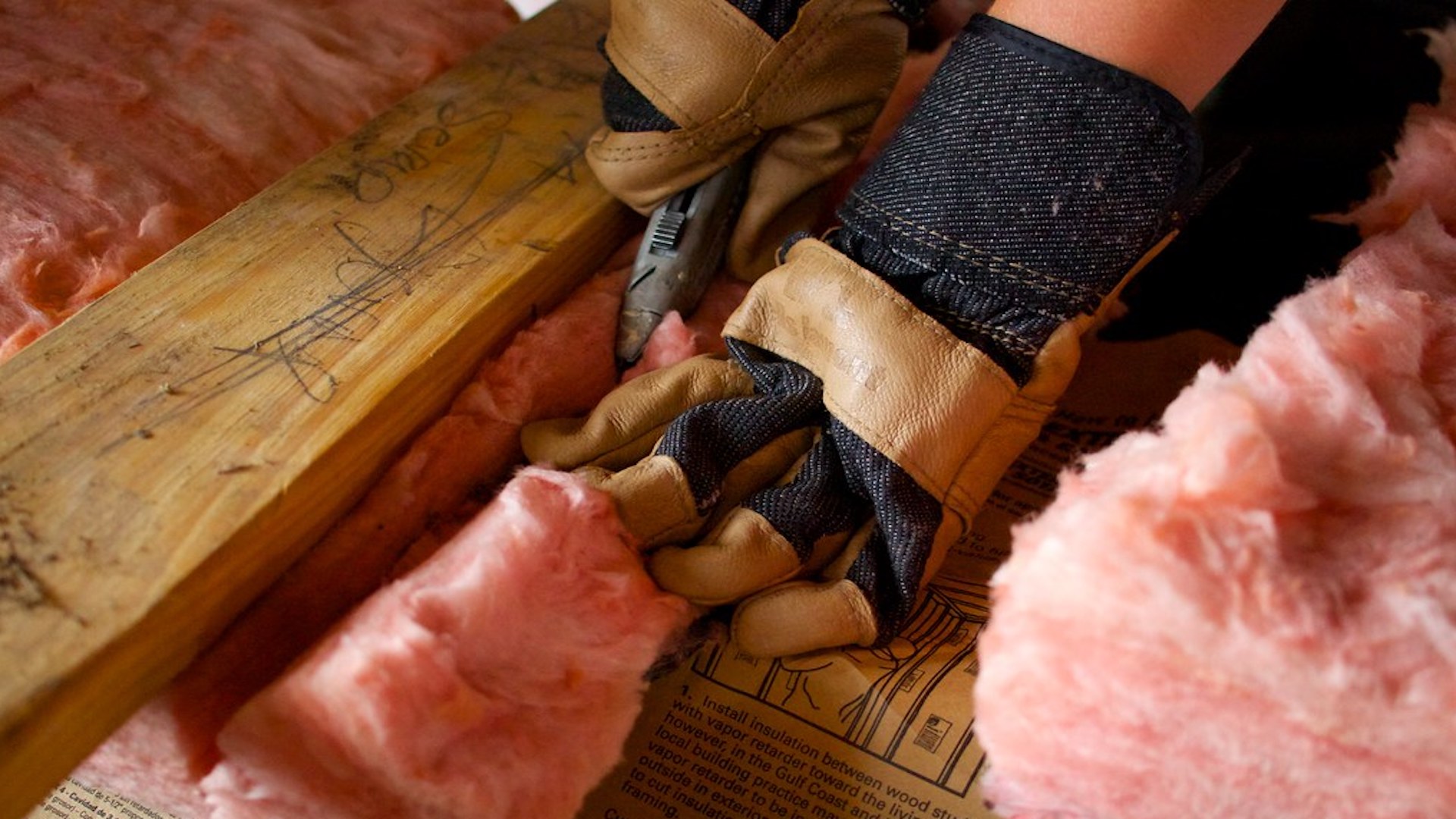
More insulation for homes is part of the Government's fight against fuel poverty

The government is not insulating homes fast enough. "Insulation" by Jack Amick is licensed under CC BY-NC 2.0

Fuel poverty experts have welcomed Westminster’s new strategy to help people on low incomes heat their homes, but warn that people will still struggle to stay warm without a stronger benefit system and help getting out of problem debt.

The proposals will extend the £140 Warm Home Discount to an extra 750,000 households,  including working-age households earning less than £16,190. This would mean a total 2.7 million people paying £140 less on their fuel bills every winter.

“This is overdue, but it’s still very welcome,” said Adam Scorer, chief executive of National Energy Action. The discount currently goes to pensioners on low incomes automatically while younger people who qualify must apply and receive the limited discount on a first-come, first-served basis.

Ministers also committed to improving the energy efficiency of “as many fuel poor homes as is reasonably practicable” by 2030, a measure which will lower fuel bills for households and reduce greenhouse emissions across the country. 

The Government wants to upgrade these homes to band C. This means installing insulation in walls and lofts, central heating systems for those who don’t already have one, and new heat sources including planet-friendly heat pumps.

Lockdowns have taken income away from hundreds of Big Issue sellers. Support The Big Issue and our vendors by signing up for a subscription.
Advertising helps fund Big Issue’s mission to end poverty

People in a band E home using mains gas could see their annual energy bills cut from £2,300 to £1,500 after installations to boost its energy efficiency, the Government paper stated.

“We needed vital clarity about how Government intends to meet its legal targets,” said Scorer, as progress had been “flatlining”. 

“This strategy helps and will support a range of public and private organisations to plan effectively and collaborate to help end fuel poverty. 

Keep reading the journalism that powers our mission

Register free to continue and learn more about the stories, campaigns and the support we provide, helping people facing poverty across the UK.

“Critically, the strategy confirms that Government is committed to the scale of resources we need to start to meet the challenge of ending fuel poverty.”

Efforts to tackle fuel poverty are closely linked to the UK’s work to reach net-zero on greenhouse gas emissions by 2050, the Government said, to ensure low income communities are not left behind as the energy industry transitions to sustainable sources.

“To make urgent progress we also need affordable, warm homes to become a real public health priority,” Scorer said, as well as “greater price protection for low income energy consumers, continuation of the universal credit uplift and urgent provision to help households move out of problem debt.”

Advertising helps fund Big Issue’s mission to end poverty

There are 1.2 million fewer low-income households living in the least energy efficient homes than there were in 2010, Government figures showed.

Ministers also pledged to extend the Energy Company Obligation, the government scheme in which medium and larger energy suppliers fund and coordinate the installation of efficiency-boosting measures in homes across the UK. Now set to run until 2026, its value has been increased from £640 million to £1 billion per year.

“There is much to be applauded in the new strategy and we welcome many of the measures that are being introduced and the announcement of additional funding,” Simon Francis, coordinator of the End Fuel Poverty Coalition, told The Big Issue.

“The updated strategy will ensure progress is made towards meeting previously missed milestones,” he added, while it “takes another step in revealing the true extent of fuel poverty in the country”.

Advertising helps fund Big Issue’s mission to end poverty

Do you know how Big Issue 'really' works?

Watch this simple explanation.

Recommended for you

View all
'So many of the problems we face today are a result of Right to Buy'
A row of house rooves and chimneys
Letters

'So many of the problems we face today are a result of Right to Buy'

Rents are set to rise 5% by the end of 2026. Here’s what it could mean for homelessness
A couple being shown around a home by an estate agent
Renting

Rents are set to rise 5% by the end of 2026. Here’s what it could mean for homelessness

I'm a KFC youth worker. Young people aren't a lost cause – we're failing them at the first hurdle
Young people at the KFC Youth Foundation Middlesborough Youth Hub.
Ellie Smith

I'm a KFC youth worker. Young people aren't a lost cause – we're failing them at the first hurdle

As Big Issue turns 35, our mission to terminate homelessness is unchanged
Arnold Schwarzenegger in Terminator 2: Judgement Day.
Steven MacKenzie

As Big Issue turns 35, our mission to terminate homelessness is unchanged